
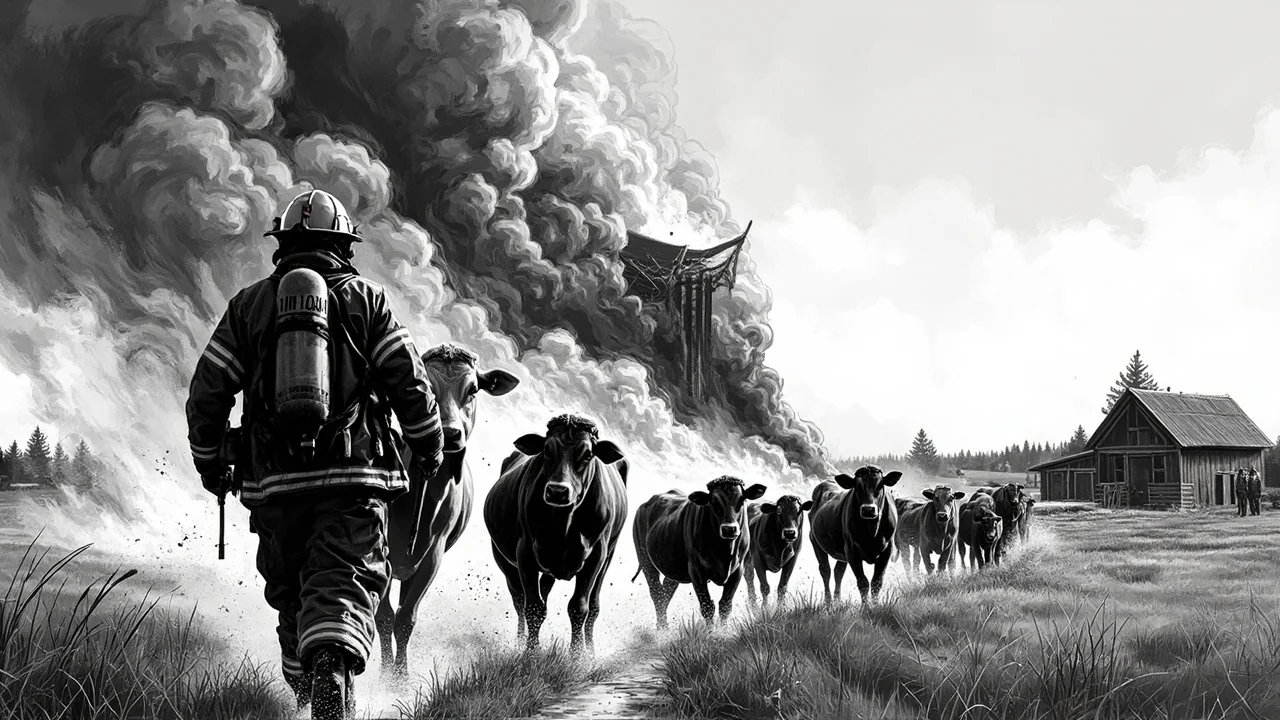
A fire erupted in a barn housing approximately 100 head of cattle in rural Norway late Tuesday night, prompting a large emergency response. The alarm came just after 11:00 PM, with the first reports indicating flames in the roof structure of the livestock building.
Operational leader Bjørnar Gaasvik confirmed the situation. "There is a fire in the roof of the barn building," Gaasvik said. He noted the significant number of animals inside, stating, "In the barn there are around 100 cattle."
Emergency services, including multiple fire crews and ambulance personnel, were dispatched to the scene. Their efforts were immediate and focused on both containing the structural fire and ensuring the safety of the large animals trapped within. "The fire department is implementing measures," Gaasvik said during the initial response phase.
Midnight Emergency in Rural Norway
The fire was reported by an individual on-site who noticed the blaze originating in a heating system connected to the barn structure. This quick detection likely played a crucial role in the emergency response timeline, allowing crews to arrive before the fire could spread uncontrollably. The specific location of the farm has not been disclosed, in line with standard Norwegian practice for personal emergencies, but the response indicates a property in a municipality with standard rural emergency coverage.
The primary mission for firefighters was dual-pronged: suppress the roof fire to prevent a total collapse of the structure and facilitate the evacuation or safeguarding of the livestock. Cattle barns present unique challenges due to their size, the potential for panicked animals, and the large amounts of combustible materials often present, such as hay and bedding.
The Livestock Rescue Operation
Rescuing large animals from a burning building is a complex and dangerous task for both the animals and the emergency personnel. Cattle can become disoriented and fearful by smoke and noise, making them difficult to move. Standard procedure in such incidents involves firefighters working to create safe exit paths, often using their knowledge of animal behavior to guide them out, while simultaneously attacking the fire's source.
The value of 100 head of cattle represents a substantial economic asset for any Norwegian farming operation. Beyond the immediate animal welfare concerns, a total loss would have severe financial implications for the farm family. Norwegian agriculture, particularly dairy and beef production, is a cornerstone of rural economies, and a single farm disaster can ripple through local communities.
The Challenge of Rural Firefighting
This incident underscores the critical importance of Norway's decentralized emergency response system, which must be equipped to handle major incidents far from urban centers. Rural fire departments often rely on volunteer or part-time personnel who must respond from their homes. Their knowledge of local geography and farm building layouts is an invaluable asset in crises like this.
Barn fires, while less frequently reported in national media than urban fires, remain a persistent risk in the agricultural sector. Common causes include electrical faults in older wiring, problems with heating lamps or systems—as was initially indicated here—spontaneous combustion of hay, and equipment malfunctions. The Norwegian Directorate for Civil Protection (DSB) and agricultural organizations continuously work on disseminating fire prevention advice to farmers.
Aftermath and Agricultural Impact
The successful intervention to save the animals suggests the fire was contained to a section of the roof, preventing it from engulfing the entire building. The next steps will involve a thorough investigation by fire authorities to determine the exact cause and origin of the blaze in the heating apparatus. Insurance assessors will also need to evaluate the damage to the structure.
For the farm, the aftermath involves not just repairs but also managing the welfare of the cattle, who may have suffered smoke inhalation or stress. A veterinarian would typically be called to examine the animals following such an event. The disruption to the daily milking or feeding routine can also have knock-on effects for the herd's health and productivity.