
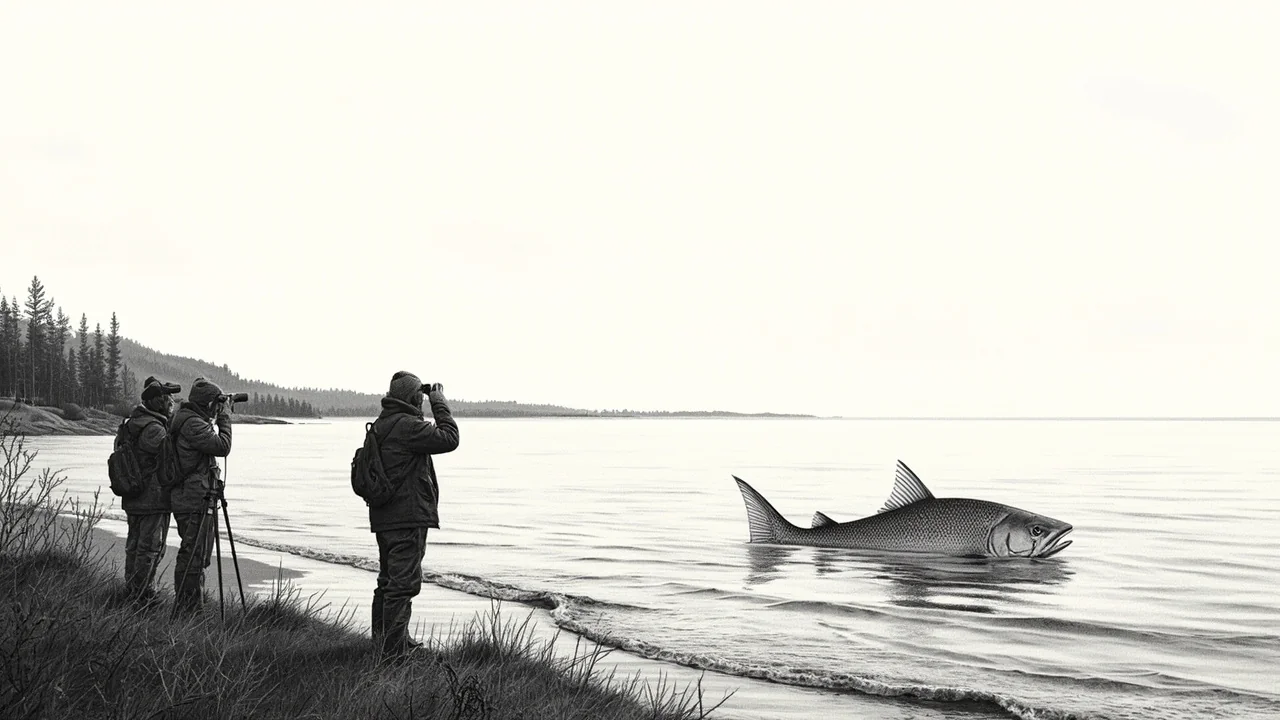
Two Norwegian birdwatchers encountered a marine anomaly so rare during a January competition that it left them in disbelief, highlighting unexpected wonders in the country's coastal waters. Jan Kåre Ness and his friend were participating in the Bird Race, a birdwatching contest to spot the most species, near Austre Bokn in Haugesund, Rogaland. On what seemed a typical Sunday, their focus shifted from birds to a mysterious shape floating in the water surface, sparking a chain of documentation and expert analysis that underscores the rarity of such events.
A Routine Day Turns Extraordinary
Jan Kåre Ness and his companion had nearly finished their Bird Race outing, scanning the sea from a prime location in Bokn commune. The friend first spotted the oddity using binoculars, while Ness initially thought it was an otter. "It was really a special experience. I have never seen anything like it before and will never see it again," Ness said, reflecting on the moment. The setting was ordinary—a calm winter day in western Norway—but the discovery was anything but, turning a competitive birdwatching activity into an impromptu marine observation session.
Identifying the Marine Mystery
Upon closer inspection with binoculars, the friend concluded it was a breiflabb, a type of fish known for its broad, flat body. Ness, however, relied on his naked eye and stuck with his otter hypothesis initially. "I had nothing else to compare it to, so I thought it was an otter," he explained. This discrepancy in identification highlights the challenge of spotting unfamiliar marine life from shore. The breiflabb, later confirmed by researchers, is not commonly seen at the surface, especially during winter months, making this sighting particularly noteworthy for amateur naturalists.
The Urge to Document a Rare Find
As a freelance photographer, Ness's immediate reaction was to capture the moment. "Here I must document," he thought, dashing to take quick shots of the fish as it gaped in the water surface. "I am very keen on documenting, whether it's bird observations or now the sight of a breiflabb," Ness said. His photographs became crucial for verification, showing the fish in detail and allowing for later analysis. This instinct to record aligns with broader trends in citizen science, where public contributions aid marine research in Norway's fjords and coastal areas.
Social Media Sparks Scientific Inquiry
Ness later posted the images on his Facebook profile to gauge how normal such a sighting might be. One response suggested, "I would think it is a female struggling with navigation, either because she has very heavy egg sacks, or because she has released them." This comment prompted Haugesunds Avis to send the pictures to Otte Bjelland, a researcher at the Institute of Marine Research. Bjelland called it "a very exciting observation," noting that the social media speculation likely touched on key causes, though he emphasized that any conclusions require careful interpretation.
Expert Perspective on Surface Behavior
Otte Bjelland explained that similar observations of breiflabb near the surface have been recorded in previous winters, typically during spawning seasons in February and March. "This buoyancy can take the breiflabb all the way to the surface," he said, referring to how female breiflabb gain lift due to maturing eggs. He added that while the Facebook comment might be onto something significant, the exact reason remains speculative without further data. This insight ties the sighting to known biological patterns, where fish behavior changes during reproductive cycles, often leading to rare surface appearances in Norwegian waters.
The Role of Citizen Observations in Marine Science
This event underscores how casual observers can contribute to marine knowledge in Norway. Bird Race participants, often focused on avian species, inadvertently documented a breiflabb, providing visual evidence for researchers. Bjelland's acknowledgment of past similar cases suggests that such sightings, while rare, are part of a broader phenomenon linked to seasonal changes. It also raises awareness about the diversity of life in Norway's maritime environments, from the Arctic north to southern fjords like those near Haugesund.
Implications for Future Marine Monitoring
The discovery prompts questions about how climate or environmental shifts might affect fish behavior in Norwegian seas. While no direct link is made in the source, Bjelland's reference to winter observations hints at seasonal consistency. For marine scientists, public reports like Ness's can fill gaps in data, especially for species not routinely monitored. This collaborative potential between citizens and institutions could enhance understanding of Norway's marine ecosystems, which are vital for fisheries and conservation efforts.
A Personal Memory and Broader Wonder
For Jan Kåre Ness, the experience remains a vivid personal memory, blending his passions for photography and nature. "It was really a special experience," he reiterated, emphasizing the uniqueness of the moment. Such stories remind us that even in well-traversed areas like Rogaland's coast, nature can still surprise. As Norway continues to balance marine resource use with conservation, incidental discoveries like this highlight the value of keeping an eye on the water—both for science and for sheer wonder.