
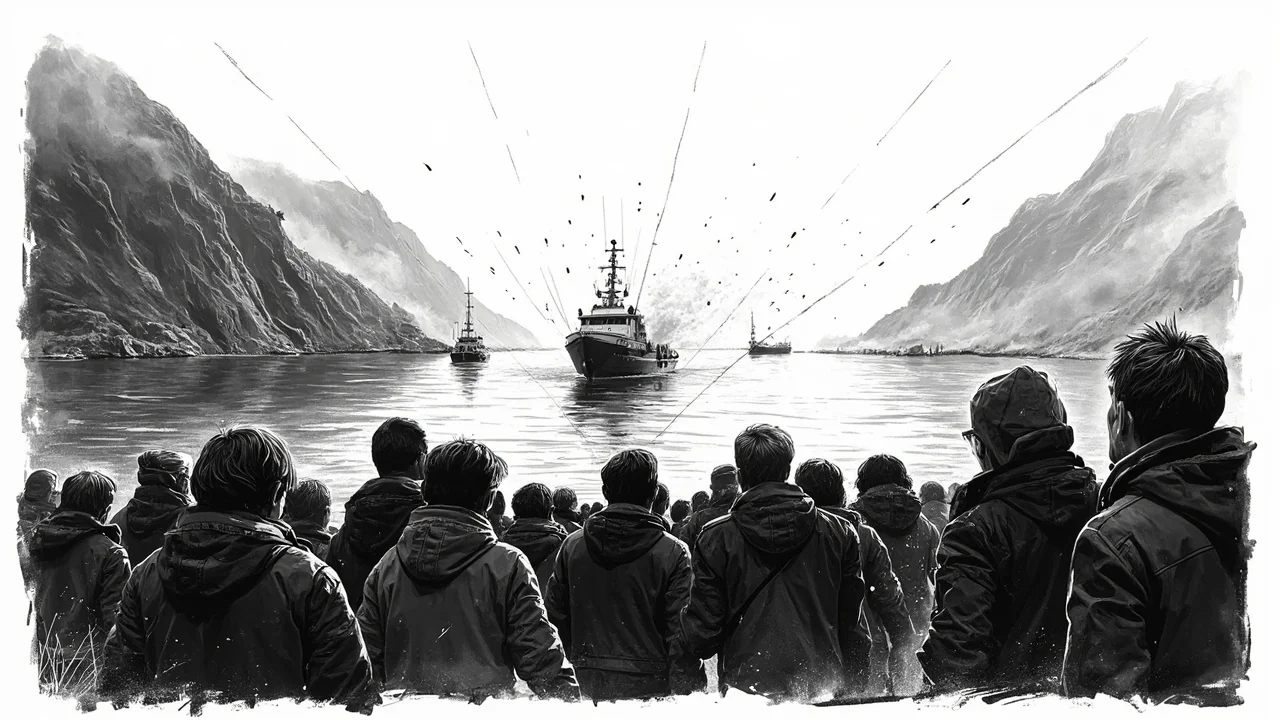
Norway's Åfjord municipality faced a major emergency response as a large boat burned intensely at a dock near a workshop hall. Witnesses reported the vessel was fully engulfed in flames, prompting police to establish a 300-meter safety perimeter. Authorities urgently advised nearby residents to close their windows due to dense, potentially toxic smoke spreading from the scene.
This incident in the Trøndelag region immediately triggered a multi-agency response. Local fire brigades, police, and likely coastal administration units mobilized to contain the blaze and mitigate risks to adjacent infrastructure. The boat's proximity to a workshop hall raised significant concerns about fire spread and secondary explosions.
Emergency Response and Community Impact
Police moved swiftly to secure the area, a critical step in maritime fire incidents. The 300-meter evacuation zone is a standard protocol for fuel-carrying vessels, suggesting the boat was substantial and its tanks posed a serious hazard. This action protected bystanders and allowed emergency crews to operate without obstruction.
Advising residents to close windows was a direct public health measure. Burning fiberglass, plastics, fuels, and treated woods release a complex mix of particulates and chemicals. In a coastal community like Åfjord, where air currents can carry smoke inland, this guidance was essential for protecting vulnerable populations.
"When a vessel burns at dock, the risks multiply," said Lars Moe, a former chief of the Norwegian Coastal Administration's emergency preparedness division, in an analysis for Nordics Today. "You have the immediate fire threat, potential for fuel spillage into the fjord, and the risk of the vessel sinking and creating a navigation hazard. The priority is always life safety, then environmental protection, then asset salvage."
The Broader Context of Norwegian Maritime Safety
While this is a localized event, it touches on national priorities. Norway maintains one of the world's most stringent maritime safety regimes, governed by the Norwegian Maritime Authority (Sjøfartsdirektoratet). The country's intricate coastline, bustling with everything from small fishing boats to massive cruise ships and offshore supply vessels, demands constant vigilance.
Incidents like the Åfjord fire test the integrated response system linking municipal fire services, the Governor of Trøndelag, the Coastal Administration, and the Norwegian Civil Defence. The effectiveness of this coordination directly influences outcomes, especially in remote fjord communities where major firefighting assets may be hours away.
Norway has invested heavily in maritime rescue and response, partly due to its offshore oil and gas industry. The Norwegian Society for Sea Rescue (RS) and the Joint Rescue Coordination Centre (HRS) are key pillars. A dock fire, however, initially falls to local resources, highlighting the importance of municipal preparedness.
Environmental and Economic Considerations
Any vessel fire in Norway's pristine fjords raises immediate environmental alarms. Åfjord is part of the Fosen peninsula, an area known for fishing and aquaculture. A fuel spill could devastate local marine life and impact fish farms, a crucial economic sector for the region.
The Norwegian Coastal Administration would be on high alert for any signs of pollution. Their mandate includes containing and cleaning oil spills. The potential for environmental damage adds a layer of complexity to the firefighting strategy, as water used to douse the blaze can become contaminated runoff.
Economically, the loss of a large boat is significant for an individual owner or a small company. Many coastal Norwegians depend on vessels for their livelihood, whether in fishing, tourism, or transport. The destruction of a workshop hall adjacent to the fire would compound the financial blow, affecting local employment and services.
Analysis: Preparedness in the Coastal Municipality
Åfjord, with a population just over 4,000, exemplifies the challenge facing many Norwegian municipalities. They must maintain a high level of emergency readiness despite limited resources and large geographical areas. This incident will likely prompt a local review of response plans, equipment inventories, and inter-agency communication protocols.
Norway's Directorate for Civil Protection (DSB) consistently emphasizes the concept of "samfunnssikkerhet" or societal security. This philosophy integrates preparedness across all sectors. A boat fire tests this integration, involving fire, police, health (for smoke inhalation), environment, and potentially housing services if evacuations are needed.
"The real test of preparedness isn't in the major cities with their dedicated harbor fire units," Moe noted. "It's in the smaller municipalities along the coast where resources are thinner but the maritime risks are just as real. The initial hour of response often determines the final outcome."
Looking Ahead: Investigation and Lessons
Once the fire is extinguished, an investigation will begin. The Norwegian Safety Investigation Authority (NSIA) may become involved if the incident is deemed significant enough. They will seek to determine the cause—whether electrical fault, engine issue, fueling accident, or other factor—to prevent future occurrences.
The findings could influence safety advisories for boat owners nationwide. Common recommendations include proper maintenance of electrical systems, safe fuel storage practices, and having accessible fire extinguishers on board. For municipalities, lessons may involve reviewing the zoning of industrial docks relative to residential areas and ensuring clear access for emergency vehicles to all piers.
This event in Åfjord is a stark reminder of the inherent risks in a nation defined by its relationship with the sea. Norway's maritime infrastructure is vast and generally safe, but it is not immune to accident. The quiet fjord community's calm was shattered by flames and smoke, putting local emergency plans into action and demonstrating the constant need for vigilance along Norway's long and rugged coastline. Will this incident lead to renewed focus on fire safety for smaller harbors and private docks across the country?