
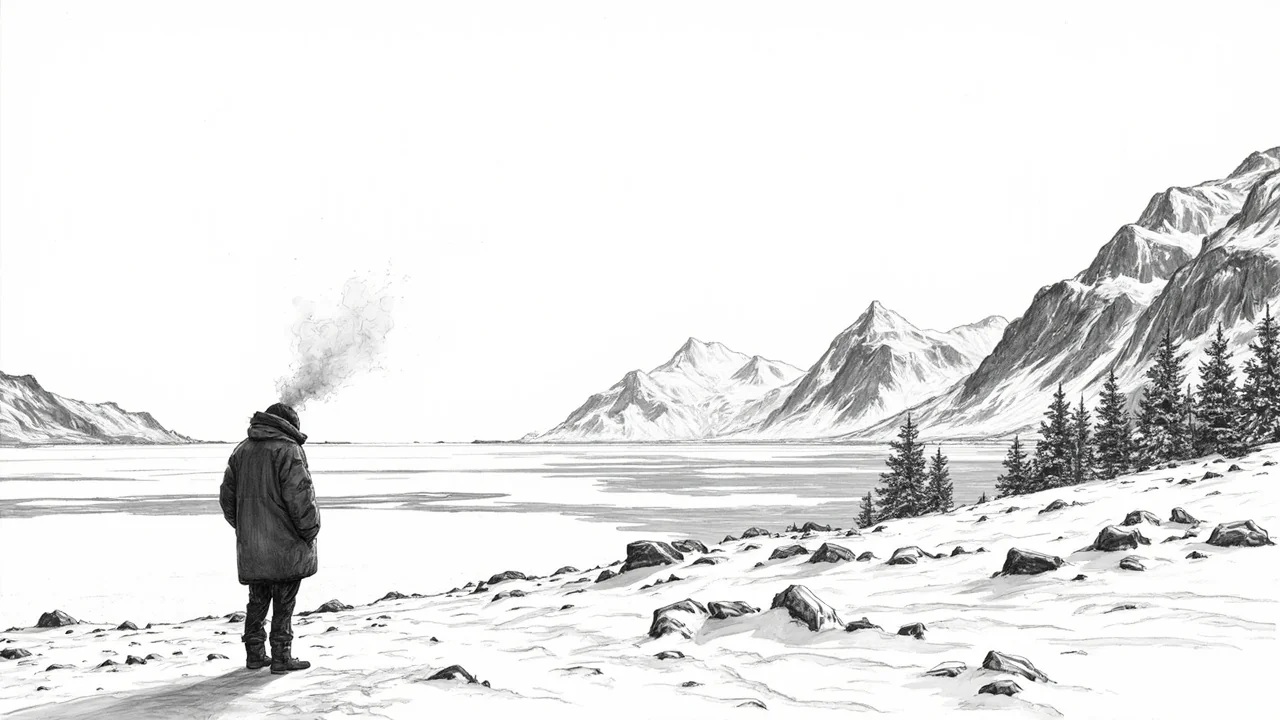
Norway winter weather is turning sharply colder again, with meteorologists warning of temperatures plunging to minus 35 degrees Celsius in parts of the country this weekend. Both northern and southern regions are expected to face biting cold as a persistent high-pressure system continues to channel frigid air from the Arctic and Siberia.
The forecast has revived questions about whether a rare atmospheric event—known as sudden stratospheric warming—might be returning. While researchers say that specific phenomenon isn’t active right now, they acknowledge it could reappear by late February, potentially delaying the arrival of spring.
Cold Snap Rooted in Locked-in Weather Pattern
Eldbjørg Moxnes, on-duty meteorologist at the Norwegian Meteorological Institute, explained that the current freeze stems from a stalled weather pattern that has held steady since New Year’s Day. “We’ve had essentially the same setup since January 1st,” she said. “A strong high-pressure system is pulling cold air down from the North Pole and the Siberian region.”
This atmospheric blockage prevents milder Atlantic air from reaching inland and northern Norway, allowing sub-zero conditions to persist far longer than typical for mid-February. The result is a deep freeze affecting daily life—from transportation delays to heightened energy demand—and raising concerns among vulnerable populations.
Moxnes noted one silver lining: the extreme cold increases the chance of seeing nacreous, or “mother-of-pearl,” clouds. These iridescent formations appear in the stratosphere when ice crystals refract sunlight under very low temperatures. “They’re not common because they require such intense cold,” she said. “But right now, you might spot them just after sunrise or before sunset.”
Sudden Stratospheric Warming: Not Active—But Possibly Returning
Earlier this week, some speculation arose linking the current cold spell to sudden stratospheric warming (SSW), a dramatic spike in temperatures high in the atmosphere that can disrupt normal wind patterns and send Arctic air southward. However, Erik Kolstad, a climate researcher at NORCE Climate and the Bjerknes Centre, clarified that no such event is underway.
“We have precise measurements that tell us exactly when SSW occurs,” Kolstad said. “Right now, it’s not happening.” The last confirmed SSW event took place in late November 2023. While unusual, Kolstad noted that two such events in a single winter aren’t impossible—2024 actually saw two occurrences, something not observed in many years prior.
Looking ahead, he said conditions suggest another SSW could develop toward the end of February. “If it does happen again, it would likely lead to a cold start to spring,” he added. Still, he emphasized that the current cold cannot be directly attributed to the November event, given the time gap. “The effects of SSW can linger, but we can’t say this freeze is solely due to that past episode.”
Record-Breaking January Adds to Concerns
January 2024 was Norway’s coldest month since 2010, according to official data. Yet neither Kolstad nor Per Haga, another meteorologist who commented earlier this week, could confirm that the record lows were caused by sudden stratospheric warming. The connection remains uncertain, underscoring the complexity of attributing specific weather extremes to individual atmospheric phenomena.
What is clear is the role of the current high-pressure system. Unlike fleeting cold fronts, this stable ridge has acted like a gatekeeper, locking Arctic air over Scandinavia for weeks. Such prolonged patterns are increasingly scrutinized in climate science, as researchers examine whether Arctic amplification—the faster warming of polar regions—is influencing mid-latitude weather stability.
Still, the immediate concern for Norwegians is practical: how to cope with another wave of extreme cold. Authorities in several counties have issued advisories for outdoor workers, elderly residents, and pet owners. In mountainous areas like Finnmark and Troms, schools have contingency plans for remote learning if roads become impassable.
What This Means for Spring
If Kolstad’s prediction holds and a second sudden stratospheric warming event occurs in late February, the implications could stretch beyond the next few weeks. Historical data shows that SSW events often lead to colder-than-average conditions across Northern Europe for up to two months afterward.
That would mean March—and possibly even April—could see below-normal temperatures, delaying snowmelt in key watersheds and affecting hydroelectric power planning. Farmers in southern Norway, already monitoring soil frost depth, may need to adjust planting schedules. Meanwhile, ski resorts, which have benefited from abundant snow, could see extended seasons—but only if infrastructure withstands the strain.
For now, the focus remains on the weekend’s forecast. In Oslo, temperatures may dip below minus 20°C, while valleys in the interior—such as those near Røros and Dovre—could approach minus 30°C or lower. Coastal areas will be somewhat moderated by the sea, but wind chill will make conditions feel even harsher.
A Winter That Won’t Let Go
As Norwegians bundle up once more, the question lingers: is this just a stubborn winter, or a sign of deeper shifts in atmospheric behavior? Scientists caution against drawing quick conclusions from a single season. Yet the recurrence of rare events like double SSW episodes in one winter adds to ongoing debates about climate variability in a warming world.
For residents, the answer matters less than preparation. With reliable forecasts and clear communication from meteorologists, communities can adapt—even when the cold seems endless. And for those lucky enough to catch a glimpse of mother-of-pearl clouds shimmering in the twilight, there’s a reminder that even in the harshest weather, nature offers moments of quiet beauty.
Will this late-winter freeze give way to an early spring—or will Norway face a prolonged chill well into March? The stratosphere may hold the key.
Read more: Norway Oil Fund Loses $40B as Tech Bet Backfires.
Read more: Norway Submarine Base Faces Power Grid Rejection Crisis.