
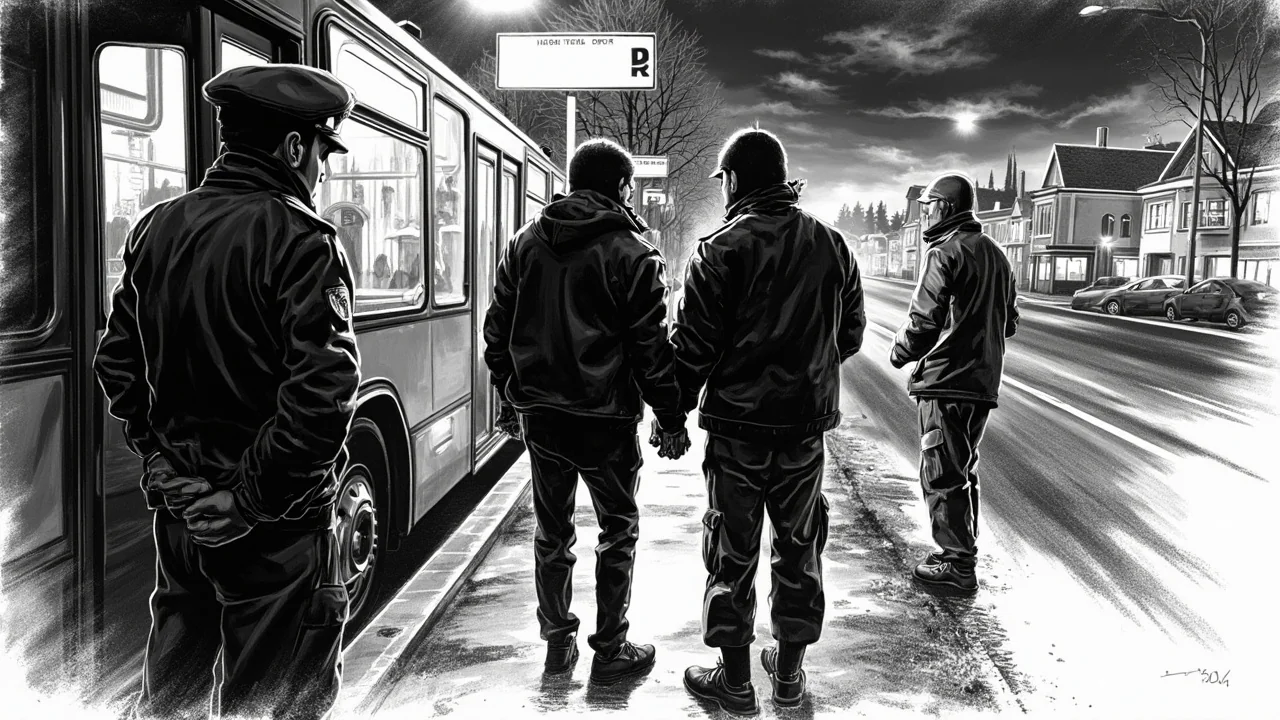
Norway police are investigating a violent assault on a night bus in Bergen. A man in his thirties was kicked and beaten by a group of teenagers in the early hours of Saturday morning. The incident occurred at the Åsane terminal shortly after 3 AM.
“We received a report that a man had been assaulted, and that some youths were kicking and hitting him. Also while he was lying on the ground,” said station chief Ørjan Hjortland at the Bergen North police station on Monday. The victim was taken to an emergency medical clinic for treatment. He was dazed, had a head injury, a cut above his eye, and a possible broken nose.
Two men in their late teens were arrested at the scene. Police later released them after questioning. The altercation reportedly began as a disagreement on the night bus itself before escalating violently outside. “The two are linked to the incident and the location, but there are conflicting explanations about the course of events,” Hjortland stated. Police are reviewing video surveillance from the area and plan to speak with the victim again as their investigation continues.
A Pattern of Late-Night Violence
This assault is not an isolated event in Norway's nightlife transport system. Similar incidents of violence on or around late-night buses and trams have been reported in major cities like Oslo and Trondheim. Security experts point to a combination of factors: alcohol consumption, crowded vehicles, and sometimes tensions between different groups of young people. The hours between midnight and 4 AM are particularly high-risk. Public transport becomes a focal point where nightlife crowds converge, often with lowered inhibitions and heightened emotions.
“These environments can be flashpoints,” said a security consultant who has worked with transit agencies. “You have confined spaces, potential overcrowding, and people who may have been drinking for hours. A minor disagreement can escalate rapidly when there’s no immediate authority figure to de-escalate.” The consultant spoke on condition of anonymity as they are not authorized to speak publicly. Police reports from recent years show a consistent pattern of assaults and disturbances linked to night bus routes serving popular entertainment districts.
The Challenge for Police and Transit Operators
For law enforcement, these incidents present significant challenges. Witnesses are often reluctant to come forward. Descriptions can be vague in the dark and chaos. As in the Åsane case, perpetrators and victims may give conflicting accounts. “Our work depends heavily on witness statements and technical evidence like video,” explained Hjortland. “When people are intoxicated or scared, getting a clear picture is difficult.” The immediate arrest of suspects is crucial, but securing convictions requires solid evidence that can withstand legal scrutiny.
Transit operator Vy, which runs bus services in Bergen, has implemented several safety measures in recent years. These include increased video surveillance on vehicles, better lighting at key terminals, and collaboration with police patrols. A spokesperson for the company stated that driver safety and passenger security are top priorities. “Our drivers are trained to report any incidents immediately, and we cooperate fully with police investigations,” the spokesperson said. However, drivers are instructed not to physically intervene in violent altercations, focusing instead on alerting authorities.
Community Reaction and Safety Debates
The attack has sparked renewed debate about public safety in Bergen. Local residents and city council members are calling for more visible security patrols at major transport hubs, especially on weekend nights. Some suggest dedicated late-night security staff at terminals like Åsane. Others argue for increased investment in street lighting and environmental design that discourages loitering and violent behavior. “People should feel safe using public transport at any hour,” said a local politician from the Labor Party. “This is about the basic right to move freely in your own city.”
Community policing initiatives have shown some success in other Norwegian cities. Programs that place officers on foot patrol in nightlife areas, engaging with young people before trouble starts, are often cited as effective. However, these programs require significant resources and consistent funding. Police unions have noted that staffing levels often struggle to meet demand during peak weekend hours, when multiple serious incidents can occur simultaneously across a city.
A Victim's Long Road to Recovery
Beyond the police investigation lies the human cost. Assault victims can suffer from physical injuries for weeks or months. The psychological impact—including anxiety, post-traumatic stress, and a fear of public spaces—can last much longer. The man assaulted at Åsane terminal is now facing this reality. Medical professionals note that head injuries, like the one he sustained, require careful monitoring. Symptoms like dizziness, confusion, and headaches can persist long after visible wounds heal.
Victim support organizations in Norway offer counseling and legal assistance. They emphasize that recovery is a process. “The immediate focus is on physical health, but the emotional shock often hits later,” said a coordinator for a Bergen-based support group. “Many victims blame themselves or feel isolated. It’s important to seek help.” These services are available free of charge, but advocates say many victims are unaware of them or hesitant to reach out.
Looking Ahead: Prevention and Accountability
The Bergen police investigation continues. The collection and review of video surveillance footage will be a critical next step. This evidence could corroborate witness statements or provide new details about the sequence of events. The decision to release the two suspects does not mean the case is closed. Police can reopen questioning and present new evidence to prosecutors at any time. The threshold for charging someone with assault in Norway requires sufficient evidence to secure a conviction, a standard police must carefully meet.
This incident serves as a stark reminder of the violence that can erupt in everyday settings. A routine bus ride home turned into a traumatic event. It raises urgent questions for city officials, transport companies, and police: What more can be done to protect citizens during the most vulnerable hours? How can communities foster a culture where conflict de-escalates instead of exploding into violence? The answers will determine whether stories like this remain frequent headlines or become rare exceptions. For now, a man in his thirties is recovering from his injuries, and a city is left to ponder its safety after dark.