
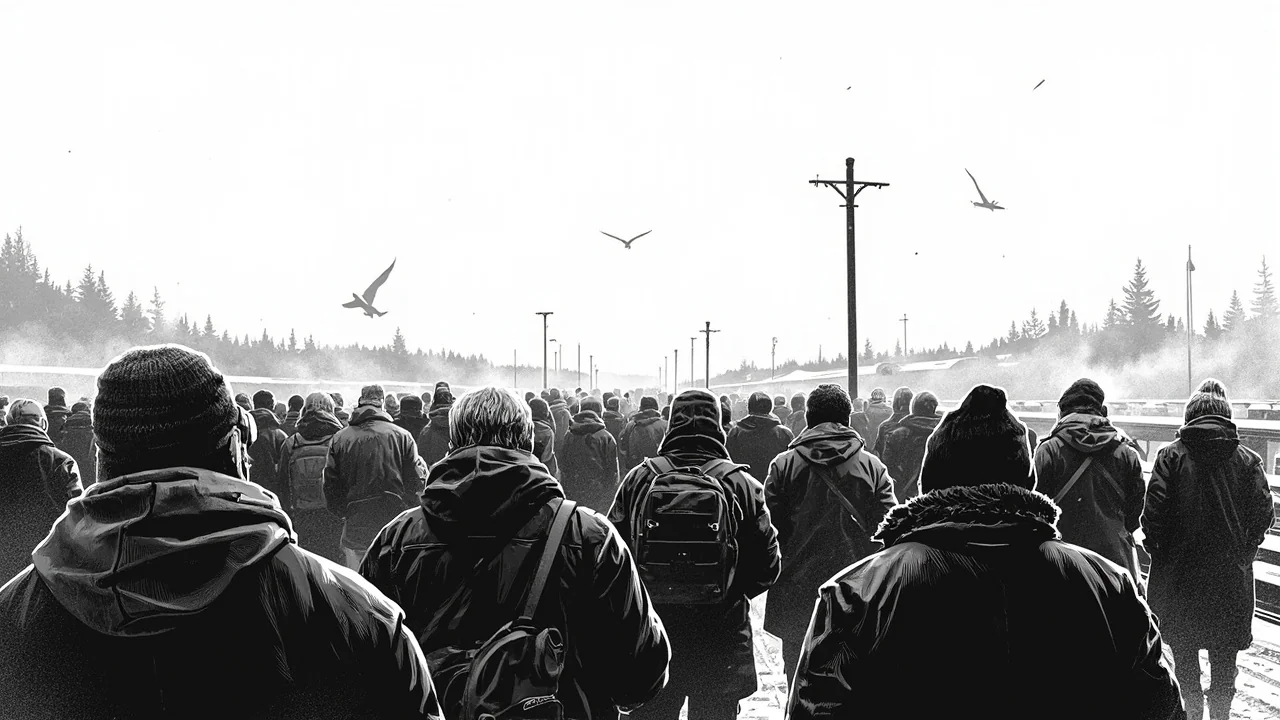
Norway's crucial Dovrebanen railway line resumed operations late Tuesday night after a power failure stranded a passenger train carrying approximately 200 people for several hours. The incident halted all traffic on the main northbound artery between Tangen and Eidsvoll, disrupting one of the country's busiest inter-city routes connecting Oslo to Lillehammer and Trondheim.
Train operator Vy confirmed the line reopened at 10:27 PM. The stoppage began around 6:00 PM when the train, traveling from Oslo to Lillehammer, suddenly lost electrical power. This forced an immediate closure of the affected section, leaving the train immobilized on the tracks. The disruption caused significant delays and required the implementation of contingency plans for alternative transport.
Immediate Response and Passenger Experience
Emergency services were notified and responded to the scene. The primary focus was on the welfare of the passengers aboard the immobilized train. While not in immediate danger, the 200 travelers faced an uncertain wait as technicians worked to diagnose and repair the electrical fault. The loss of power affected onboard systems, including lighting and climate control, though backup systems provided essential functions during the stoppage.
A Vy spokesperson said in a statement that their priority was passenger safety and information. The company activated its crisis communication protocol to inform travelers on the affected service and those planning to use subsequent departures. The disruption occurred during the evening commute, compounding delays for those returning from the capital to cities in the inland region.
Critical Infrastructure Under Scrutiny
The Dovrebanen line is a backbone of Norway's national rail network. It serves as the primary link between Oslo and major population centers in the Gudbrandsdalen valley, as well as the vital connection to Trondheim, Norway's third-largest city. This route is critical for both commuter traffic and long-distance travel, including freight services that transport goods north and south.
Power failures on electrified lines, while uncommon, present a severe operational challenge. Unlike diesel-powered services, electric trains cannot simply switch to an alternate power source. They require a constant supply from the overhead catenary wires, making them vulnerable to localized faults in the electrical grid or specific line equipment. This incident highlights the systemic dependency on uninterrupted electrical supply for modern rail transport.
Broader Network Impact and Contingencies
The closure between Tangen and Eidsvoll created a bottleneck with ripple effects across the network. Trains scheduled to run north from Oslo were held at the capital's central station or at points south of the fault. Southbound services from Lillehammer and beyond were similarly affected, creating a backlog of services and passengers at multiple stations.
Vy and the state-owned rail infrastructure manager Bane NOR coordinated on contingency measures. These typically involve arranging replacement bus services to bridge the gap between operational rail segments. However, the capacity and travel time of bus replacements are inferior to the train service, leading to extended travel times and crowded conditions for displaced passengers.
Historical Context and System Reliability
The Norwegian rail network is renowned for its punctuality and reliability, with electric trains forming the core of intercity services. Incidents like Tuesday's power failure are statistically rare but garner significant attention due to the high number of passengers affected and the essential nature of the infrastructure. Each event prompts internal reviews by both the operator and the infrastructure manager to identify the root cause and prevent recurrence.
Previous minor delays on the Dovrebanen are often attributed to weather conditions, especially in winter, or signaling issues. A complete power loss of this duration is a more significant event. The investigation will likely examine whether the fault originated with the train itself, the overhead power lines, or a substation supplying that section of track. The findings will be crucial for maintaining the network's high reliability standards.
Economic and Commuter Consequences
Beyond the immediate inconvenience to passengers, such disruptions have tangible economic effects. Freight deliveries are delayed, business travel is interrupted, and tourism flows are impacted. The line to Lillehammer is particularly important for the tourism and leisure sector, given the city's status as a former Winter Olympics host and a year-round destination.
For daily commuters, the reliability of the Dovrebanen is a key factor in housing and work choices. Many residents of cities like Hamar and Lillehammer rely on the efficient rail link to workplaces in the Oslo region. An unexpected four-hour closure undermines confidence in this commuting pattern and can lead to calls for increased investment in network resilience, such as duplicated power feeds or more robust backup systems.