
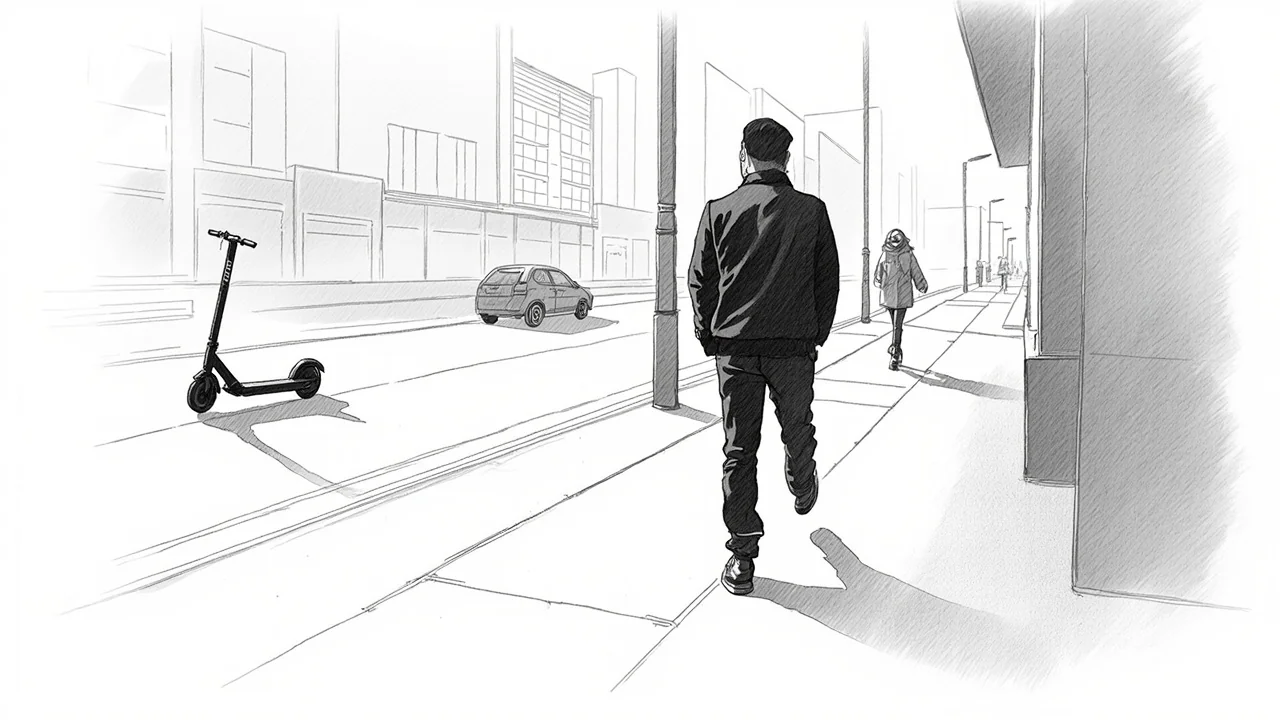
Norway's capital Oslo will ban e-scooters from all sidewalks following a parliamentary decision empowering municipalities with stricter regulatory tools. The Storting's move marks the end of a contentious five-year experiment with shared micromobility that flooded the city's walkways with rental vehicles. City officials plan to implement the ban this year, confining the silent, electric scooters to bicycle lanes and roadways.
This policy shift addresses a core conflict in modern urban planning: balancing innovation with public safety. Since their 2019 debut, the scooters have split Oslo's population. Proponents champion them as a green, flexible last-mile solution. Critics condemn them as hazardous clutter, citing thousands of emergency room visits. The new rules aim to reclaim pedestrian space, fundamentally altering how the vehicles integrate into Oslo's transport network.
A Capital Divided Over Two Wheels
E-scooters appeared suddenly on Oslo's streets, offered by multiple competing companies. Their dockless model allowed users to locate and unlock them via smartphone apps, leaving them anywhere after a ride. Adoption was rapid, particularly among younger residents and tourists. The scooters promised a convenient alternative for short trips, potentially reducing car use in the congested city center.
Yet the drawbacks quickly became apparent. Sidewalks in neighborhoods like Grünerløkka and Majorstuen became obstacle courses. Pavement parking created hazards for visually impaired and elderly residents. The most serious concern, however, was injury. In June 2021 alone, Oslo's emergency clinic registered 421 e-scooter related injuries. That alarming statistic triggered the first serious political debate about a blanket sidewalk prohibition.
From Political Debate to Legislative Action
The path to a ban involved multiple levels of government. Initially, city authorities had limited power to regulate vehicle operation, which falls under national transport law. Oslo's city government, led by the Labour Party and supported by the Socialist Left Party, lobbied the national parliament for enhanced local control. The Storting's recent vote grants all Norwegian municipalities the explicit authority to ban e-scooters from sidewalks.
“This is about prioritizing the safety and accessibility of our public spaces,” said a city councilor involved in the process. “The sidewalk must first and foremost be safe for pedestrians. The high number of injuries showed that the mixed traffic model was not working.” The councilor emphasized that the goal is not to eliminate e-scooters but to integrate them safely, similar to bicycles.
Operators like Tier, Voi, and Lime now face significant operational changes. Their business model often relies on sidewalk placement for visibility and accessibility. Confining scooters to bike lanes may reduce spontaneous ridership. Companies may need to create dedicated parking zones to prevent clutter in cycling infrastructure. This transition period will test the commercial viability of shared scooter services under stricter rules.
Analyzing the Safety Data and Urban Impact
The decisive factor for policymakers was the consistent injury data from Oslo University Hospital and other clinics. Injuries ranged from minor fractures and severe lacerations to traumatic head injuries, often occurring when scooters hit pavement irregularities or collided with pedestrians. Many incidents involved riders lacking experience or ignoring safety guidelines, sometimes under the influence of alcohol.
Urban design experts note that Oslo's infrastructure was unprepared for this new vehicle type. The city has invested heavily in cycling networks, but coverage is not universal. On roads without bike lanes, e-scooters will now have to navigate alongside cars and buses, raising new safety questions. Some analysts suggest this ban could accelerate investment in protected cycling corridors, benefiting all non-motorized transport.
Comparatively, Oslo's approach is now among the strictest in the Nordic region. Copenhagen permits e-scooters on sidewalks in certain areas with speed limiters. Stockholm has designated zones but no full sidewalk ban. Oslo's blanket prohibition sets a precedent for Norwegian cities like Bergen and Trondheim, which may follow suit. This creates a potential patchwork of regulations across the country, complicating operations for national scooter firms.
The Broader Transport Ecosystem in Transition
This ban does not occur in a vacuum. It is part of Oslo's long-term strategy to reduce car dependency and emissions. The city has removed hundreds of parking spaces, introduced congestion charges, and promoted public transit. E-scooters were initially seen as a piece of this puzzle. Their relegation to bike lanes reframes them as a supplement to cycling, not walking.
Public reaction is mixed. Pedestrian advocacy groups have welcomed the decision. “This is a victory for everyone who uses their feet to get around,” said a representative from a walking association. “Our sidewalks are for people, not for motorized vehicles, however small.” Regular scooter users express concern about reduced convenience and potentially longer walking distances to find a scooter parked in a bike lane.
The economic impact is another consideration. The scooter rental industry employs hundreds in Oslo for charging, maintenance, and logistics. Stricter parking enforcement and fewer spontaneous rides could shrink revenue. Companies may reduce fleet sizes, affecting jobs. The city must balance its safety mandate with the health of a legitimate, though disruptive, new industry.
Enforcement Challenges and Technological Solutions
Implementing the ban presents practical hurdles. Police resources are limited, and enforcement cannot be constant. The city likely will rely heavily on the scooter companies themselves. Providers can use geofencing technology to slow down or disable scooters that enter sidewalk zones. Apps can warn users about the new rules before a ride begins.
Successful enforcement may also require a public education campaign. Tourists, a major user group, may be unaware of local laws. Clear signage in central areas and at rental points will be essential. The city may also impose fines on companies whose scooters are repeatedly found illegally parked on sidewalks, incentivizing better corporate compliance.
Looking Beyond the Ban: The Future of Micromobility
Oslo's decision represents a critical moment for micromobility. It signals that cities will not accept innovation at any cost, especially when public safety is compromised. The industry's future may depend on developing better vehicle design, such as larger wheels for stability, and more responsible business practices. Partnerships with cities to create dedicated infrastructure could be the next step.
The ban also sparks a conversation about who owns and controls city streets. As new technologies emerge—from e-scooters to potential future personal transport devices—cities need flexible legal frameworks. The Storting's decision to empower municipalities is a recognition of that need. Local governments are best positioned to assess what works in their unique urban landscapes.
Will Oslo's sidewalk ban make the city safer and more pleasant, or will it stifle a useful transport alternative? The answer will unfold over the coming months. The true test will be the injury statistics from next summer. If emergency room visits decline significantly without a major drop in legitimate scooter use, other global cities watching Oslo's experiment may adopt similar tough love. The era of the freewheeling e-scooter on Oslo's fortau is over, but the search for its proper place in the urban fabric continues.