
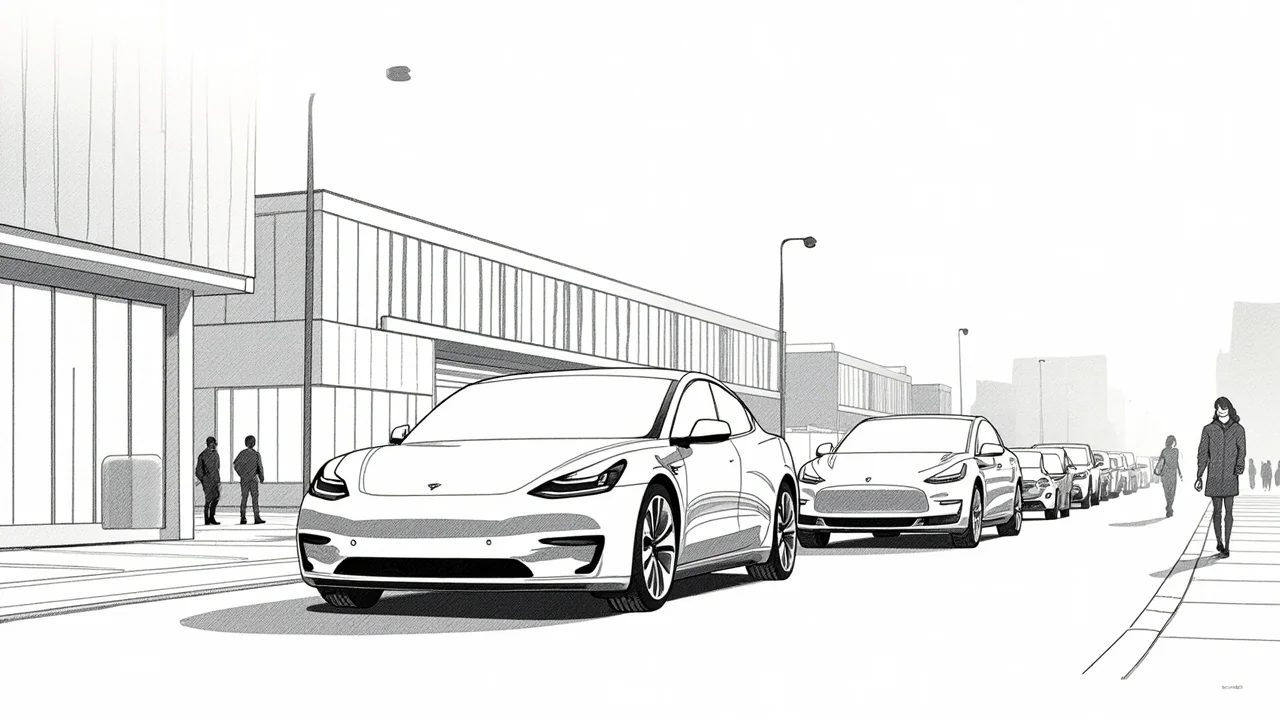
Norway's new car market reached a landmark 96 percent electric vehicle share last year, cementing its position as the global leader in the transition from fossil fuels. Official registration data released on January 2, 2026, confirms the nation has accelerated past its own ambitious targets, setting a new benchmark for other countries to follow.
The Policy Engine
This shift was not an accident. It is the direct result of a sustained, bipartisan policy framework enacted over decades. The foundation was laid with a clear goal: to make zero-emission vehicles the affordable and practical choice for Norwegian consumers. The most powerful tool has been a significant tax exemption for battery electric vehicles (BEVs). While internal combustion engine cars face heavy purchase and registration taxes, BEVs have been exempt, often bringing their sticker price in line with or below comparable petrol models.
Additional incentives have compounded the effect. BEV drivers benefit from reduced annual road taxes, tolls, and ferry fares. They also gain access to bus lanes in congested urban areas like Oslo, a privilege that saves considerable time during commutes. This comprehensive package, supported by both Labour and Conservative-led governments, created a predictable market for automakers and consumers alike.
Economic Realities and Infrastructure
Beyond incentives, simple economics now drive the trend. The total cost of ownership for an electric car in Norway is frequently lower than for a fossil fuel vehicle when factoring in fuel savings and maintenance. Norway's electricity grid, powered almost entirely by renewable hydropower, provides a clean and relatively cheap energy source for charging. This addresses a key concern in other nations where electricity can be carbon-intensive or expensive.
Infrastructure growth has kept pace. A dense network of public fast chargers spans the country, from the major E6 highway to remote coastal roads in the north. Charging at home is also commonplace, supported by government grants for home charging installations in apartment buildings. This network alleviates range anxiety, a significant barrier to adoption elsewhere.
The International Perspective
Norway's 96 percent figure stands in stark contrast to global averages. While many European nations are seeing rapid growth, their EV market shares remain in the 20 to 30 percent range. The United States lags further behind. Norway's success demonstrates the effectiveness of long-term, consistent fiscal policy over sporadic subsidies or mandates. It shows that consumer behavior can be radically altered when the financial and practical advantages are clear and sustained.
This leadership has made Norway a key testing ground for global automakers. New models are often launched first in the Norwegian market, where consumer acceptance is high and feedback is immediate. The competitive landscape is now entirely focused on electric models, with traditional manufacturers phasing out petrol and diesel options from their Norwegian showrooms entirely.
Challenges on the Horizon
Despite the success, challenges are emerging. The high penetration of EVs has begun to strain aspects of the incentive model. Lost tax revenue from exemptions is a growing topic in political discussions at the Storting. Some parties have suggested a gradual introduction of fees for zero-emission vehicles to fund road maintenance and new infrastructure.
The bus lane access privilege has also caused congestion in some corridors, leading to debates about its future. Furthermore, the demand for raw materials like lithium and cobalt for batteries raises questions about the sustainability of the global supply chain. Norway must now navigate a second phase of its transition, balancing the need to maintain momentum with the practical realities of a mature EV market.
The Road Ahead
The 2025 data proves the transition to electric personal transport is not only possible but can be achieved rapidly with the right conditions. Norway's next policy focus is shifting toward electrifying heavier vehicles, like trucks and construction equipment, and further reducing emissions from the maritime sector. The experience gained from the car transition will inform these efforts.
For the international community, Norway serves as a large-scale case study. It provides evidence that strong, predictable policies can create a market that drives technological adoption faster than most forecasts predicted. The question for other nations is not whether they can follow, but whether they can build the political consensus to implement similar long-term strategies. As the world watches, Norway's roads, once dominated by the sound of internal combustion engines, have grown quieter, showcasing a future already arrived.
A Model in Transition
The Norwegian model is now entering a new chapter. The debate is no longer about if the transition will happen, but about how to manage its consequences and ensure its long-term sustainability. The focus is turning to electricity grid capacity, circular economy solutions for batteries, and ensuring the transition is equitable across different regions and income groups. The 96 percent mark is a historic achievement, but for Norwegian policymakers, it is a stepping stone, not a finish line. What happens next in Norway will offer crucial lessons for the global automotive industry's complete overhaul.