
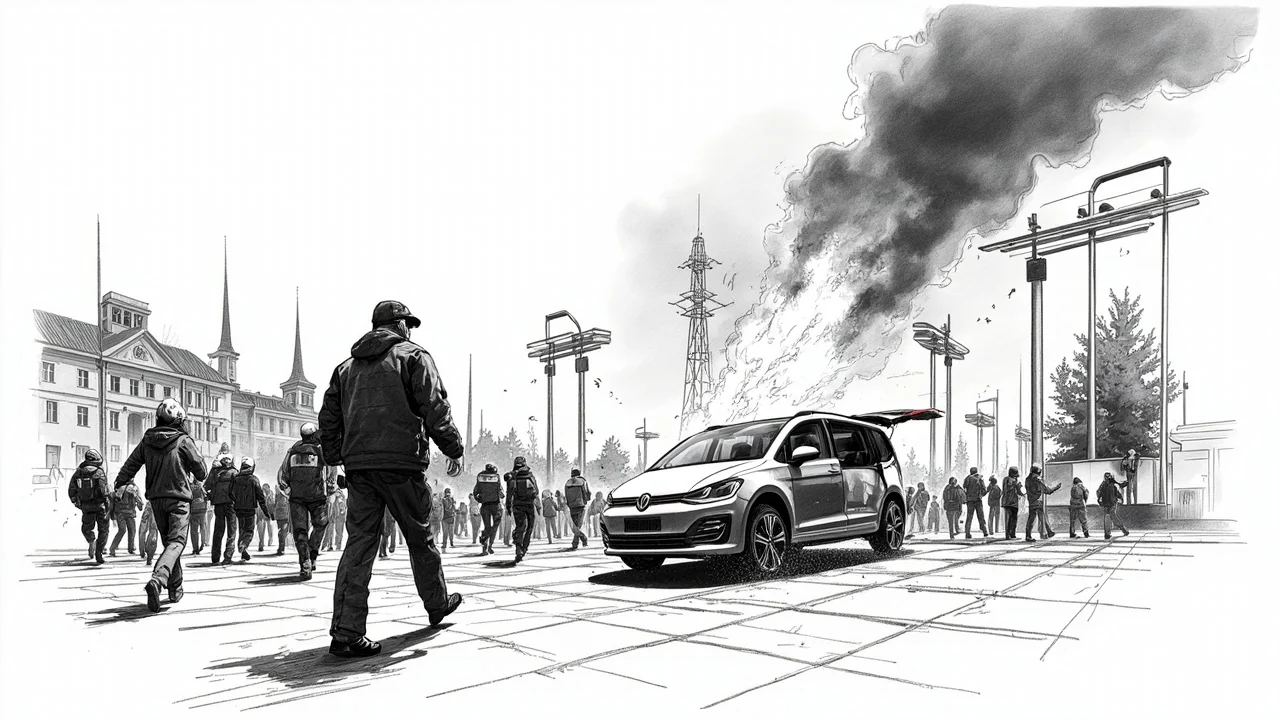
Norway's electric vehicle transition faced a stark safety test after a lithium-ion battery pack ignited in a Trondheim car wash. The fire forced the evacuation of 100 people and sent two to hospital for smoke inhalation, raising immediate questions about the risks accompanying the nation's world-leading EV adoption.
Thick black smoke poured from the wash hall at Tungasletta just after 9:30 AM. Operations leader Carina Hollås confirmed the blaze originated in a battery pack stored on a pallet. Firefighters contained the fire by 10:05 AM, preventing it from spreading to nearby structures. The speed and intensity of the incident, however, left emergency responders and local officials examining a new urban hazard.
"One hundred people were evacuated. Two individuals inhaled smoke and received medical treatment on site," Hollås said in her situation report. The incident did not involve a charging vehicle but a stationary battery unit, shifting focus from charging infrastructure to general storage and handling protocols.
A National Priority Under Scrutiny
This fire strikes at the heart of Norwegian energy and transport policy. Norway boasts the highest per capita electric car ownership globally, with EVs constituting over 90% of new car sales. The government has driven this shift through substantial tax exemptions, toll road passes, and charging infrastructure investments. This successful policy now confronts the practical safety challenges of managing millions of high-capacity lithium-ion batteries nationwide.
"Every new technology brings new risks," said Lars Erik Wetter, a fire safety engineer with the Directorate for Civil Protection (DSB). "We have extensive experience with petrol and diesel fires. Lithium-ion battery fires are different. They can reignite hours or days after being suppressed and require vast amounts of water to cool." The DSB has issued guidelines for fire departments, but this incident highlights the gap between professional response and everyday commercial handling.
The Chemistry of Risk
The Trondheim event exemplifies a thermal runaway event. In a lithium-ion battery, a short circuit, physical damage, or manufacturing defect can cause internal overheating. This triggers a chemical chain reaction that produces intense heat and flammable gases. The result is a fire that burns extremely hot and is difficult to extinguish. Traditional firefighting methods can sometimes be ineffective or even dangerous, as water applied to certain battery chemistries can produce toxic hydrogen fluoride gas.
Industrial sites and recycling centers have reported similar fires, but a blaze in a commercial car wash represents a more public, urban scenario. It places these energy-dense power units in proximity to crowded civilian areas and standard business operations. The battery pack involved was reportedly not in a vehicle, suggesting it was either in storage, awaiting installation, or being serviced. This raises questions about safe storage standards for businesses that handle EV components.
Policy Response and Regulatory Gaps
Norway's Fire Protection Association has urged the government to establish clearer national regulations for battery storage and firefighting. Current building codes and workplace safety laws have not kept pace with the rapid proliferation of EV technology. Storting politicians from both the Labour Party and the Conservative Party have called for a review.
"We need to know if this is a one-off incident or a symptom of a larger problem," said Conservative MP Tina Bru, former Minister of Petroleum and Energy. "Our commitment to electrification is unwavering, but safety is non-negotiable. The government must ensure regulations evolve alongside the technology." Bru suggested the Ministry of Transport and the DSB should collaborate on new safety directives for businesses servicing EVs.
This incident may influence ongoing debates in the Storting about extending consumer safety laws. It also touches on Norway's ambitious green energy export plans, which include supplying battery technology and expertise to Europe. Safety concerns could impact market confidence if not addressed proactively.
Local Impact and Business Liability
For the business owner at Tungasletta, the aftermath involves significant disruption and potential liability. Beyond fire damage, contamination from toxic runoff water used to fight the blaze is a major concern. Insurance claims for lithium-ion battery fires are complex and often costly, leading to higher premiums for businesses involved in the EV sector.
Trondheim municipality's environmental agency will assess any soil or water contamination. "Our first priority was human safety," said a municipal spokesperson. "The next phase is environmental safety. Runoff from battery fires can contain heavy metals and other pollutants." The clean-up operation underscores the hidden costs of such incidents, which extend far beyond property damage.
Local fire chief Arne Myhre described the challenges. "We train for these events, but each battery fire is unique. The key is rapid containment and continuous cooling. We were fortunate today that the building was not densely occupied and that our response was swift." His statement hints at the potential for a more severe outcome in a different setting, such as an underground parking garage or a residential complex.
A Global Challenge with Nordic Implications
Norway is not alone in facing this challenge. Fire departments from Stockholm to Seattle are adapting their tactics. However, Norway's extreme market penetration makes it a critical case study. The data and experience gathered here will inform safety standards across Scandinavia and beyond. Swedish and Finnish civil protection agencies closely monitor Norwegian incidents to shape their own preparedness strategies.
The Nordic model emphasizes prevention through regulation. This fire will likely accelerate legislative proposals currently moving through government committees. Possible measures include mandatory fireproof storage cabinets for detached battery packs, specialized training for auto workshop employees, and stricter zoning for battery recycling facilities.
Norway's success in electrifying transport is a testament to effective policy. The next phase requires ensuring that this technological revolution is managed with equal rigor for safety. The Trondheim fire, while quickly extinguished, leaves a lingering question for policymakers and the public: As the nation's car parks fill with silent, electric vehicles, are its emergency systems and regulations fully prepared for the new risks they contain? The answer will determine the sustainable trajectory of Norway's clean energy leadership.