
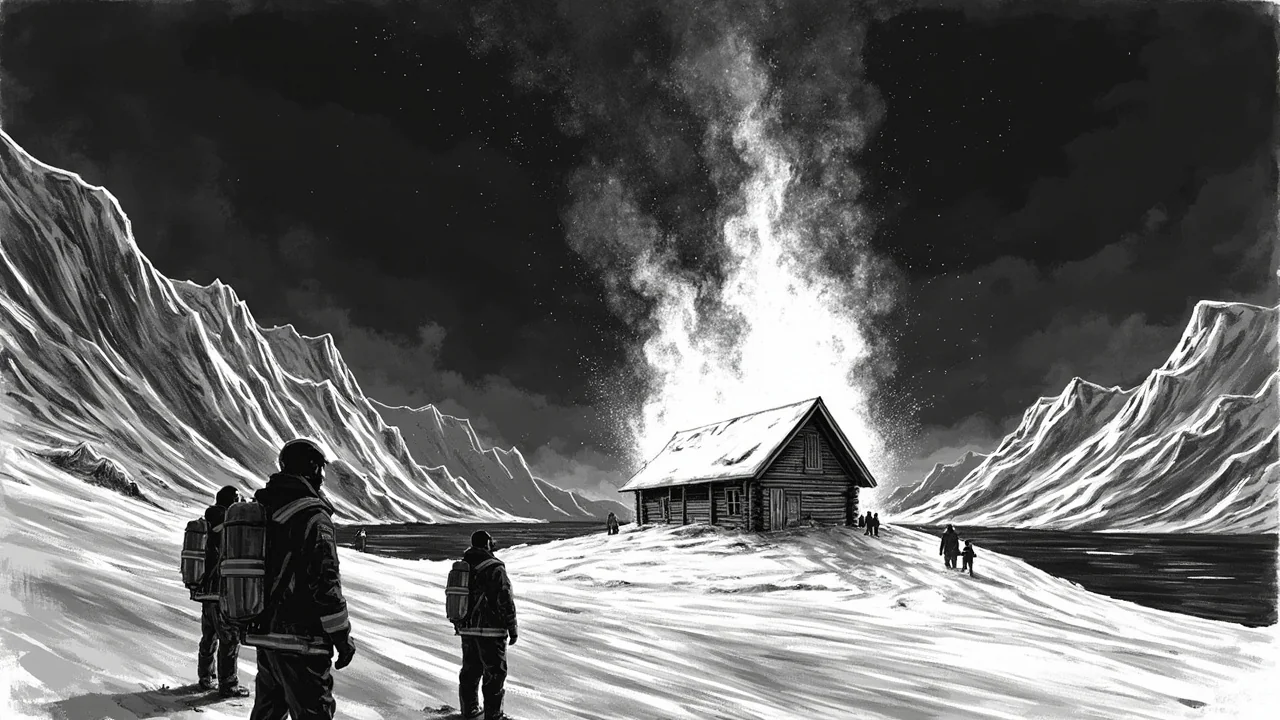
Norway's emergency services tackled a major industrial fire in Hurdal after an oil burner ignited inside a commercial building. The blaze burned powerfully through the roof, with firefighters confronting a 250-liter diesel tank connected to the heating unit. Quick intervention prevented a potential environmental and structural disaster in the municipality north of Oslo.
Flames Through the Roof
Operations leader Melissa Krag confirmed the severity of the situation in her initial report. "The fire service is on site. Burning powerfully through the roof," she stated. The description indicated a fully developed fire, requiring a significant response to achieve containment. The presence of the large diesel fuel source represented a primary hazard, raising the risk of explosion or a rapidly spreading fuel-fed fire. Fire crews from the surrounding region mobilized to the scene.
Containing the Fuel Hazard
The 250-liter diesel tank attached to the oil burner became the focal point of firefighting strategy. Safely cooling this tank to prevent a boiling liquid expanding vapor explosion (BLEVE) was a critical priority. Such an event could have propelled shrapnel and ignited fuel over a wide area, endangering responders and nearby structures. Firefighters used specialized foam and water applications to control the main body of the fire while simultaneously applying cooling streams to the tank. Their successful management of this dual threat marked a key turning point in the operation.
Industrial heating systems using oil burners are common in Norwegian commercial and agricultural buildings, particularly in rural areas like Hurdal. These systems are generally safe when properly maintained, but mechanical failure or human error can lead to dangerous situations. This incident will likely prompt local safety inspectors to review maintenance records for similar installations in the region.
A Community on Edge
While no injuries were reported, the fire caused considerable disruption. The affected commercial building suffered significant damage to its roof and interior areas exposed to heat and smoke. Nearby businesses and residents were alerted as a precaution, with some advised to close windows due to smoke drift. The sight of emergency vehicles converging on the small municipality created a palpable sense of alarm.
"Any major fire in a community like ours is deeply concerning," said a local council member who observed the response. "We are grateful for the swift action that prevented this from becoming something far worse. It serves as a stark reminder about the importance of fire safety protocols for all business owners." The economic impact on the business operating from the building will be assessed in the coming days.
Investigation and Aftermath
With the fire extinguished, the investigation phase began. Police and fire authorities will work to determine the precise cause of ignition. Forensic technicians will examine the remains of the oil burner unit, looking for signs of electrical fault, fuel line leakage, or improper operation. The building's owner and operators will be interviewed as part of the standard procedure.
The findings could influence regional fire safety advisories. Depending on the cause, the Directorate for Civil Protection (DSB) might issue guidance to municipalities regarding inspections of older oil-fired heating systems. Norway has stringent technical standards for such equipment, but enforcement relies on a combination of national regulation and local oversight.
Broader Implications for Industrial Safety
This fire, while contained, connects to a wider national conversation about industrial and commercial fire safety. Norway's focus is often on its large-scale offshore oil and gas installations, where safety regimes are world-class. Yet, smaller-scale industrial risks on the mainland require constant vigilance. Every municipality maintains a fire response plan that accounts for the specific hazards present in its district, from fuel storage to chemical use.
Experts note that preventative maintenance is the most effective tool against such incidents. "A well-maintained system, with regular professional servicing, has a very low risk profile," explained a fire safety engineer familiar with heating systems. "The challenge is ensuring that all property owners, especially for smaller businesses, prioritize this upkeep. An event like this underscores the potential consequences of neglect, even if that is not determined to be the cause here."
The successful containment of the Hurdal fire demonstrates the effectiveness of Norway's decentralized emergency response network. Even smaller municipalities have access to trained personnel and equipment capable of handling significant technical fires. This layered response system, where local teams are supported by regional specialists if needed, is a cornerstone of the country's civil protection strategy.
Looking Ahead
The scarred building in Hurdal will now enter the recovery phase, involving insurance assessors and construction crews. For the local fire service, the operation provides real-world data to refine future responses to similar incidents. The community's sense of security, momentarily shaken, will likely be reinforced by the professional response they witnessed.
This incident poses a silent question to business owners across the country: when was the last time your building's essential systems underwent a thorough safety check? As Norway moves towards greener energy solutions, replacing older oil-fired systems, this fire highlights the persistent risks embedded in existing infrastructure. The true measure of success will be whether this event sparks proactive inspections elsewhere, preventing the next potential blaze before it can even begin.