
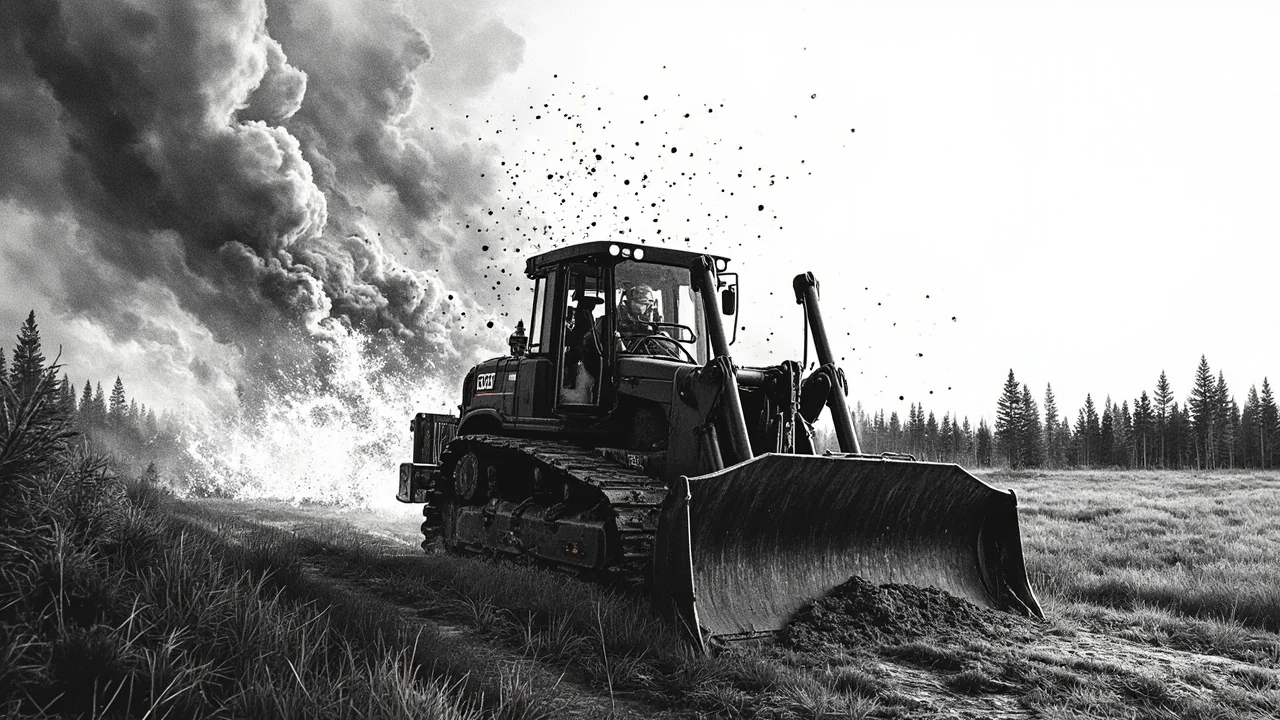
Norway terrain fire crews faced a 10 football pitch blaze in Høyanger Friday night after a dramatic call reported fire spreading toward buildings. The initial alarm at 6:43 PM described a large area of grass and heather ablaze near Torvund, with concerning wind conditions threatening nearby structures.
Vaktleder Børre Brekkvassmo at the 110 emergency center confirmed the severity. "The first report we got was dramatic. A large area was on fire, and there was a danger of it spreading to buildings. There has been a fair amount of wind in the area, but it has now subsided a little," Brekkvassmo said at 7:10 PM.
Private Bulldozer Operation
Before professional crews arrived, private individuals on site launched their own firefighting efforts. Their methods were unconventional. "Among other things, a man is said to have tried to extinguish the fire using a bulldozer," Brekkvassmo stated. This attempt to create firebreaks or smother flames with heavy machinery preceded the coordinated response.
Fire and rescue services dispatched personnel from Høyanger, Lavik, and a tanker truck from Sande. Both firefighters and police units arrived at the scene to assess the situation. The police reported that two cars, three caravans, a tractor, and a trailer had burned in the fire, illustrating the rapid spread and material damage.
Containing a Large-Scale Blaze
The operational challenge was significant from the start. Police described the burning area as roughly equivalent to ten football fields. Operations leader Steinar Hausvik in the police provided an update on the progress and persistent risks. By 9:18 PM, fire crews reported they were beginning to gain control. "But it is still blowing so it can quickly turn around," Hausvik cautioned, highlighting the volatile nature of terrain fires dependent on weather.
The strategic focus remained on preventing the fire from reaching homes and ensuring public safety. Authorities confirmed that, for the moment, there was no need for evacuation. Crucially, no personal injuries were reported, a key relief for emergency responders managing the complex incident.
Terrain Fire Risks in Norwegian Spring
This fire near Torvund underscores the persistent danger of terrain fires in Norway, particularly during dry, windy periods in spring and early summer. Dead grass and heather from the previous year can become highly flammable tinder, allowing fires to ignite easily and spread with startling speed. Wind acts as a primary accelerant, carrying embers and changing direction unexpectedly, which complicates containment efforts for ground crews.
The use of private machinery like a bulldozer, while illustrating local initiative, also points to the perceived urgency of the threat. Creating physical barriers by clearing vegetation is a standard firefighting tactic, but it is typically executed by trained personnel with proper support to ensure their own safety. The incident shows how communities in rural and semi-rural areas may take immediate action when they feel property or nature is under direct threat, before official help arrives.
Emergency Response Coordination
The multi-unit response from Høyanger, Lavik, and Sande demonstrates the standard mutual aid protocol for rural fire services in Norway. Tanker trucks are essential in areas where natural water sources are not immediately accessible, carrying large volumes of water to the firefront. Coordination between the police and fire service is standard for traffic management, scene security, and public communication during such events.
The successful initial containment reported by firefighters points to an effective deployment and attack strategy. However, the continued wind mentioned by operations leader Hausvik means the situation required sustained monitoring and manpower. Control does not equate to full extinguishment, and terrain fires can smolder in root systems for days, requiring thorough overhaul to prevent re-ignition.
Material Loss and Community Impact
The loss of vehicles and camping trailers represents a significant personal cost for those affected. For many in rural communities, tractors and trailers are vital tools for work or agriculture, not merely leisure assets. The burning of caravans also suggests the fire may have spread through an area used for seasonal recreation or storage. The financial and practical impact on the owners will be felt long after the smoke clears, involving insurance assessments and replacements that can be slow in remote locations.
The Path Forward and Continued Vigilance
As crews worked into the night to secure the perimeter and extinguish hot spots, the immediate danger to buildings appeared to be mitigated. The lack of needed evacuations was a positive sign. The coming hours and days would require patrols of the burned area to ensure no flare-ups occurred. An investigation into the fire's cause, standard procedure for such incidents, would likely begin once the emergency phase concluded.
This event serves as a seasonal reminder of the fire hazard present in the Norwegian countryside. Municipalities often issue warnings during dry spells, advising against open burning and urging caution with potential ignition sources like outdoor grills or machinery. The quick spread of this fire, covering approximately 50,000 square meters, shows how rapidly conditions can escalate, demanding both professional readiness and informed public caution to protect life, property, and the vulnerable landscape.