
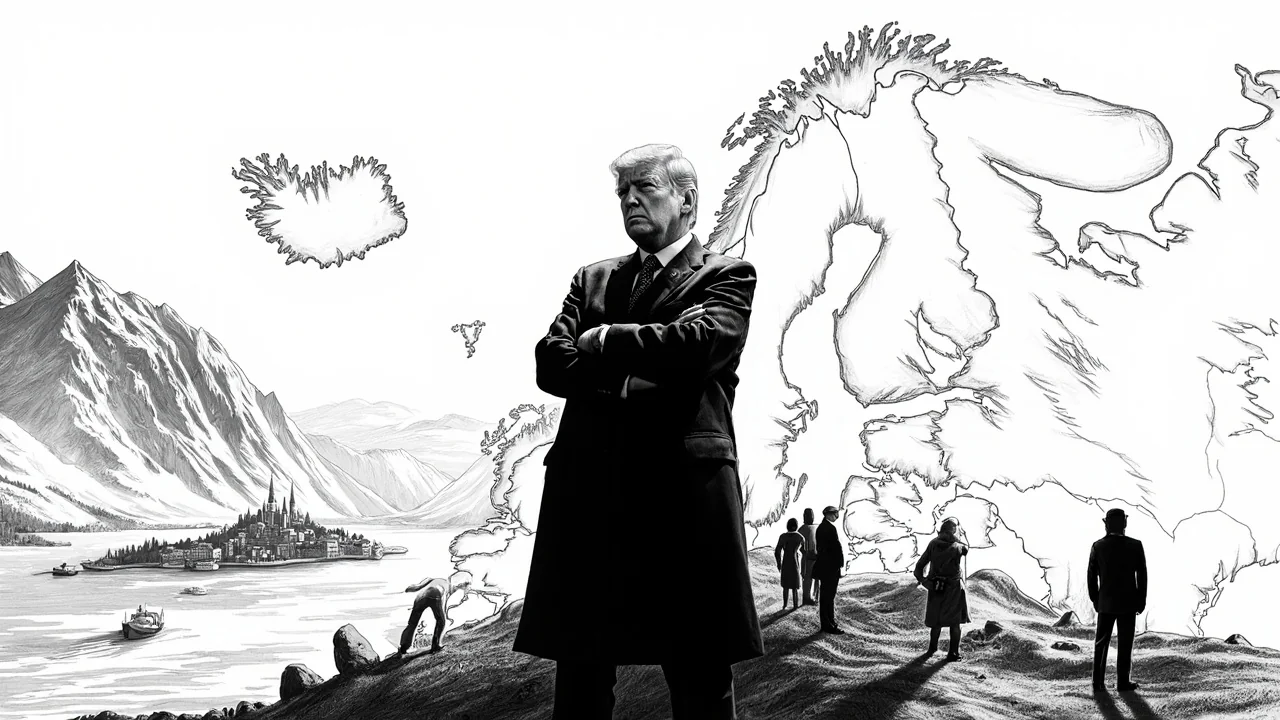
Norway's trade with the United States faces immediate disruption after Washington announced 10% tariffs on all imports from the Nordic country starting February 1. The duties will increase to 25% from June 1 if unresolved tensions over Greenland persist, targeting Denmark, Sweden, and Finland alongside Norway in a broad economic measure. This move escalates a diplomatic battle centered on Greenland, an autonomous Danish territory, and has sparked swift political and economic reactions across the region. For Norway, a nation deeply integrated into global energy markets, the tariffs pose a direct threat to key export sectors including oil, gas, and seafood, with potential ripple effects on Arctic policy cooperation. The Storting building in Oslo is now the focal point for urgent government deliberations as officials assess the damage.
The Tariff Announcement and Its Scope
The United States government confirmed the 10% across-the-board tariff on goods from Norway, Denmark, Sweden, and Finland, with a scheduled hike to 25% in June absent a resolution. This policy directly links trade penalties to the ongoing geopolitical friction over Greenland, where US strategic interests have clashed with European sovereignty concerns. The tariff list explicitly ties economic consequences to the Greenland events, marking a significant departure from standard trade disputes. Norwegian officials received the notification with alarm, recognizing that the February 1 deadline allows little time for mitigation. The broad Nordic targeting indicates a concerted US pressure campaign on multiple fronts.
Immediate Economic Consequences for Norway
Norway's export-driven economy braces for impact, with the oil and gas sector at the forefront of vulnerability. The country's oil production, including major fields like Johan Sverdrup in the North Sea and Snøhvit in the Barents Sea, now faces increased costs for US-bound shipments. Industry analysts predict that a 10% tariff could reduce profit margins on Norwegian crude, potentially affecting investment decisions in offshore projects. Beyond energy, seafood exports from fjords like those in Troms og Finnmark are also targeted, threatening a vital industry for coastal communities. The tariffs apply to all goods, meaning technology and manufacturing sectors will likewise contend with new barriers to the American market.
Political Reactions from the Storting
Politicians in the Norwegian Parliament, the Storting, convened emergency discussions to formulate a response. Members from both government and opposition parties expressed uniform concern over the tariffs' implications for national sovereignty and economic stability. A representative from the Standing Committee on Energy and the Environment said in a statement that the move undermines decades of transatlantic cooperation. The government in Oslo is now coordinating with counterparts in Copenhagen, Stockholm, and Helsinki to present a unified Nordic position. This collective approach aims to leverage diplomatic channels before the June 1 escalation, though the short timeline complicates negotiations.
The Arctic Policy Dimension
Norway's Arctic policy, which emphasizes environmental stewardship and international collaboration, faces new uncertainty due to the tariff dispute. The tensions over Greenland have spilled into broader Arctic governance, where Norway holds significant interests through its management of the Svalbard archipelago. Cooperation with the US on issues like maritime safety and resource development in the High North could be jeopardized by the trade measures. Officials in Oslo stress that Arctic stability requires predictable partnerships, and the tariffs introduce an element of friction that may hinder joint initiatives. This development comes as Norway seeks to balance its oil extraction in the Barents Sea with climate commitments.
Industry-Specific Impacts and Market Response
Within Norway's energy sector, companies operating fields like Statfjord and Ekofisk are recalculating their export strategies to account for the tariff costs. Preliminary estimates suggest that the 10% duty could translate to millions of dollars in additional expenses for major exporters, potentially affecting global oil prices if supply chains adjust. The seafood industry, particularly salmon farms in the Hardangerfjord region, reports anxiety over lost competitiveness in the US market. Financial markets in Oslo showed immediate volatility, with energy stocks dipping on the announcement. Business leaders call for swift government action to prevent long-term damage to trade relationships built over years.
Path Forward and Resolution Efforts
Norwegian authorities are exploring all diplomatic avenues to resolve the Greenland-related tensions before the June 1 tariff increase. This includes engaging US counterparts through NATO channels and bilateral dialogues focused on shared interests in the North Atlantic. The Storting is considering legislative measures to support affected industries, though options are limited in the face of external trade policies. A key question remains whether the Nordic bloc can negotiate a carve-out or if the tariffs will solidify into a prolonged trade barrier. The outcome will significantly influence Norway's economic planning for 2024, particularly in budget allocations for energy and maritime sectors.