
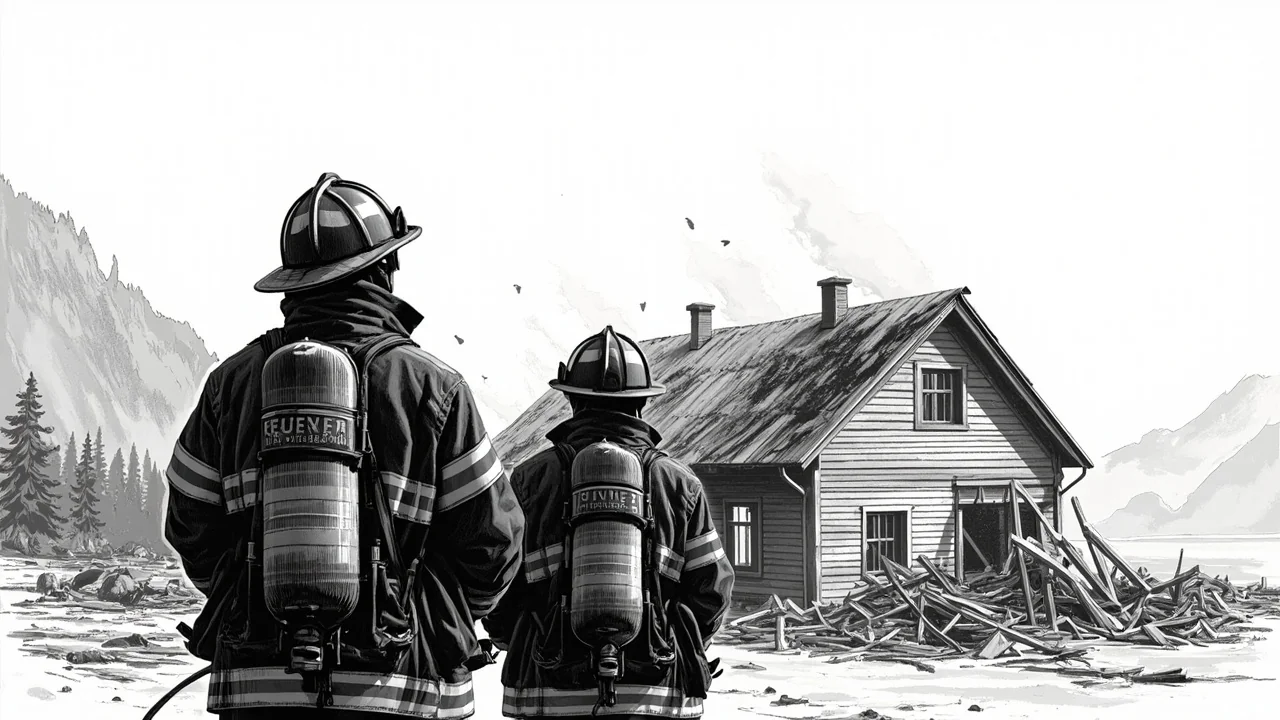
Norway's fire service is reeling from the deaths of two firefighters in a residential blaze. Police have now charged the homeowner of the burnt house in Verdal with possible negligent creation of danger, a serious development that intertwines a fatal accident with a criminal probe. The separate investigation into the firefighters' deaths as a workplace accident has also led to the formal charging of the local fire department, a routine but significant step in such tragedies. This case now centers on the potential link between a property owner's actions and the catastrophic outcome for the first responders called to help.
A Fatal Response in Trøndelag
The incident occurred in Verdal, a municipality in Trøndelag county, where the local volunteer fire department responded to a house fire. During firefighting operations inside the building, two smoke divers, the term for specially trained firefighters who enter hazardous environments, lost their lives. The specific cause of their deaths has not been publicly disclosed by investigators. The house was completely destroyed by the fire, leaving a scene that required extensive examination by both police and the Norwegian Labour Inspection Authority, which handles serious workplace accidents.
Dual Investigations Unfold
The legal aftermath has split into two distinct but parallel investigative tracks. The first, conducted by the Trøndelag Police District, focuses on the homeowner's potential criminal liability. The charge of negligent creation of danger implies investigators are examining whether actions or omissions by the property owner inadvertently set the conditions that led to a dangerous situation. This could involve factors related to the fire's origin or the state of the property that exacerbated risks for emergency personnel. Police have not detailed the specific allegations behind the charge.
The second investigation treats the firefighters' deaths as an industrial accident. Under Norwegian law, employers are responsible for providing a safe working environment. The Verdal fire department, as the employer of the deceased firefighters, has been formally charged in this process. This is a standard procedural step in fatal workplace incidents, initiating a detailed review of the department's protocols, equipment, training, and command decisions during the emergency response. The goal is to determine if all safety regulations were followed and to identify any systemic failures.
Workplace Safety Under Scrutiny
The routine charging of the fire service highlights the stringent framework governing occupational safety in Norway. The Norwegian Labour Inspection Authority (Arbeidstilsynet) holds broad powers to investigate and sanction employers following serious accidents. Their findings in this case could lead to mandated changes in operational procedures for fire departments across the country, particularly for high-risk smoke diving operations. The authority will scrutinize everything from risk assessments conducted at the scene to the functionality of breathing apparatus and communication systems used by the team.
This tragedy also casts a spotlight on Norway's network of largely volunteer fire brigades, especially in rural and semi-rural areas like Verdal. These crews perform an essential, dangerous public service with professional training but often without the full-time staffing of major city departments. The investigation will assess whether resource constraints or organizational factors played any role in the outcome. Previous fatal incidents involving emergency responders in Norway have historically led to nationwide reviews of equipment standards and operational guidelines.
A Community and a Service in Mourning
The loss has deeply affected the close-knit community of Verdal and the broader Norwegian emergency services community. Firefighters across the country have held moments of silence, and flags have flown at half-mast at stations. The deaths represent a rare and severe event in Norwegian firefighting, a profession where teamwork and trust in safety systems are paramount. The simultaneous criminal charge against the homeowner adds a complex layer of anguish and legal gravity to a community already coping with grief.
Local officials have expressed their profound sorrow while emphasizing full cooperation with the investigating authorities. The fire department involved is providing support to the families of the deceased and to the other responders who were on scene, a process that will continue long after the initial headlines fade. The incident serves as a stark reminder of the inherent dangers faced by firefighters every time they respond to a call, regardless of the location or perceived scale of the incident.
Legal and Procedural Pathways Ahead
The homeowner, now formally charged, will go through Norway's legal process, which may involve further investigation, possible plea negotiations, or a trial. The penalty for negligent creation of danger, if proven, can include imprisonment, reflecting the seriousness with which the law views endangering lives. Meanwhile, the workplace accident investigation will proceed methodically, likely taking many months to complete. Its conclusion could result in recommendations, orders for improvement, or potentially fines for the fire department if serious regulatory breaches are found.
Both investigative threads aim to establish a clear, factual account of what happened on that tragic day. They seek to determine accountability, whether criminal or administrative, and most importantly, to derive lessons that could prevent future fatalities. For Norway's fire and rescue services, the ultimate outcome will be measured not just in legal rulings, but in whether it leads to tangible enhancements in the safety of those who rush into danger. The deaths of two firefighters in Verdal have initiated a painful but crucial examination of responsibility, from the ownership of a property to the protocols of national emergency response.