
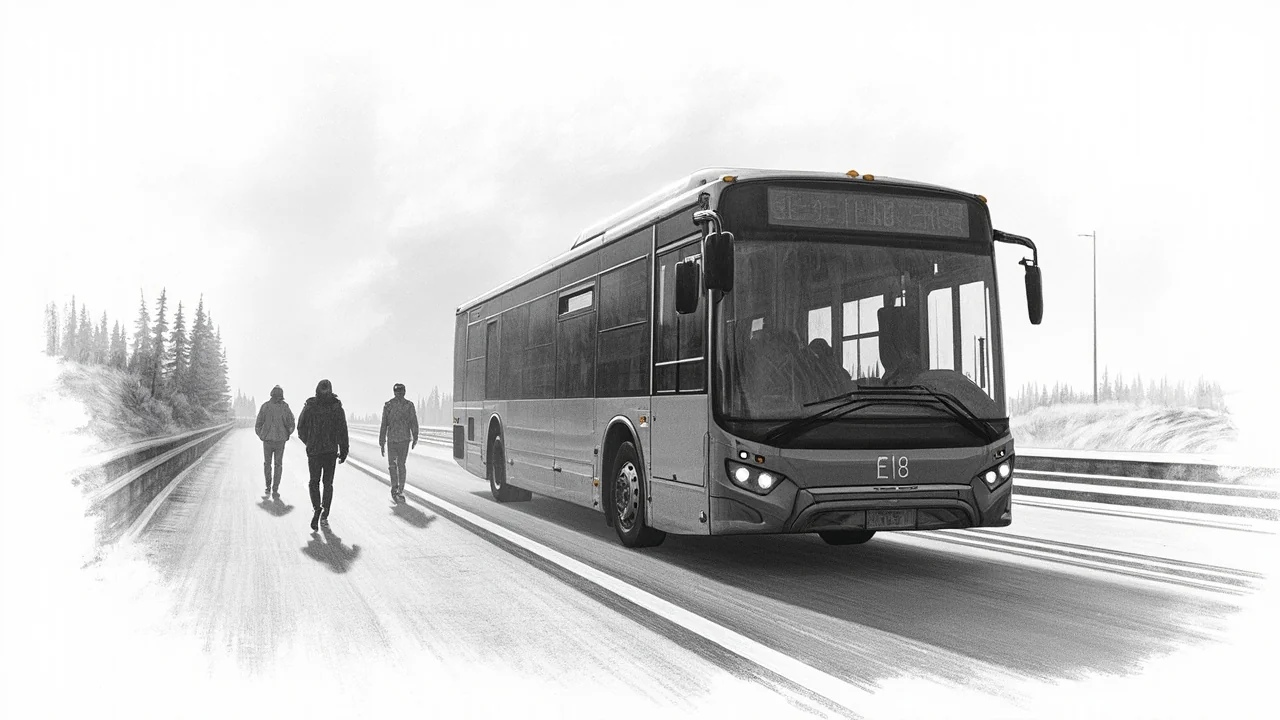
Norway's emergency services responded to a major electric bus fire on the E18 highway at Kongshavn in Oslo on Monday afternoon. The incident, stemming from a collision between a bus and a private car, caused significant traffic disruptions but resulted in no serious injuries.
Police Operations Manager Bjarne Pedersen confirmed the details in a statement. "It does not appear there are any personal injuries," Pedersen said initially. He later updated that there was "heavy smoke development and fire in the bus, which is an electric bus." Authorities confirmed the bus was not carrying passengers at the time of the collision and subsequent fire. The bus driver was taken to a medical clinic for evaluation as a precaution.
Emergency Response and Traffic Chaos
The fire required a substantial response from police, fire, and ambulance services. The intense smoke from the burning electric bus was visible from a considerable distance, drawing public attention. As crews worked to extinguish the blaze and secure the scene, police were forced to close all lanes of the E18 in both directions. This major arterial route, critical for traffic moving into and out of central Oslo, was completely blocked, creating severe congestion throughout the surrounding area. Commuters faced long delays during the afternoon rush hour as authorities diverted traffic.
The closure impacted not just private vehicles but also public transport and freight routes that rely on the E18 corridor. Traffic management systems alerted drivers to seek alternative routes, but the sudden nature of the incident led to widespread gridlock. The clean-up and investigation kept the highway closed for several hours, with a phased reopening expected only once the scene was deemed safe and evidence was collected.
Focus on Electric Vehicle Safety
While the direct cause of the fire remains under investigation by the Norwegian Safety Investigation Authority (NSIA), the incident immediately casts a spotlight on the safety protocols for electric vehicles, particularly in public transport. Norway has the world's highest per capita adoption of electric vehicles, and its capital, Oslo, has aggressively electrified its bus fleet as part of its ambitious climate goals. This commitment is central to Norway's national strategy to reduce carbon emissions from the transport sector.
The fire on the E18 presents a tangible test of the infrastructure and emergency procedures designed for this new technology. Electric vehicle battery fires, while statistically rare, pose unique challenges. They can burn at extremely high temperatures, require large amounts of water or specific extinguishing agents to cool, and carry a risk of thermal runaway—where damaged cells can reignite hours or even days after the initial fire is put out. Fire departments in Norway have undergone specialized training for such events, and this incident will be closely studied to assess the effectiveness of current response strategies.
Implications for Policy and Public Perception
This event occurs at a sensitive time for Norwegian energy and transport policy. The government continues to promote electric mobility as a cornerstone of its green transition, even as it faces scrutiny over the broader environmental impact of battery production and the sourcing of raw materials. A high-profile incident involving a public transport electric bus has the potential to influence public confidence.
Policymakers and city officials will be monitoring the NSIA's findings closely. The investigation will likely examine the crash dynamics, the specific bus model and battery system involved, the immediate response, and the overall handling of the incident. The results could inform future safety regulations, manufacturing standards, and operational guidelines for electric buses not only in Oslo but across the country. There may be calls for a review of emergency response protocols specific to electric public transport vehicles on major highways and in tunnels.
Furthermore, the incident highlights the interconnected risks of modern transport systems. A single collision can trigger a cascade of consequences: a fire, a major highway closure, widespread economic disruption from delayed logistics, and a significant draw on public safety resources. This underscores the importance of resilience planning in urban infrastructure, especially as cities become more reliant on complex electrical systems for mobility.
Looking Ahead
For now, the primary facts are clear: a collision led to a dramatic fire, the emergency response prevented injuries, and a major transport artery was crippled for hours. The bus driver's condition is reported as stable. The damaged vehicles have been removed for forensic examination.
As the investigation proceeds, the key questions will focus on the technical cause of the fire and the efficacy of the response. The answers will carry weight far beyond this single stretch of asphalt at Kongshavn. They will contribute to an ongoing national conversation about the practical realities of Norway's electric future, where safety and sustainability must be continuously balanced. For Oslo's commuters, however, the immediate lesson was a stark reminder of the city's vulnerability to sudden disruptions on its key roadways.