
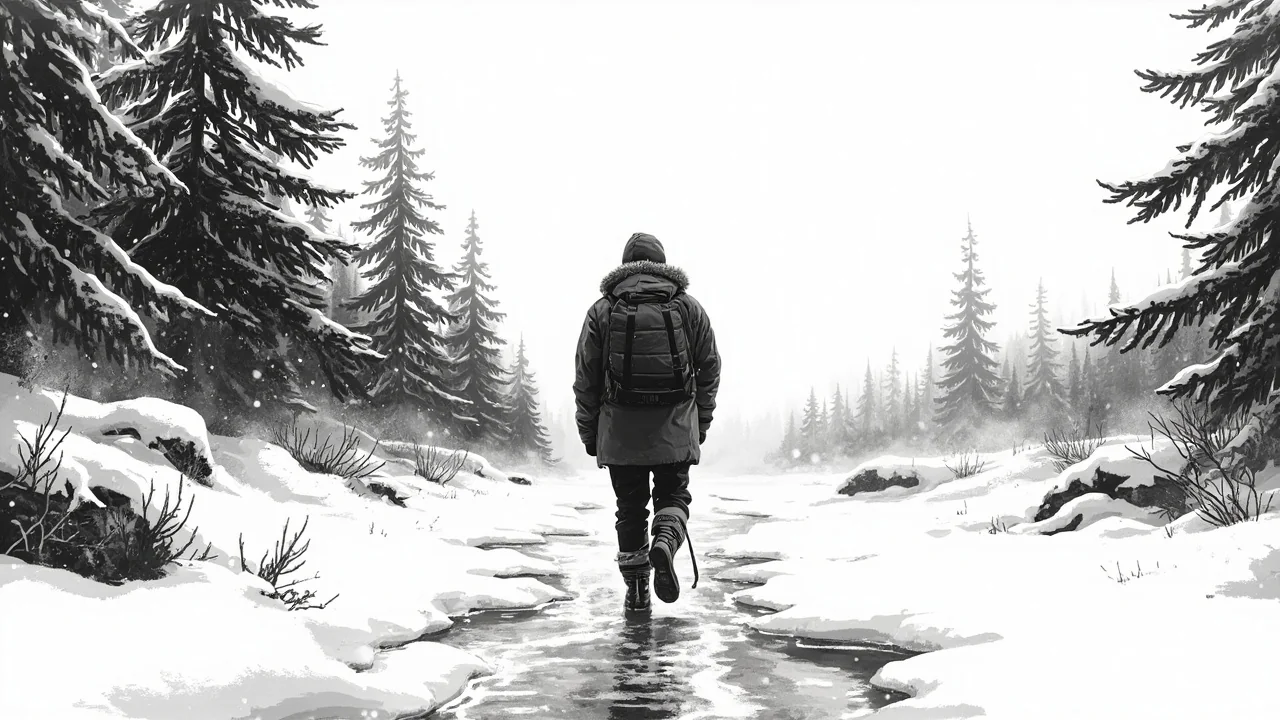
Norway's meteorological institute has issued a yellow-level danger warning for ice across southern and eastern regions. The warning follows forecasts of rain freezing on cold surfaces as a mild weather front moves in, creating hazardous conditions for drivers and pedestrians.
“Find your spikes,” meteorologists stated bluntly in their public advisory. The warning highlights a specific and common winter hazard: rain that freezes instantly upon contact with roads and sidewalks that remain below freezing. In higher elevations and inland areas, precipitation will initially arrive as sleet and snow, further complicating travel.
The agency warns of locally difficult driving conditions. This type of warning, while not uncommon in a Norwegian winter, triggers a well-rehearsed public response. It signals the immediate need for personal safety measures in a country where winter preparedness is a cultural norm.
The Science Behind the Slick Hazard
This particular ice event is a classic transitional winter phenomenon. A mass of milder Atlantic air is pushing into Norway, but the ground—especially in inland valleys and shaded urban areas—has been kept cold by a preceding high-pressure system. When the rain hits these frozen surfaces, it doesn't soak in or run off; it forms a clear, hard glaze of ice known as “glattis.”
This ice is often more dangerous than snow. It is transparent, making it nearly invisible on asphalt—a condition drivers call “black ice.” On sidewalks, it creates a perfectly smooth, treacherous sheet. The meteorologists' simple instruction, “find your spikes,” is the most effective countermeasure. Spiked shoe attachments, or “brodder,” are ubiquitous in Norway, carried in pockets and purses from November through March.
“The yellow warning is for a localized, high-impact event,” explains a climatologist familiar with the institute's protocols. “It’s not about a massive storm, but about a specific combination of temperature and precipitation that creates disproportionate risk. A few millimeters of freezing rain can paralyze local traffic more effectively than a decimeter of snow.”
A Nation's Winter Reflex
The public response to such a warning reveals much about Norwegian society. In hardware stores and petrol stations, sales of ice grips and windshield scrapers will see a momentary spike. Municipal road crews, particularly in affected counties like Viken, Innlandet, and the Oslofjord region, will have been monitoring the forecast and are likely pre-treating major roads with brine or gravel.
For commuters, especially those who must traverse mountain passes like the E16 towards Hønefoss or the E6 through the interior, the warning prompts a reassessment. Many will opt for public transport, which in cities like Oslo boasts high reliability in winter conditions. The Norwegian Public Roads Administration (Statens vegvesen) updates its online road condition maps in real-time, a tool heavily used during such alerts.
This ingrained preparedness is a product of both geography and policy. Norway’s elongated shape and varied terrain mean microclimates can change dramatically over short distances. A clear morning in Bergen can coincide with an ice storm in the mountain pass to Oslo. The national emphasis on self-reliance, or “dugnad,” extends to winter safety; individuals are expected to take primary responsibility for their own mobility and safety.
Economic and Daily Life Impacts
While a yellow warning is the second-lowest level on Norway's four-tier danger scale (yellow, orange, red), its economic impact is not insignificant. Logistics and transport companies face immediate delays. Last-mile delivery services for goods and food see disruptions as drivers exercise extreme caution. For the construction and service industries, where work often continues outdoors year-round, the day brings increased risk of slips and falls, a major cause of workplace injury in winter.
School administrators and parents also heed the warning. Some schools may delay outdoor breaks or remind children to wear appropriate footwear. The warning serves as a communal reminder, a digital nudge that cuts through the routine of a winter day.
Norway's approach to winter hazards is systematic. The meteorological institute’s warnings are integrated directly into navigation apps like Google Maps and Yr, the institute's own popular service. This seamless integration between official data and daily-use technology ensures the warning reaches people where they are making decisions—in their cars or planning their journeys.
Beyond the Warning: A Culture of Preparedness
The “find your spikes” advisory is more than a weather notice; it is a reflection of a national contract with nature. Norwegians maintain a respectful, prepared relationship with their climate. The average household owns multiple sets of winter tires, ice grips, shovels, and emergency kits for their vehicles. This is not seen as paranoia but as simple prudence.
This cultural mindset is supported by infrastructure. Heated sidewalks are common in city centers like Oslo's Karl Johans gate. Public buildings have sturdy mats and often buckets of gravel at entrances. The national focus on “friluftsliv” (outdoor life) demands and cultivates a population that understands how to read weather and terrain.
Experts point to this as a key reason why Norway, despite its harsh winters, maintains high mobility and relatively few weather-related fatalities. “The warning system is effective because it speaks to a prepared audience,” says a researcher in societal safety. “The message isn't ‘be afraid,’ it’s ‘execute your plan.’ ‘Find your spikes’ assumes you already own them and know how to use them. It’s a call to action, not to alarm.”
Looking Ahead in a Changing Climate
This specific ice warning, while routine, also fits into a broader pattern being studied by Norwegian scientists. Climate change is altering precipitation patterns and increasing the volatility of winter weather. Warmer seas can lead to more moisture in the atmosphere, potentially intensifying rain events. Meanwhile, cold snaps can still grip the continent, leading to sharp transitions like the one triggering this warning.
Researchers are examining whether the frequency or character of these freezing rain events is changing. A potential increase in such “rain-on-snow” or “rain-on-ice” events could have implications for everything from road maintenance budgets to wildlife, as ice layers can lock away forage for animals like reindeer.
For now, the system works as intended. The yellow warning flashes on phones and websites. People sigh, rummage in their hall closets for their ice grips, and walk a little more carefully. The trains may run a minute late, and the morning commute takes a bit longer. It is a small, seasonal adjustment in a country that has learned to move with the rhythms of its formidable winters. The ultimate question is not if the ice will come, but whether a society is ready to meet it. Today, as the meteorologists advised, Norway is simply being told to lace up.