
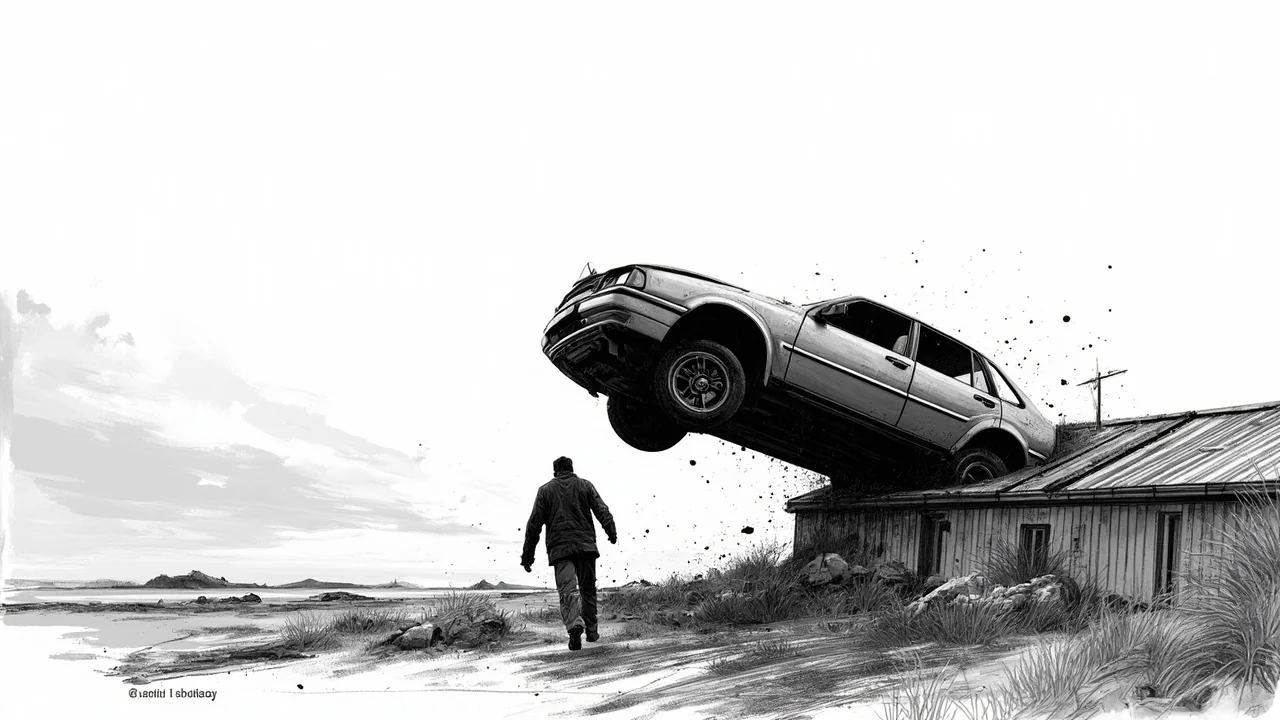
Norway's police are investigating one dramatic single-vehicle crash on Karmøy after the driver initially fled the scene of his overturned car. The incident, reported to police on Wednesday evening, saw a passenger car come to rest on its roof following a loss of control. No individuals were found at the scene when authorities arrived. Operations leader Victor Fenne-Jensen confirmed that police located the suspected driver just over an hour later. "A man in his 50s. He appears unharmed," Fenne-Jensen said. The man was not the registered owner of the vehicle and was driving without a valid license, police stated. By 9 PM, he was in police custody for questioning. "He is known to police from before with a number of traffic cases and drunk driving," Fenne-Jensen noted, while adding police had no current information suggesting impairment was a factor in this specific case.
Details of the Karmøy Incident
Authorities received the report of the crash on Wednesday night in Vestland county. The specific location on the island of Karmøy was not disclosed in the initial statement. The sole vehicle involved had suffered significant damage from the rollover. The rapid departure of the driver from the crash site prompted a search. Police work led to contact with the man believed to be responsible within approximately 70 minutes of the initial call. This swift resolution prevented a prolonged public safety concern regarding an unaccounted-for driver potentially injured or in shock.
Driver's History and Legal Position
The suspect's prior record with law enforcement, specifically for traffic violations including incidents of drunk driving, adds context to the event. Norwegian law treats driving without a valid license as a serious offense, often resulting in substantial fines and potential imprisonment. The act of leaving the scene of an accident, known as "hit-and-run" or "ulykkesstedet" in Norwegian, carries additional severe penalties. These can include license revocation for a minimum of two years and a jail sentence, particularly if the crash caused injury or significant property damage. The fact that the man was not the car's owner raises further legal questions about the circumstances under which he was operating the vehicle.
Police Procedure and Public Safety
Victor Fenne-Jensen's statement outlines a standard but efficient police response. Securing the crash scene, ensuring no injured parties were present, and then initiating a search for the missing driver are protocol. The operasjonsleder's careful distinction between the driver's known history and the active investigation's findings—stating they had "no opinion" yet on whether impairment was involved—demonstrates adherence to procedural correctness. This separation of fact from prior record is crucial for the integrity of the ongoing investigation and any subsequent legal proceedings. The case highlights the challenges police face with repeat offenders in the traffic system.
The Bigger Picture on Norwegian Roads
While a single-vehicle crash on an island may seem isolated, it connects to broader national concerns. Norway maintains strict traffic laws aimed at preserving its strong road safety record. However, incidents involving unlicensed drivers and those fleeing crashes present persistent problems. Data from Norwegian public roads authorities often cites driver behavior as a leading contributor to accidents. This event on Karmøy will likely be logged as another case where human factors—decision-making, disregard for legal driving prerequisites, and the choice to flee—were central. It serves as a stark reminder that even with advanced vehicle safety technology and good infrastructure, the individual behind the wheel is the most critical variable.
What Happens Next for the Driver
The man in his 50s now faces a multi-faceted legal reckoning. Police will submit their investigation report to the Norwegian prosecuting authority, Statsadvokaten. He can be charged with multiple counts: driving without a valid license, unauthorized use of a vehicle if the owner did not consent, and the severe charge of leaving the scene of an accident. His prior record will be considered during sentencing if he is convicted. The court will weigh the absence of injury to others and his immediate cooperation upon contact as potential mitigating factors, but the primary offenses are serious. The case will proceed through the Norwegian legal system, where penalties are designed to deter such dangerous behavior.
A Community's Response
For residents of Karmøy, the sight of an overturned car and a missing driver disrupts the community's sense of security. It prompts questions about who is using their local roads and under what conditions. While Norway's overall crime rates are low, traffic offenses remain a common point of contact between citizens and law enforcement. The successful and relatively quick resolution of this case by Vestland police may provide some reassurance. It demonstrates the operational capacity to respond to and resolve such incidents efficiently, limiting the period of public uncertainty and potential danger.
Final Assessment of the Case
This incident encapsulates a clear failure at multiple levels: the individual's decision to drive without legal entitlement, the loss of control of the vehicle, and the subsequent choice to abandon the crash site. The police response was textbook in its execution, moving from scene security to suspect location within a short timeframe. The legal consequences awaiting the driver are significant and intended to reinforce the societal contract governing road use. As the investigation transitions to the judicial phase, the core facts remain undisputed—a car on its roof, a driver who fled, and a history that suggests a pattern of risky behavior. The question for Norwegian authorities remains how to effectively break such patterns before they lead to even more severe outcomes on the nation's roads.