
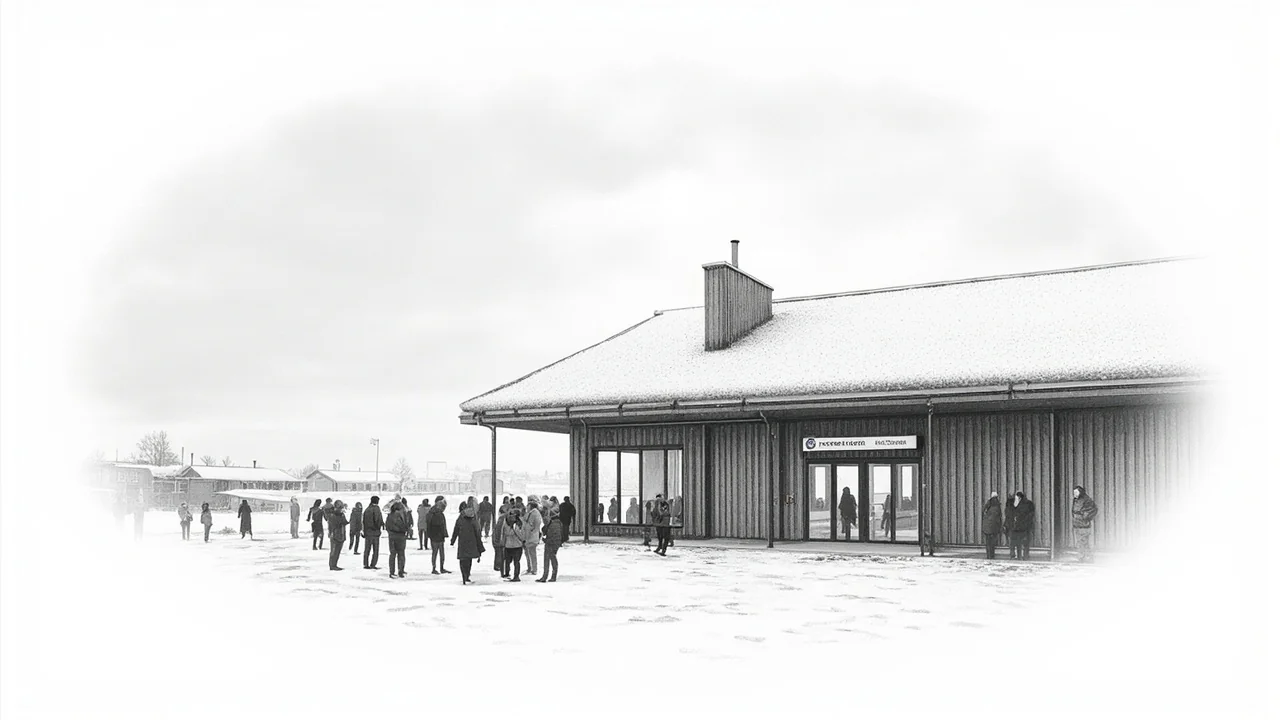
Norway's passport office in Bodø has suspended operations due to a critical heating system failure, leaving residents in the Arctic city unable to process travel documents. The police station, which houses the passport and immigration administration, has fallen several degrees below the Norwegian Labour Inspection Authority's recommended minimum temperatures. This technical fault, exacerbated by cold weather, has created a significant administrative bottleneck in Northern Norway, with existing appointment wait times already stretching into April and May.
All scheduled appointments for the coming days have been cancelled, with affected individuals notified via SMS. Police authorities expect the closure to last several days but hope to resume normal operations soon. They have pledged to release additional appointment slots, including evening hours, once the heating and ventilation system is repaired. The incident highlights the vulnerability of essential public services to infrastructure issues, particularly in Norway's demanding northern climate.
A Chilled Halt to Essential Services
The temporary shutdown centers on the Bodø police station, a hub for both passport issuance and immigration administration. Officials confirmed the closure was necessary because indoor temperatures had dropped significantly below the 18-degree Celsius minimum recommended by the Arbeidstilsynet for office environments. This was caused by a combination of faulty equipment in the station's heating and ventilation plant and ongoing cold weather in the region. For citizens, it means a complete stop to in-person application processing during one of the busiest periods for passport renewals ahead of the summer travel season.
"The cold weather combined with faults in the plant means the indoor temperature is several degrees below the Labour Inspection Authority's recommendations," police said in a statement. The dual impact on both the Passkontor and the Utlendingsforvaltning (immigration administration) under one roof amplifies the disruption. This is not a simple administrative delay; it is a full cessation of service due to an occupational health and safety standard being breached. The police's decision to close prioritizes employee welfare over service continuity, a calculation mandated by Norway's strict workplace regulations.
Compounding an Existing Backlog
The heating failure could not have occurred at a more inconvenient time for Bodø's residents. Police data indicated a pre-existing wait time for passport appointments, with available slots not appearing until April or May. This backlog is a national issue reflected in Bodø, stemming from high post-pandemic demand for travel documents and centralized processing challenges. The sudden closure for technical reasons adds an unpredictable layer of delay on top of this known queue. Individuals with imminent travel plans or expiring residency permits now face heightened uncertainty.
Authorities have stated their intention to mitigate the impact once services restart. "It will be possible to book more appointments, also in the afternoon, as soon as the fault is fixed," the police announcement noted. This suggests a planned surge capacity to work through the accumulated demand. However, the effectiveness of this measure depends entirely on the speed of the repair and how quickly the system can return to full operational capacity. Each day of closure pushes the existing backlog further out and risks creating a spike in demand that could overwhelm the system upon reopening.
Infrastructure and Climate: A Northern Vulnerability
This incident underscores a broader, often overlooked, challenge in Norway: the reliability of public infrastructure in harsh climates. Bodø, situated north of the Arctic Circle, experiences long, cold winters where functional heating systems are not a luxury but a critical requirement for any building. The failure of such a system in a key government building points to potential issues with maintenance, aging infrastructure, or the intensity of seasonal strain. While rare, such failures can paralyze local access to state services, with fewer alternative offices available in the north compared to more populous southern regions.
The concentration of services—passports, ID cards, and immigration processing—in a single affected location creates a single point of failure. There is no mention of contingency plans to redirect citizens to neighboring police districts, such as those in Narvik or Mo i Rana, which may also have their own capacity constraints. This forces residents to wait. The situation provides a case study in the logistical challenges of administering a sprawling, geographically diverse country like Norway, where distance and climate directly impact service delivery.
Analysis: When the Physical World Disrupts Digital Governance
From a policy perspective, the Bodø closure is a reminder that even in a highly digitalized society like Norway, the physical world can still bring essential services to a standstill. The country has made strides in digital public services, but core functions like biometric data collection for passports and residence permits require in-person attendance. This creates a critical physical bottleneck. The incident raises questions about redundancy in public service delivery networks and whether more decentralized or resilient systems are needed, especially in remote regions.
Furthermore, it highlights the tension between employee rights and citizen service expectations. Norwegian law firmly protects workers from unsafe conditions, including excessively cold workplaces. The police administration had no legal choice but to close the offices. However, for the citizen needing a passport for a family emergency or a residency card for work, this legal necessity translates into personal frustration and potential hardship. The state's duty of care to its employees directly conflicts with its duty to provide accessible services, a conflict resolved in favor of the former, as mandated by law.
The Path to Restoration and Lessons Learned
The immediate path forward is technical: engineers must diagnose and repair the fault in the heating and ventilation plant. Only then can the police station be brought back to a compliant temperature and staff return to their posts. The subsequent administrative challenge will be greater: clearing the backlog of cancelled appointments while absorbing the constant stream of new applications. The promise of extended afternoon hours is a start, but it may require temporary staffing increases or streamlined processes to prevent the disruption from having a ripple effect lasting months.
For Norwegian authorities, this should prompt a review of infrastructure resilience in key service buildings across the north. It also argues for a continued push towards digital solutions where legally and technically possible, to reduce dependency on single physical locations. For Bodø's residents, the episode is a lesson in the fragility of modern administrative systems. It reinforces the old Norwegian advice: apply for your passport well in advance, especially if you live where the winter is long and the machinery that keeps the cold at bay is fallible. As the police work to fix the heating, the cold reality of delayed plans settles in for many in this Arctic city.