
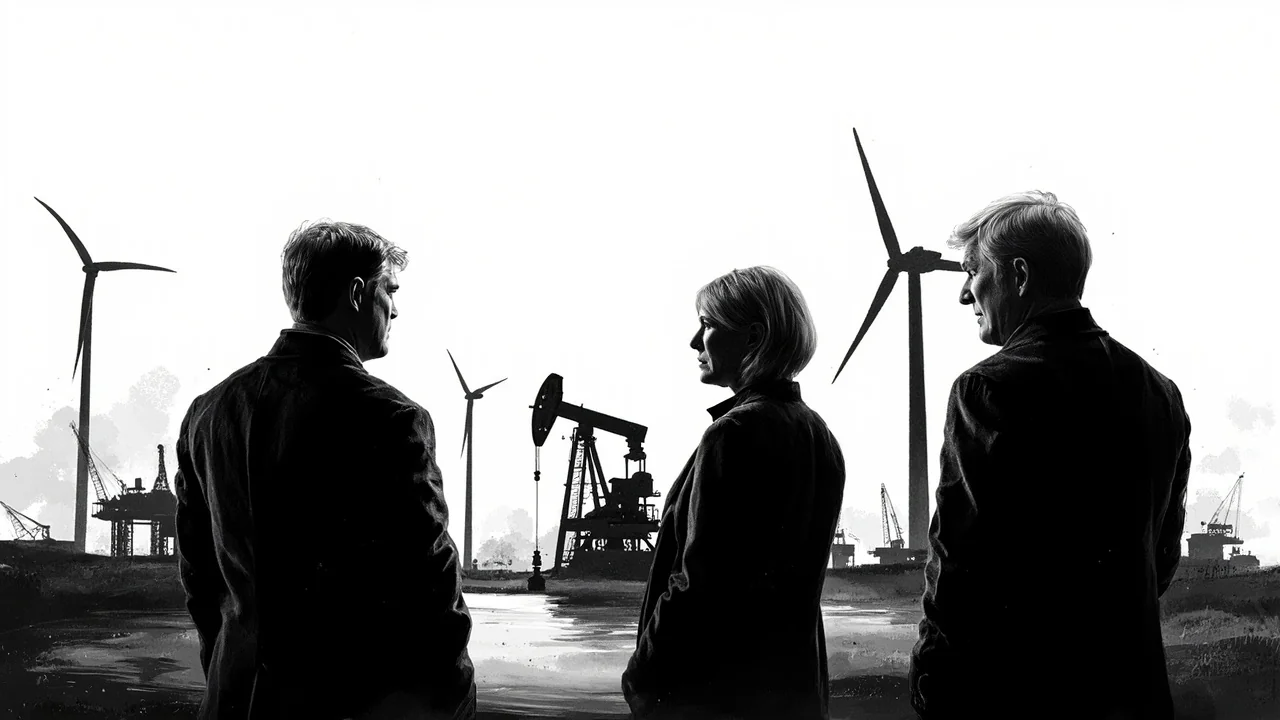
Norway's government will present a major parliamentary report on its oil and gas future in 2027. Prime Minister Jonas Gahr Støre announced the plan on Monday. The report will outline the prospects for Norwegian petroleum activity and address critical choices for production from the 2030s onward. These choices include exploration areas and new technologies built on the foundation of the oil and gas industry. This announcement sets the stage for a defining national debate about Norway's economic engine and its climate commitments. The 2027 timeline signals a deliberate, multi-year process to chart the course for the nation's most important industry.
A Strategic Pause for a Defining Debate
The 2027 date is not an accident. It represents a strategic pause. The report will arrive after the next parliamentary election, due in 2025. This timing pushes the most consequential decisions about Norway's long-term petroleum policy into the next political cycle. It allows the current government to avoid making immediate, potentially divisive, declarations about scaling down exploration or production. Instead, it initiates a period of study and discussion. "The report will describe the outlook for petroleum activity in Norway," Støre said. He emphasized it would handle "central crossroads that will be important for production from the 2030s and onward." This includes decisions on which new areas, if any, should be opened for exploration. It also covers how to pivot the industry's vast expertise toward new energy technologies.
The Core Dilemma: Wealth Versus Climate
At the heart of the upcoming report is Norway's fundamental dilemma. The petroleum sector is the backbone of the national economy and the source of its massive sovereign wealth fund, valued at over $1.6 trillion. It finances public services, pensions, and the green transition. Yet, Norway is also a global advocate for climate action. It has committed to ambitious emission reduction targets. The country faces increasing international and domestic pressure to explain how continued oil and gas extraction aligns with a 1.5-degree Celsius global warming limit. The 2027 report will force a direct confrontation with this tension. It must reconcile the economic need for a managed, profitable decline with the climate imperative to reduce fossil fuel production. Industry experts note the report will likely focus on the concept of "managed decline" rather than an abrupt halt.
Technology and Transition: The "New Solutions"
A key element of Støre's announcement was the focus on technology. He specifically mentioned "new technologies and solutions built on the shoulders of the oil and gas industry." This is a reference to Norway's stated ambition to use its offshore expertise for carbon capture and storage (CCS), hydrogen production, and offshore wind. The government and industry argue that the engineering prowess, project management skills, and financial muscle developed over 50 years in the North Sea are irreplaceable assets for the energy transition. The report will likely assess the commercial readiness and potential of these technologies. It will examine whether they can generate sufficient jobs and investment to replace the economic role of oil and gas over time. The success of major projects like the Longship CCS initiative will be closely watched as a benchmark.
Political Reactions and the Road to 2027
The announcement has already drawn lines for future political battles. Parties on the left, including the Socialist Left Party, will push for the report to mandate a clear end date for new exploration and a firm plan for production decline. They argue that 2027 is too late and that decisions are needed now to meet climate goals. The Conservative Party and the Progress Party, traditionally strong supporters of the oil industry, will likely advocate for maximizing resource extraction for as long as there is a global market. They emphasize energy security and national wealth. The governing Labour Party and its coalition partner, the Centre Party, are navigating a middle path. They seek to maintain industry support and jobs while gradually steering the economy toward a greener future. The 2027 report will be the document that tries to codify this difficult compromise.
Global Context and Market Realities
Norway's 2027 decision will not be made in a vacuum. It will be heavily influenced by global energy market trends, European energy security concerns, and technological breakthroughs elsewhere. The war in Ukraine solidified Norway's role as Europe's most stable supplier of natural gas. This geopolitical reality adds a layer of complexity to any plan to rapidly wind down production. European demand for gas is expected to decline in the long term but may remain significant for years. The report will need to model various global demand scenarios. It must assess the risk of Norway leaving resources in the ground while other nations continue to produce. The economic analysis will be scrutinized, particularly its projections for future oil and gas prices and the fiscal implications for the Norwegian state.
A Nation Preparing for a Post-Oil Era
Ultimately, the 2027 parliamentary report is more than a policy document. It is the beginning of Norway's official, structured conversation about its post-oil identity. For decades, petroleum has defined the nation's prosperity and global influence. The report process will force a national reckoning with what comes next. It will evaluate the strength of other sectors, from seafood to renewable energy to technology. It will question how the wealth fund should be used to future-proof the economy. The three-year lead time provides a window for intensive research, public consultation, and political negotiation. The outcome will shape Norway's economy, its climate legacy, and its place in the world for the rest of the century. The announcement is the starting gun for a race to define the next chapter of Norwegian history.