
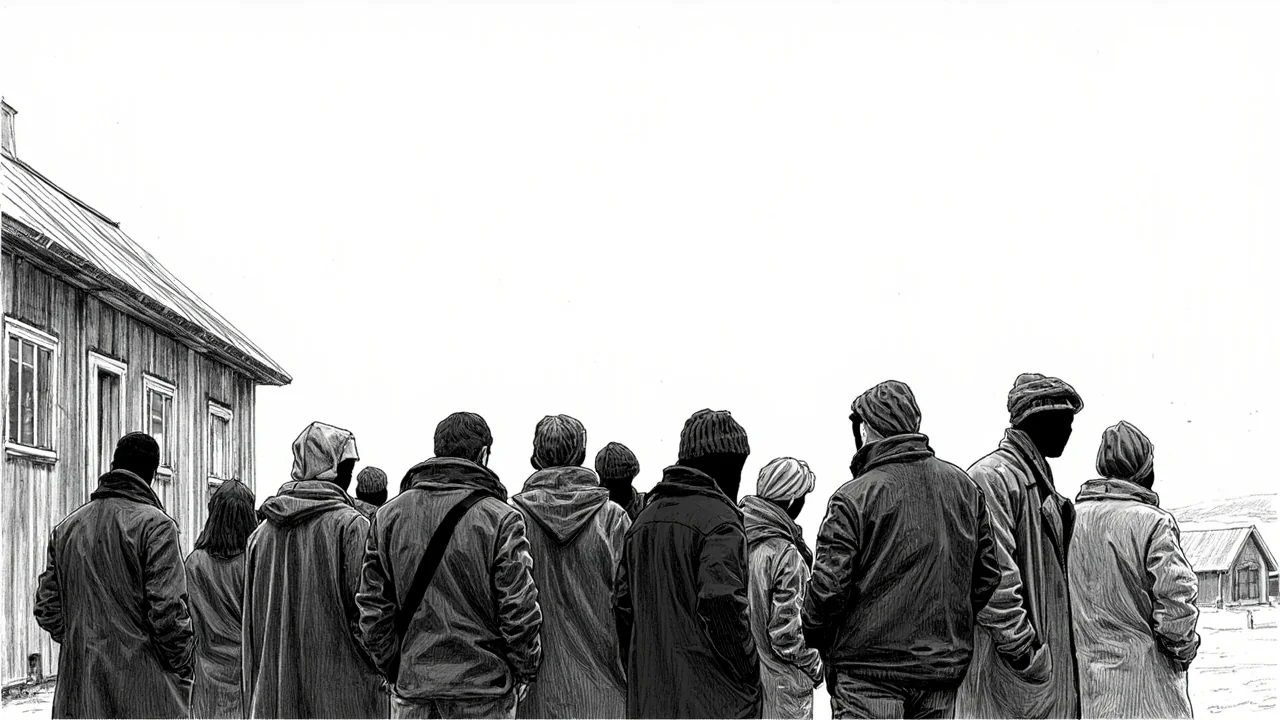
Norway's child welfare system has faced a reckoning over the 1964 removal of a Romani infant who later suffered abuse. Herman Sr. Marin Qvist Pettersen, now 61, spent 27 years seeking the truth about why he was taken from his parents. An official investigation has now concluded that his family's Romani heritage, then derogatorily called 'tatere,' was a decisive factor in the brutal process. His case represents a painful chapter in Norway's history with its Romani minority.
A Life Shattered by the State
'I was a 'fantunge'. They could do whatever they wanted with me. I was beaten up and subjected to abuse,' Pettersen told a Norwegian newspaper in December 2023. He described a childhood marked by violence after the state's intervention. As a baby, he was taken from his biological parents and placed in a children's home. He was later adopted out to a family where the severe abuse occurred. For nearly three decades, Pettersen sought answers, trying to understand the official decisions that set his traumatic life in motion. His quest was not just for personal closure but to highlight a systemic failure.
The Investigation Unveils Systemic Bias
On assignment from then-State Administrator Bent Høie, investigator Helge Bjørnestad delivered a crushing report in the autumn of 2023. The report scrutinized the process that led to Pettersen's removal and subsequent adoption. Bjørnestad stated clearly that ethnic prejudice played a central role. 'Both Pettersen's biological parents were of the Romani people. That they were 'tatere' had significance for the brutal process,' Bjørnestad stated from the witness stand in the Gulating Court of Appeal last fall. This formal confirmation gave legal weight to Pettersen's long-held belief that discrimination was at the heart of his case. The investigation peeled back the layers of a bureaucratic decision made six decades ago, exposing the bias embedded within it.
A Legal Battle for Recognition and Compensation
Pettersen's civil case for compensation was heard in the Gulating Court of Appeal last autumn. The lawsuit is against the state, seeking redress for the lifelong consequences of its actions. Bjørnestad's investigative report served as a key piece of evidence in these proceedings. The case moves beyond an individual tragedy, challenging the state to acknowledge its institutional responsibility. It asks the court to put a value on a childhood lost and a life altered by prejudicial policies. The legal battle is the final step in Pettersen's long journey through the very system that failed him, now seeking accountability through its own structures.
The Enduring Scars of Historical Injustice
The case sheds a harsh light on Norway's historical treatment of the Romani people. The term 'fantunge' or 'foundling' reflects a time when Romani children were sometimes removed from their families under controversial premises. Pettersen's story is not viewed in isolation but as part of a broader pattern that affected an entire community. The emotional and psychological scars of such removals are intergenerational, affecting not just the individual but family bonds and cultural continuity. His public testimony has given a voice to a silence that lasted for generations, prompting a national examination of past practices.
A Quest for Truth That Took Decades
Pettersen's 27-year search for answers involved navigating opaque archives and confronting institutional reluctance. His persistence underscores the difficulty victims face when challenging historical state actions. The delivery of the Bjørnestad report marked a pivotal moment, transforming personal suspicion into documented fact. This long timeline, from 1964 to the 2023 court hearings, shows how the pursuit of justice for historical wrongs can span a lifetime. It also shows how societal understanding of minority rights and child welfare has evolved, making past decisions appear even more starkly unjust through a modern lens.
The Human Cost of Bureaucratic Decisions
At its core, this is a story about the human cost of bureaucratic, prejudiced decisions. The report details a 'brutal process,' a clinical term that belies the reality of a child being severed from his parents and culture. The subsequent abuse in his adoptive home compounded the initial trauma of removal. Pettersen's life narrative is a direct consequence of those state actions, a living testament to their real-world impact. His testimony breaks down complex policies into raw, human terms—of fear, violence, and a stolen identity.
What Justice Looks Like After 60 Years
The ongoing court case raises complex questions about justice and compensation for historical injustices. Can financial compensation ever address a lost childhood and a lifetime of trauma? For Pettersen, the legal acknowledgement of wrongdoing may be as crucial as any monetary award. For the state, the case presents an opportunity to formally confront a dark aspect of its social history. The verdict, when it comes, will set a precedent for how Norway deals with similar claims from its past. It will signal whether the system can truly deliver accountability for mistakes made generations ago.
A Legacy Beyond the Courtroom
Regardless of the legal outcome, Herman Sr. Marin Qvist Pettersen's fight has already created a legacy. By forcing an official investigation and a public court hearing, he has brought a hidden history into the light. His story has become part of Norway's ongoing dialogue about equality, minority rights, and the ethical limits of state power over family life. It serves as a sobering reminder that the decisions of the past continue to resonate in the present, and that the pursuit of truth, no matter how long it takes, is a powerful force for change. Can a society truly heal if it does not fully face the wounds it has inflicted?