
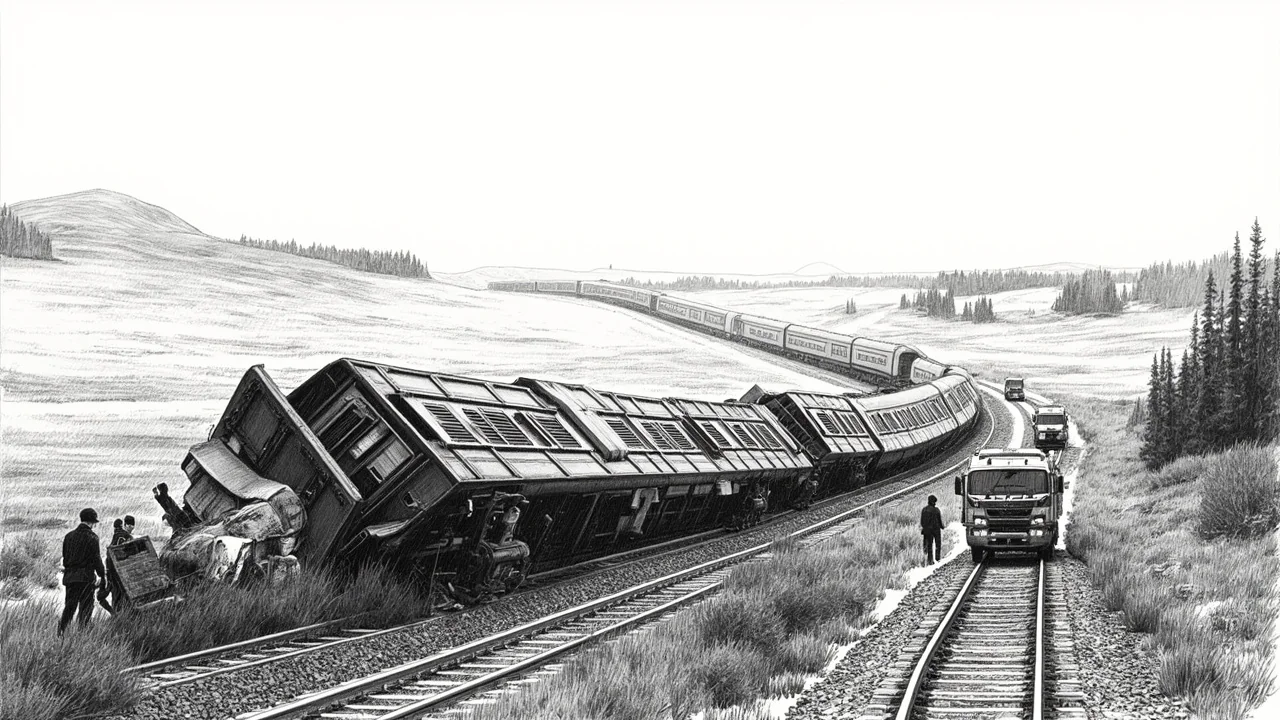
Norway's Nordlandsbanen railway between Fauske and Bodø is closed until Wednesday following a derailment on Monday. The incident has severed a critical transport artery in the Arctic region, stranding passengers and disrupting freight. Bane Nor, the state railway manager, confirmed the closure in a traffic update, citing ongoing recovery and repair efforts. This disruption highlights the vulnerabilities of northern infrastructure amid harsh climatic conditions.
Derailment Halts Critical Arctic Link
The derailment occurred on Monday, forcing immediate suspension of all services on this segment of Nordlandsbanen. Bane Nor estimates that normal operations will resume by Wednesday, January 14th, pending safety inspections. No injuries have been reported, but the incident has caused significant logistical headaches. Nordlandsbanen is Norway's longest railway line, stretching from Trondheim to Bodø, and serves as a lifeline for remote communities. Its closure isolates key towns like Fauske and Bodø, which rely on rail for both passenger travel and cargo. The derailment's exact cause remains under investigation, with initial focus likely on track integrity or rolling stock issues.
Arctic weather often exacerbates railway challenges, with ice and snow testing infrastructure resilience. This section of track traverses rugged terrain near the Saltfjellet mountain range, where maintenance is complex. Storting members from Nordland County have long advocated for increased railway funding, citing economic and strategic importance. The closure immediately affects daily commuters and tourists, with alternative transport options quickly overwhelmed. Local bus services have added extra routes, but capacity remains limited. Freight operators face delays in moving goods, including potential impacts on regional supply chains.
Passenger Chaos and Freight Delays
Passengers report widespread confusion, with many left scrambling for last-minute accommodations or costly flight alternatives. Bodø Airport has seen increased demand for short-haul flights to southern cities like Trondheim. However, air travel in northern Norway is expensive and weather-dependent, offering no perfect substitute. For freight, the disruption hampers the movement of equipment and materials crucial to local industries, including fisheries and small-scale manufacturing. While not a major route for oil industry supplies, the line does support general logistics in the Arctic. Any prolonged closure could ripple through the regional economy, particularly in winter when road alternatives are less reliable.
Bane Nor has mobilized repair teams to assess track damage and clear any wreckage. The agency emphasizes that safety protocols are paramount, hence the conservative Wednesday reopening estimate. Historical data shows that derailments on Norwegian railways are rare but costly when they occur. In 2022, Bane Nor reported only two minor derailments nationwide, underscoring generally high safety standards. Yet, each incident prompts scrutiny of maintenance schedules and investment levels. The Norwegian National Rail Administration has earmarked funds for line upgrades, but Arctic projects often face budget overruns due to difficult conditions.
Infrastructure Challenges in Northern Norway
Northern Norway's geography poses unique hurdles for railway operations. Permafrost thaw, heavy snowfall, and steep gradients require specialized engineering solutions. The Fauske-Bodø segment, completed in 1962, represents an older segment of the network where modernization is ongoing. Experts note that climate change is increasing the frequency of extreme weather events, testing infrastructure durability. A 2023 report from the Norwegian Transport Authority warned of rising maintenance costs for Arctic railways. Storting debates have centered on balancing coastal ferry subsidies with rail investments, as both are vital for northern connectivity.
This derailment may reignite discussions about prioritizing northern infrastructure in state budgets. Conservative Party representatives have called for accelerated rail electrification to reduce environmental impact and improve reliability. Labour Party members stress the need for job creation through infrastructure projects. The current government, led by Prime Minister Jonas Gahr Støre, has pledged to enhance transport links as part of its regional development strategy. However, competing demands from oil and gas sectors in the North Sea often divert attention and resources. Ensuring rail safety in the Arctic remains a bipartisan concern, yet funding allocations remain contentious.
Safety Record and Future Precautions
Norwegian railways boast an impressive safety record compared to European averages, with fatal accidents being exceedingly rare. Bane Nor conducts regular track inspections using advanced monitoring technology, including drones and sensors. After this incident, a thorough review of inspection protocols on Nordlandsbanen is likely. Previous derailments in Norway have been attributed to factors like rockfalls, mechanical failures, or human error. The investigation here will determine if similar issues played a role. Regardless, the closure serves as a stark reminder of infrastructure fragility in remote regions.
Passenger associations have urged Bane Nor to improve communication during disruptions, citing delays in alerting travelers about alternative arrangements. In response, Bane Nor has activated its emergency response plan, coordinating with local transport providers. The agency also uses social media and apps to provide real-time updates. For frequent travelers, such disruptions underscore the need for contingency planning, especially in winter. Businesses dependent on rail freight are advised to diversify logistics routes, though options in the sparsely populated north are limited.
Looking Ahead: Wednesday's Reopening
All eyes are on Wednesday's planned reopening, which hinges on successful repairs and safety certifications. Bane Nor has not specified the extent of damage, but typical derailment repairs involve track realignment and signal checks. If weather cooperates, crews will work around the clock to meet the deadline. However, Arctic storms could delay progress, extending the closure. Once service resumes, Bane Nor may impose speed restrictions temporarily to ensure safety. This could cause ongoing minor delays for passengers and freight.
The derailment's timing is particularly inconvenient, coming amid normal winter travel patterns. It may also affect tourism in Bodø, a gateway to the Lofoten Islands and a European Capital of Culture for 2024. Local officials hope for a swift resolution to minimize economic fallout. Long-term, this event may accelerate plans for rail modernization in the north, including potential double-tracking or bridge reinforcements. Storting committees will likely request a briefing from Bane Nor on the incident's causes and lessons learned.
Norway's commitment to sustainable transport includes rail as a green alternative to roads and air. Incidents like this test public confidence in that vision. As the Arctic gains geopolitical importance due to climate change and resource exploration, reliable infrastructure becomes ever more critical. This derailment, while temporary, prompts broader questions about investing in resilience for Norway's northern frontiers. Will future budgets adequately address these vulnerabilities, or will remote communities continue to bear the brunt of infrastructure failures? The answer may shape Arctic policy for decades to come.