
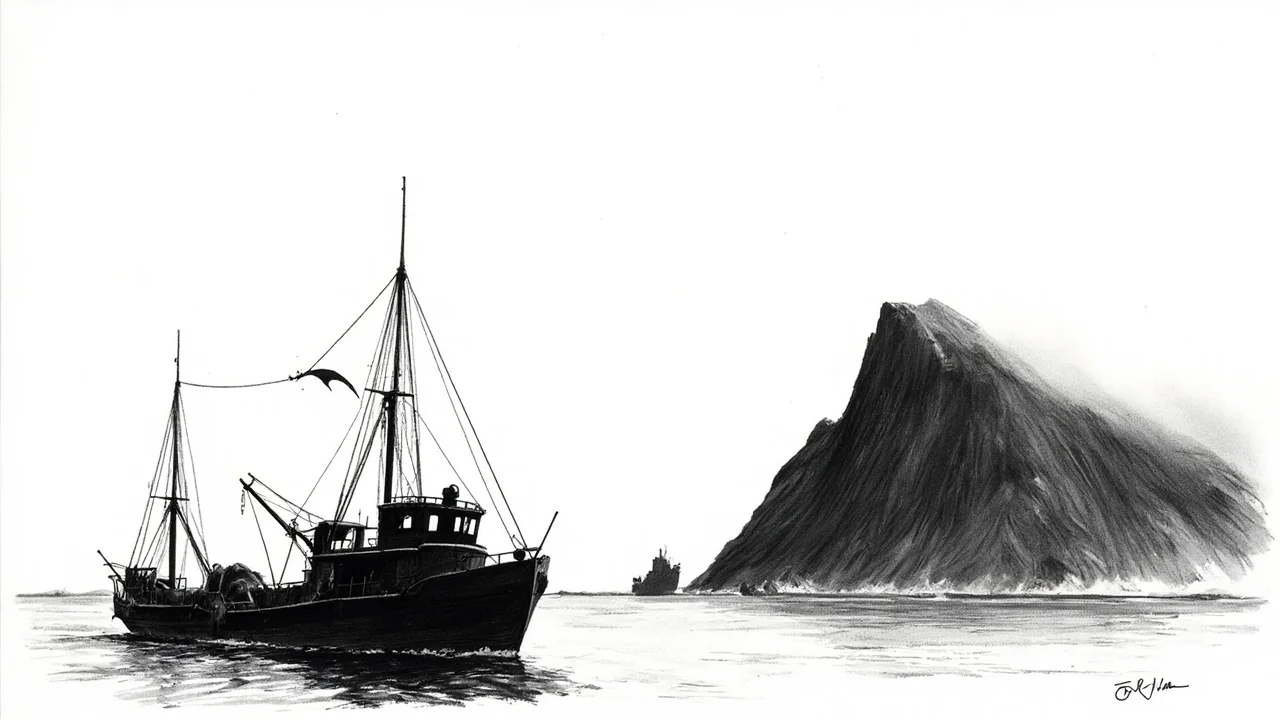
Norway's government has increased the annual quota for minke whale hunting by 235 animals, setting a new target of 1,641 whales for the coming season. The decision, announced by Fisheries and Oceans Minister Marianne Sivertsen Næss, cites the need for more sustainable seafood and the robust health of the whale population as key reasons for the boost.
A Captain's Cautious Welcome
For veteran whaler Lars Jacobsen, operating out of the Lofoten islands, the news is a welcome signal. "It shows the government recognizes we have a viable, regulated industry," he says. "But a quota on paper and whales in the hold are different things. Last year's quota was 1,406, but we only caught 429. The market, the weather, and the logistics are the real limits." His sentiment underscores the complex reality behind the headline numbers. The government notes the increase is largely due to unused quotas from previous years being transferred forward, not a new assessment of a suddenly larger population.
The Minister's Sustainability Argument
In her statement, Minister Sivertsen Næss framed the decision within broader food policy goals. "To reach the UN's sustainability goals we must also eat more seafood, and whaling provides healthy and locally sourced food," she said. The government stresses that Norwegian whaling is strictly regulated and that the Northeast Atlantic minke whale stock is in very good condition. "Norwegian whaling is sustainable, strictly regulated, and the minke whale stock is in very good shape. Norway employs effective and animal welfare-friendly hunting methods," Sivertsen Næss stated, adding that the whales' own large consumption of fish impacts the marine ecosystem.
An Industry Facing Practical Hurdles
The gap between quota and catch reveals the challenges facing this niche industry. Last year, only ten vessels participated in the hunt, one fewer than the previous year, yet they managed a higher catch than the year before. This points to a skilled but shrinking fleet. The primary hurdles are not regulatory but economic and logistical. Processing facilities are limited, and the domestic market for whale meat, while stable, is not expansive. Export markets, particularly to Japan, face significant regulatory and political barriers. Furthermore, the hunt itself is weather-dependent and concentrated along Norway's vast coastline, making it a challenging operation.
The International and Domestic Debate
Norway's continued whaling remains a point of international contention, despite its legal objection to the International Whaling Commission's commercial moratorium. The government consistently argues its practice is science-based and sustainable, a position echoed by the minister. Domestically, the industry enjoys political support across several parties, seen as a part of Norway's coastal cultural heritage and a right to use abundant marine resources. However, animal rights groups and environmental organizations continue to challenge the practice on ethical grounds and question the necessity and sustainability of the hunt in the 21st century. They argue that whale populations face cumulative threats from climate change, pollution, and ship strikes, and that hunting adds an unnecessary pressure.
Expert Perspective on Population and Policy
Marine biologist Dr. Kari Nilsen, who has observed whale stocks for two decades, offers a measured view. "The scientific data from the Norwegian Institute of Marine Research does indicate a healthy and growing minke whale population in our waters. From a pure stock management perspective, the increased quota is likely sustainable," she explains. "The more critical discussion is not biological, but societal. It revolves around animal welfare standards during the hunt, the carbon footprint of the hunting vessels compared to other protein sources, and whether this aligns with Norway's global image as a champion of ocean sustainability." This analysis highlights that the debate has moved beyond simple population counts.
The Fundamental Question
Ultimately, Norway's increased minke whale quota forces a recurring national question: In an era focused on ecosystem management and ethical consumption, what is the place of a traditional, controversial harvest that the government deems sustainable but much of the world rejects? The answer will be found not just in government press releases from Oslo, but in the quiet decisions of consumers at fish markets in Bergen and Tromsø, and on the decks of the few remaining vessels that still brave the open sea for this catch.