
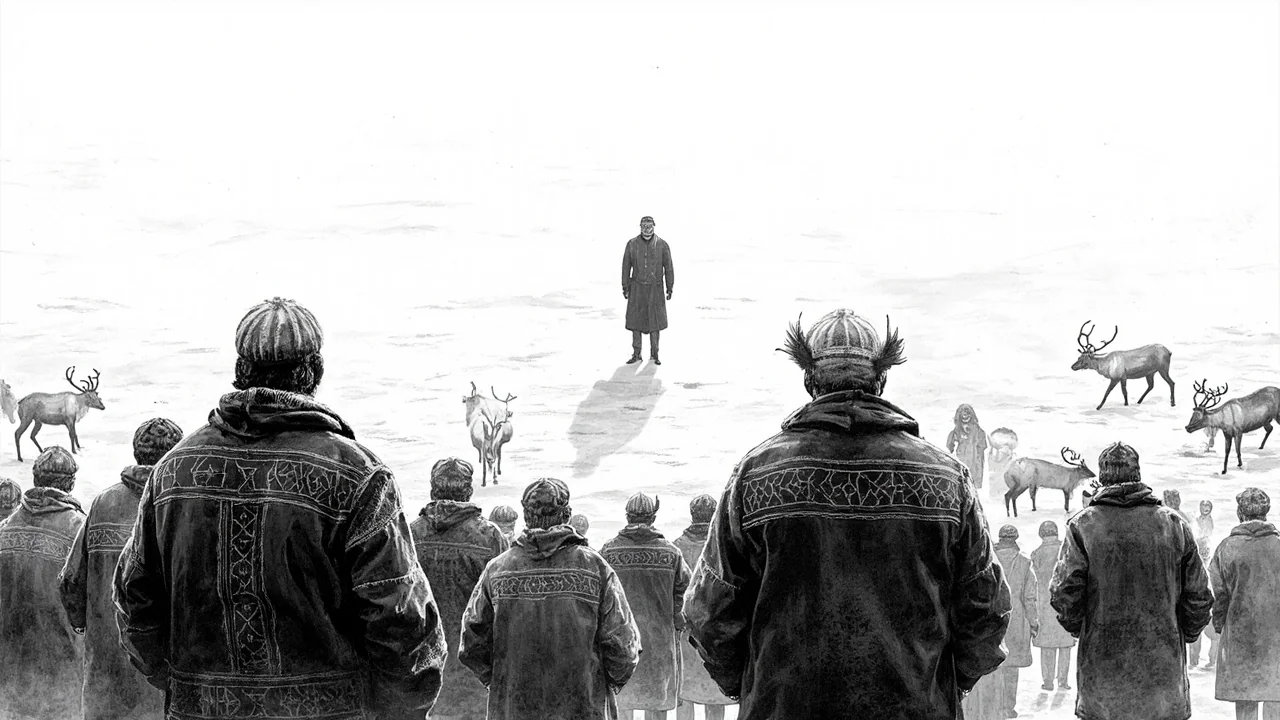
Norwegian reindeer herders are refusing to pay a 2.7 million kroner state bill. The charge stems from a controversial forced count of their herds four years ago. The herders from Karasjok, in Norway's largest grazing district, have sued to have the financial demand dismissed. Their court case begins in Tana District Court on February 10th.
The dispute centers on a 2020 aerial count that revealed far more animals than permitted. The legal limit for the district was 10,000 reindeer. Herders had reported having 11,755 animals. The state's forced count, however, found a staggering 15,071 reindeer. Authorities argued the herd had grown far beyond the legal limit and that the herders refused to conduct their own count.
A Costly and Controversial Operation
The state-initiated count became Norway's most expensive reindeer tally ever. It cost over 18 million kroner, blowing past all budgets. The state's share of the expenses was over 14 million kroner. These funds paid for hired personnel, snowmobiles, and helicopter use. The operation was dramatic and contentious. Herders argued the animals were harassed during the count. They also claimed they themselves were threatened with police reports for alleged sabotage.
At the time, the management of the count drew sharp criticism, including from the Agriculture Minister. Two leaders involved were later replaced. Now, the legal battle is over who should foot the bill for this expensive operation. The state has demanded 2.7 million kroner from the herders to cover part of the cost.
The Legal Argument for Defense
The herders' lawyer, Trond Biti from Karasjok, claims the state had no legal basis to launch its own count. He argues the herders in District 13 had already begun counting their flock within the deadline set by authorities. Therefore, the state's subsequent order for a count was invalid. If the order was not valid, Biti contends, then the demand to pay for the costs of that count cannot be valid either.
Biti states the herders were actively complying before the state intervened with forced measures. This forms the core of their legal defense in the upcoming trial. They seek a ruling that nullifies the payment demand entirely.
The State's Position
The government's lawyer, Magnus-Johan Færø, has declined to comment ahead of the court case. He referred to the submission sent to the court. In that document, the state's position is outlined clearly. Authorities maintain that two prior orders for the herders to present the herd for an official count were ignored. When the herders also failed to follow a formal counting order, a forced count was the last resort.
Such a count is one of several compulsory measures allowed under paragraph 79 of the Reindeer Herding Act. The law states that owners can be ordered to pay the expenses in such cases. The state argues all legal steps were followed correctly before the costly aerial operation was launched.
Clash Over Control and Culture
This case highlights a deeper tension between state management of natural resources and traditional Sami reindeer herding practices. Reindeer herding is a central part of Sami culture and livelihood in northern Norway. Herders operate within a complex system of grazing districts and legal quotas designed to sustain the fragile Arctic environment. The state has a regulatory duty to enforce these limits to prevent overgrazing.
However, methods of counting and verification have long been a point of friction. Traditional knowledge and ground-based counts often clash with the state's preference for technological, aerial methods. The 2020 operation, using helicopters, epitomized this technological approach. Its extreme cost and invasive nature have made it a flashpoint in this ongoing dialogue, or lack thereof, between herders and the government.
Financial and Bureaucratic Fallout
The financial implications are severe for the herders. A 2.7 million kroner bill represents a crushing debt for the community. For the state, the case questions the fiscal responsibility of its regulatory actions. Spending 18 million kroner on a single animal count is a significant sum, especially when the outcome is a four-year legal quagmire with no resolution.
The bureaucratic aftermath was also significant. Elisabeth Aspaker was the county governor when the count's budget was shattered. The subsequent leadership changes within the involved agencies point to the internal turmoil the operation caused. It stands as a cautionary tale about the cost of enforcement when cooperation breaks down.
The Road to the Courthouse
As the February 10th court date approaches, the reindeer herders of Karasjok are preparing their defense. They are not just fighting a bill, they are challenging the state's version of events and its exercise of power. The state, meanwhile, is defending its actions as a necessary, if costly, step to uphold environmental law.
The Tana District Court will now untangle this complex knot of law, tradition, and money. Its ruling will answer whether the most expensive reindeer count in Norwegian history will also be paid for by the people it was conducted upon. The outcome will resonate through every grazing district in the country, defining the price of enforcement for years to come.