
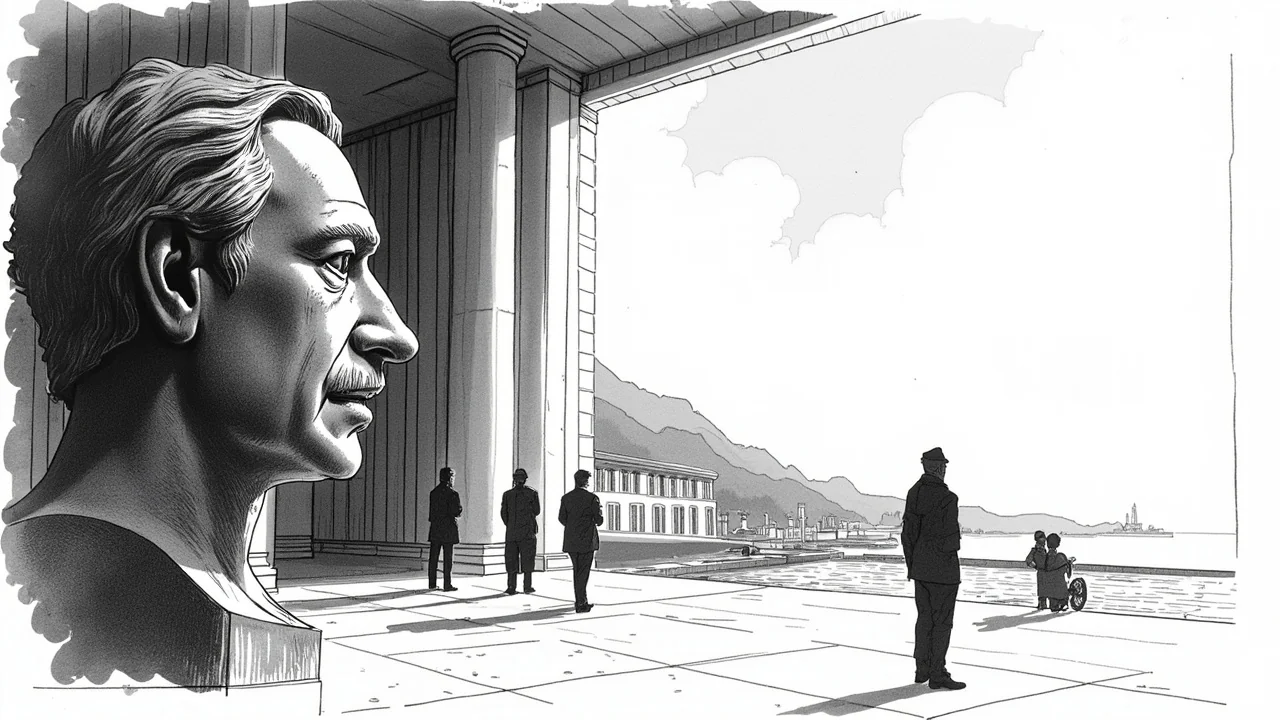
24 years after his death, Norwegian poet Hans Hyldbakk's bust is being removed from Surnadal town hall due to posthumous abuse accusations. The municipal executive board decided today to take down and store the monument, sparking a debate on handling controversial cultural legacies. Hans Hyldbakk, best known for authoring "Vårsøg," a cherished piece of Norwegian folklore, now faces allegations that have compelled local authorities to reassess his public honor.
The Municipal Decision
Surnadal's formannskapet, or executive board, convened today to address the future of Hyldbakk's cultural heritage. After discussions, they unanimously voted to remove the bust located outside the kommunehuset, the municipal building. The bronze likeness, which has stood for decades, will be placed in storage indefinitely. This action follows the emergence of abuse accusations against Hyldbakk, who passed away 24 years ago. The board cited the need to respect potential victims and reevaluate public symbols in light of new information.
The decision marks a swift response to the allegations, which surfaced recently without detailed public disclosure. Municipal officials emphasized that the move is provisional pending further community consultation. No timeline has been set for the bust's return or permanent disposition. The meeting focused solely on Hyldbakk's legacy, with board members weighing artistic contributions against ethical considerations. This process reflects a growing trend in Norwegian communities to scrutinize historical figures amid evolving social standards.
Hyldbakk's Cultural Legacy
Hans Hyldbakk remains a prominent figure in Norwegian literature, primarily for "Vårsøg," a work that celebrates spring and rural life in the Surnadal region. His poetry and writings have been integral to local identity, often taught in schools and recited at cultural events. The bust, erected as a tribute to his contributions, symbolized communal pride. However, the abuse accusations have cast a shadow over his achievements, forcing a reexamination of how Norway memorializes its cultural icons.
Hyldbakk's death in 2000 did not halt his influence, his works continue to be published and performed. Yet, the recent allegations have prompted calls for a more nuanced understanding of his legacy. Supporters argue that his art should be separated from his personal conduct, while critics contend that public honors must align with moral integrity. This dichotomy is central to the ongoing debate in Surnadal and beyond. The lack of detailed information about the accusations complicates the discussion, leaving room for speculation and divided opinions.
Broader Implications for Norway
Norway's handling of Hyldbakk's bust resonates with national conversations on historical reckoning and cultural heritage. Similar debates have emerged over statues and monuments linked to figures with controversial pasts, from polar explorers to political leaders. In recent years, Norwegian institutions have grappled with how to address abuse allegations against deceased individuals, balancing preservation with accountability. The Surnadal decision sets a precedent for other municipalities facing analogous dilemmas.
The absence of a formal national policy on such matters places the onus on local governments. Surnadal's approach—removing the bust temporarily while seeking community input—may inspire similar actions elsewhere. This case highlights the tension between celebrating artistic merit and condemning harmful behavior. As Norway continues to navigate these issues, the outcomes could influence cultural funding, public art installations, and educational curricula. The debate underscores a societal shift towards prioritizing victim voices and ethical considerations in historical narratives.