
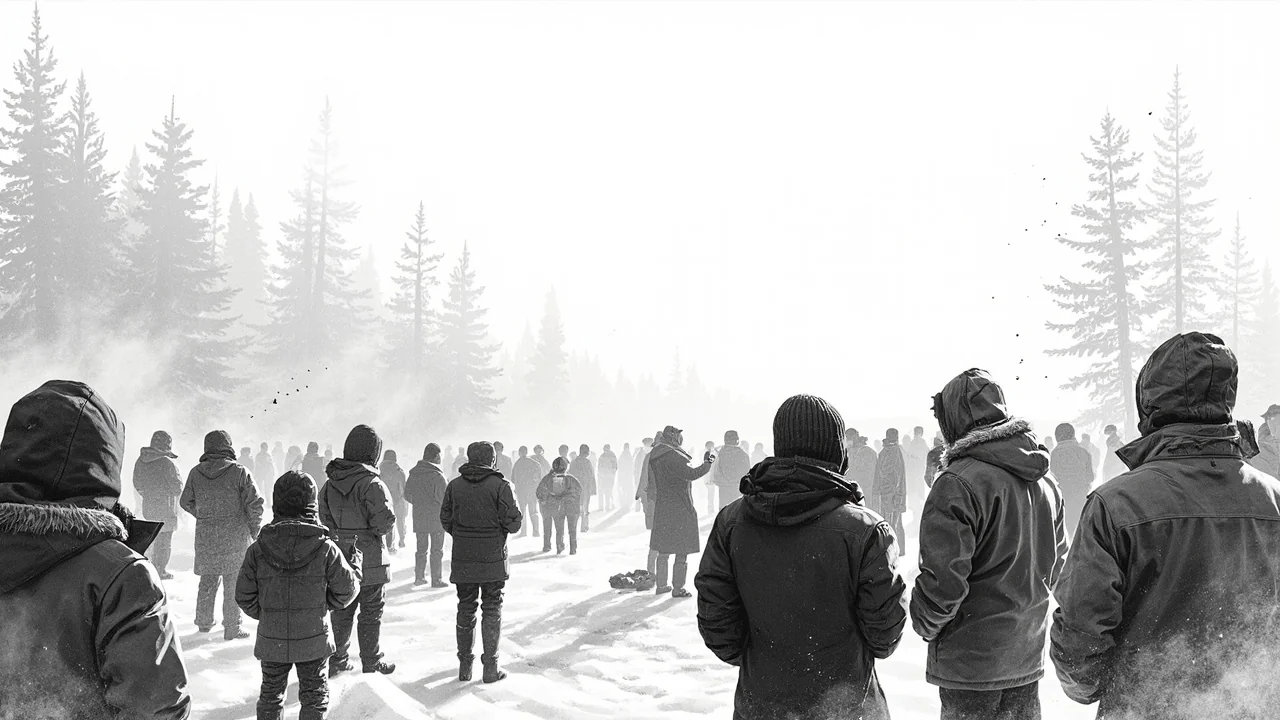
Norway's annual Russetreff on Geilo will host 1000 participants amidst temperatures plunging to minus 20 degrees Celsius this weekend. The winter gathering for russ, high school graduates celebrating their final year, has prompted significant safety changes after criticism from local health authorities. Organizers have moved concerts indoors, established large heated tents, and implemented strict transport and clothing requirements to mitigate risks associated with extreme cold and alcohol consumption.
Arctic Conditions Prompt Safety Overhaul
Geilo, a mountainous resort area in southern Norway, is known for its harsh winter climate, with January temperatures regularly dropping well below freezing. This year's Russetreff, traditionally held in late January, coincides with a forecast of severe cold, raising alarms for communal health officials. Karin Møller, the municipal chief medical officer, expressed direct concern for participant welfare. She said the combination of large crowds, alcohol service, and sub-zero temperatures creates a high risk for hypothermia, which can threaten life and health. Her warnings underscored the inherent dangers of outdoor festivities in such environments, where alcohol impairs judgment and increases vulnerability to cold.
The event primarily draws russ from Stavanger and Bergen, continuing a multi-year tradition of coloring Geilo with their celebrations. In previous years, concerts were held outdoors with only a supplementary heated tent available. This year, Birkelund Camping, which leases the grounds to a private organizing firm, has seen a shift to fully indoor concerts within a large tent structure. Diana Adampour, daily manager of the camping site, noted that past events have been enjoyable without major issues, which motivated the decision to continue hosting. She emphasized that the changes aim to provide a controlled environment, preventing unsupervised wandering in the cold Geilo streets.
Organizer Implements Comprehensive Measures
In response to the criticism, the event organizer has enacted a series of specific safety protocols. All concerts will now be held indoors, and a heated tent with capacity for 900 people has been set up as a warm refuge. Transport logistics have been overhauled, with buses shuttling participants between their hotels or cabins and the event site, a quarter-hour drive away. Access to the festivities will require proof of warm clothing, a mandatory condition for entry. Additionally, the organizer has hired security personnel and established emergency preparedness measures to ensure safety throughout the weekend.
These steps represent a proactive approach to risk management, aligning with broader Norwegian standards for public events in Arctic-like conditions. The move indoors directly addresses the core issue of exposure, while the heated tent serves as a fail-safe for those feeling cold. The transport system minimizes time spent outdoors in transit, and the clothing mandate encourages personal responsibility. The inclusion of security and emergency plans adds a layer of professional oversight, crucial for managing a large, youthful crowd in a challenging setting.
Participants Voice Mixed Reactions
Despite the concerns, many russ attendees remain optimistic and prepared. Several from Bergen, interviewed about their expectations, acknowledged the cold but expressed confidence in the event's planning. One 18-year-old participant stated they had anticipated the low temperatures when purchasing tickets and had invested in warm clothing accordingly. He said it seems well-organized and should be good. Others felt the safety worries were exaggerated, citing past experiences without incident. However, their preparations with thermal gear indicate a pragmatic acceptance of the conditions, blending youthful enthusiasm with practical adaptation to Norway's winter realities.
This dichotomy highlights a cultural aspect of russ celebrations, which often embrace resilience and camaraderie. The tradition, typically centered on May festivities with warmer spring weather, has expanded into winter events like this, testing participants' mettle. The organizer's measures aim to balance this adventurous spirit with necessary precautions, ensuring that the celebration does not compromise health. Adampour reinforced this, saying they do it for the youth so they are not just wandering around Geilo, pointing to the structured environment as a safety net.