
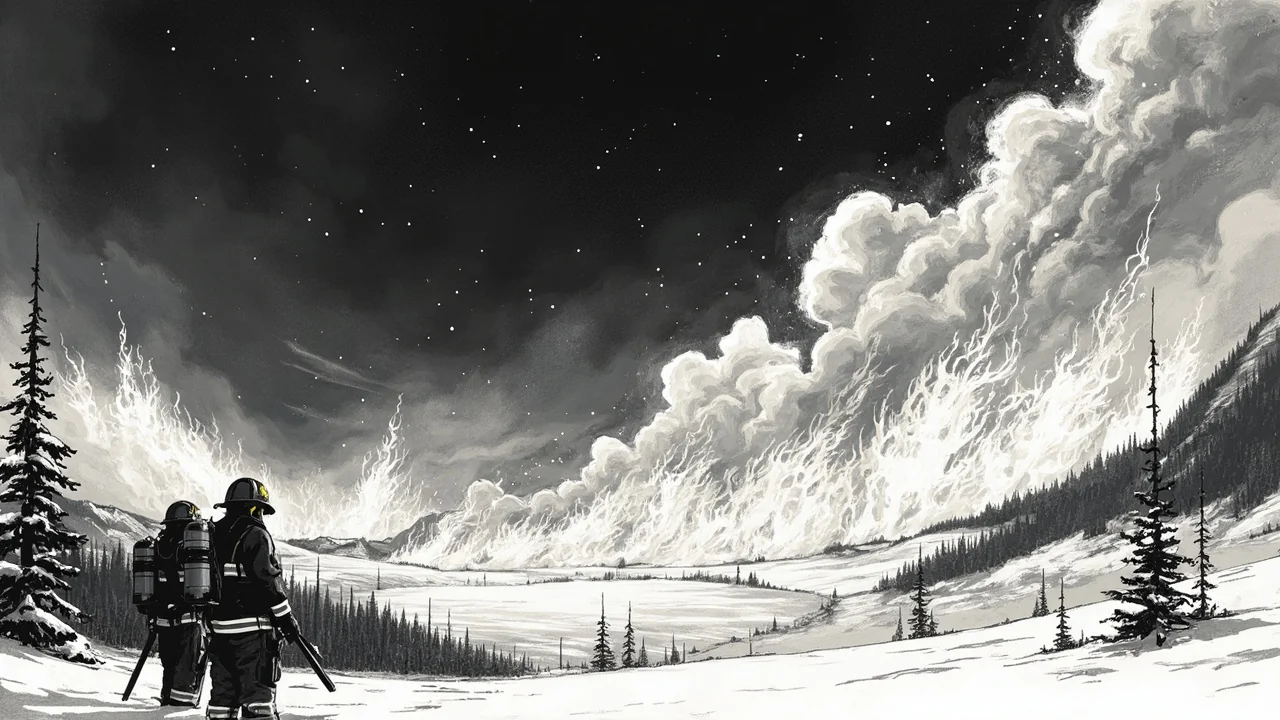
Norway recorded eight terrain fires across the country on Saturday, a sharp increase from the typical daily average and prompting widespread emergency alerts. This unusual spike occurred during winter, a season when such blazes are rare, straining response units and raising concerns about public safety and environmental risks. The incidents highlight evolving climate challenges that could impact Norway's energy infrastructure and Arctic policies.
Unprecedented Spike in Winter Blazes
Emergency services responded to eight distinct terrain fires on Saturday, far exceeding the norm for a single day. These fires varied in severity but collectively signaled an abnormal risk level during the winter months. In Ørland municipality, a substantial fire erupted in the evening, ignited by two children playing with a lighter. This incident required significant resources to contain and underscored the human factors behind such emergencies.
Meanwhile, in Hå, another terrain fire led to the suspension of both train and road traffic, disrupting transportation networks and prompting local evacuations. The disruption affected commuter routes and highlighted the infrastructural vulnerabilities during fire events. These blazes occurred in regions not typically associated with winter fire risks, such as coastal and inland areas of Vestlandet and Trøndelag.
Meteorological Drivers Behind the Crisis
Vakthavende meteorolog Per Egil Haga attributed the surge in fires to two primary factors: exceptionally dry terrain and a lack of precipitation. He said it is currently very dry in several places on the West Coast and northwards towards Trøndelag, particularly in outer areas where it has been a long time since any notable rainfall. Even though it is winter, the missing precipitation has led to unusually dry conditions.
Haga emphasized that while dry winters are not inherently abnormal, the current situation is problematic because people are unaccustomed to such risks during this season. The challenge is that we are not used to these conditions at this time of year, and thus we are not as careful as we should be. Consequently, authorities have issued warnings for high risk of grass and heather fires in multiple regions, including areas near key energy hubs like the North Sea oil fields.
Emergency Response and Public Guidance
Norwegian emergency services issued clear guidelines to mitigate fire risks, advising against open flames, proper disposal of cigarettes, and increased vigilance in dry areas. The public is urged to report any signs of fire immediately and follow local authority instructions. These measures are critical given the tinder-like state of vegetation, which can quickly escalate small incidents into major blazes.
The coordinated response involved fire brigades, police, and transport authorities, particularly in Hå where traffic was halted. This incident underscores the broader operational challenges for Norway's emergency management, especially in remote or Arctic regions where resources may be stretched thin. Officials are monitoring conditions closely, with further warnings likely if dry weather persists.
Policy Implications for Norway's Government
As Norway's Affairs Correspondent, I note that these winter fires intersect with ongoing Storting debates on climate adaptation and Arctic preparedness. The unusual dry spell, potentially linked to shifting climate patterns, could affect critical infrastructure, including energy installations in the North Sea. For instance, oil fields near dry coastal areas might face heightened fire risks, necessitating reviews of safety protocols by agencies like the Norwegian Petroleum Directorate.
Historically, Norway has focused on winter preparedness for snow and ice, but such fires suggest a need for expanded strategies. Policy makers might consider integrating fire risk assessments into national climate action plans, especially as Arctic temperatures rise. References to specific fjords like Sognefjorden or oil fields such as Johan Sverdrup could emerge in parliamentary discussions, though direct quotes are not available from the source material.
Economic and Environmental Repercussions
The fires in Hå disrupted transportation, which could have short-term economic repercussions for local businesses reliant on logistics. In broader terms, repeated incidents might strain municipal budgets and emergency funds, impacting public services. Environmentally, terrain fires can damage sensitive ecosystems, particularly in Arctic regions where recovery is slow due to harsh conditions.
This situation also raises questions about Norway's energy sector resilience. With significant oil and gas operations in the North Sea, dry conditions increasing fire risks near pipelines or refineries could pose operational challenges. The government may need to update risk assessments to include winter fire scenarios, aligning with Norway's commitment to safety and environmental stewardship.