
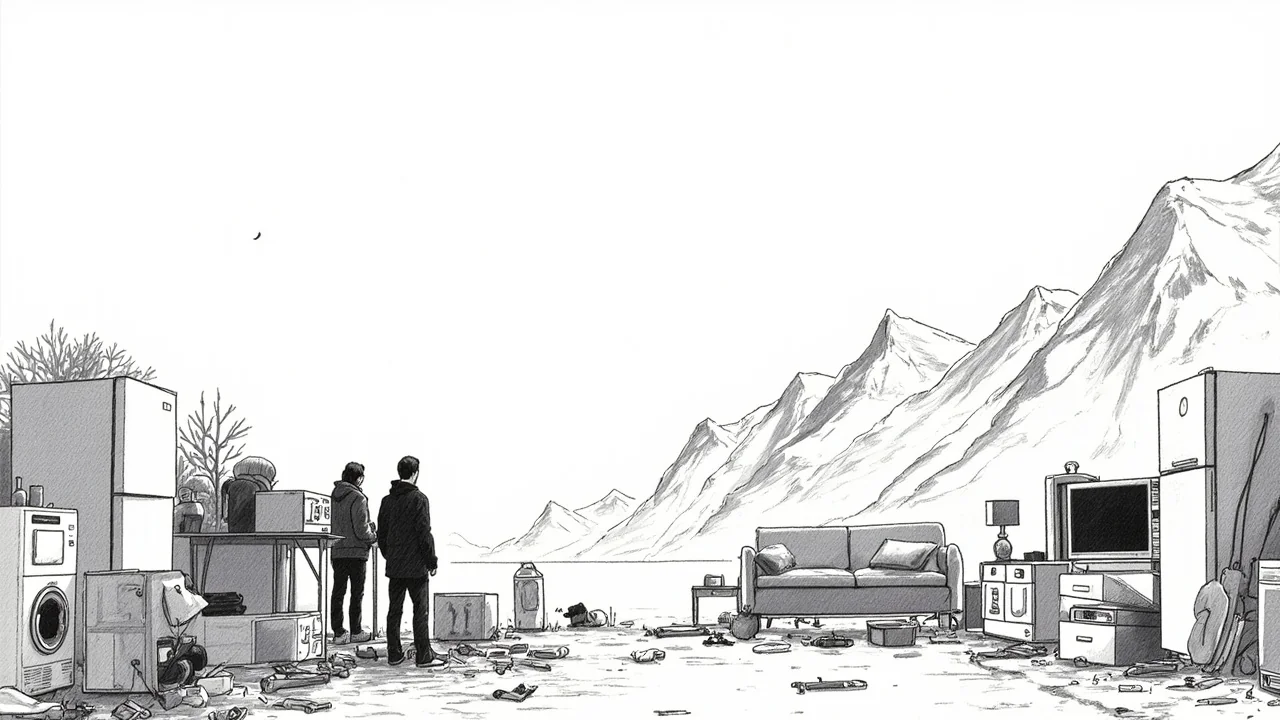
Norway's repair workshops are salvaging thousands of washing machines and dryers from landfill containers each year. At Norsk Ombruk in Stokke, Vestfold, Thomas Grønli and his colleagues give new life to appliances deemed scrap. They argue a significant portion of discarded goods suffer from minor, fixable faults.
The Repair Workshop Rescuing Appliances
Thomas Grønli is surrounded by shelves full of appliances. There are washing machines with dents hammered out, ovens with new parts, and dishwashers that never received proper maintenance. He and his team rescue these white goods from certain death at the dump and resell them with a guarantee.
Often, they perform simple tricks that homeowners could do themselves, saving both money and the environment. “We give up on white goods too easily,” says Grønli, the marketing manager at Norsk Ombruk. These are appliances from thousands of homes, left in containers at recycling stations or electronics stores.
A simple clean might be all it takes for a washing machine or dryer to live longer. Do we give up too quickly? Definitely, Thomas believes. “People can't even be bothered to list them for sale online, but throw them in a container,” he says. He estimates up to 80 percent of the appliances people discard or deliver to recycling stations could be saved.
A Common Problem with a Simple Fix
Have a dryer that isn't working? The answer may lie behind a hatch you've never opened. Grønli's work highlights how often the solution is accessible but overlooked. The mindset of immediate replacement, he suggests, is a primary driver of unnecessary waste. His workshop stands as a direct challenge to the throwaway culture pervasive in consumer electronics.
This practice isn't just about saving a single appliance. It represents a broader shift needed in consumption patterns. Every repaired machine is one less unit requiring manufacturing resources and one less item occupying landfill space. The environmental impact of extending product lifecycles is substantial, reducing both raw material extraction and electronic waste.
Why Norwegians Discard Functional Goods
Associate Professor Johan Berg Pettersen at NTNU agrees that Norwegians discard their appliances too quickly. “In many cases, we replace them because we are renovating, not because they stop functioning,” he says. He nevertheless finds it understandable if someone replaces an entire machine when the repair costs as much or more than a new one.
He has repaired his own washing machine thanks to an affordable part and some instructional videos. “But we should get used to the idea that products cost money to buy, and that it pays to maintain and repair them,” Berg Pettersen states. This academic perspective reinforces the practical message from the repair workshop, creating a consensus on the issue.
The Lifespan Paradox of Modern Appliances
How long do appliances last, and has this changed? Berg Pettersen and researcher Kamila Krych wrote an article on this topic. “We found that most last 15 years, based on how often we buy new ones. That doesn't say anything about why we replace them, but we know that many, most, are replaced before they break,” he explains.
Only stoves and washing machines have demonstrably started to last a shorter time. He thinks a possible reason why, for example, washing machines have a shorter lifespan, could be that we use them more frequently. “We wash a lot more clothes now than before, so they technically last as long or longer than before, in terms of the number of wash cycles,” Berg Pettersen says.
This creates a paradox. Appliances may be more durable per use cycle, but increased usage leads to more frequent breakdowns as perceived by the owner. This nuance is crucial for understanding the waste stream. It suggests failure is often a factor of cumulative use, not inherent poor quality, making maintenance even more critical.
Changing Habits for Economy and Environment
The core message from both the workshop floor and academic research is one of changed behavior. The initial cost of an appliance is just one part of its total economic and environmental footprint. Proactive maintenance and a willingness to attempt repairs can drastically alter that equation.
Grønli’s demonstration of what you can do when a washing machine fails is a testament to this. It demystifies the technology inside common household goods. The barrier is often knowledge and confidence, not the complexity of the fault. Social media and video platforms have made repair knowledge more accessible than ever before.
Embracing repair culture requires a shift in perspective. It moves the value from owning a new item to maintaining a functional one. For Norway, a nation with high environmental ambitions, applying this principle to consumer electronics represents a significant, yet underutilized, opportunity for sustainable consumption.
The piles of salvaged appliances at Norsk Ombruk are more than just inventory. They are physical evidence of a widespread habit of premature disposal. Each repaired machine is a small victory against a culture of waste, proving that the most sustainable appliance is often the one you already own.