
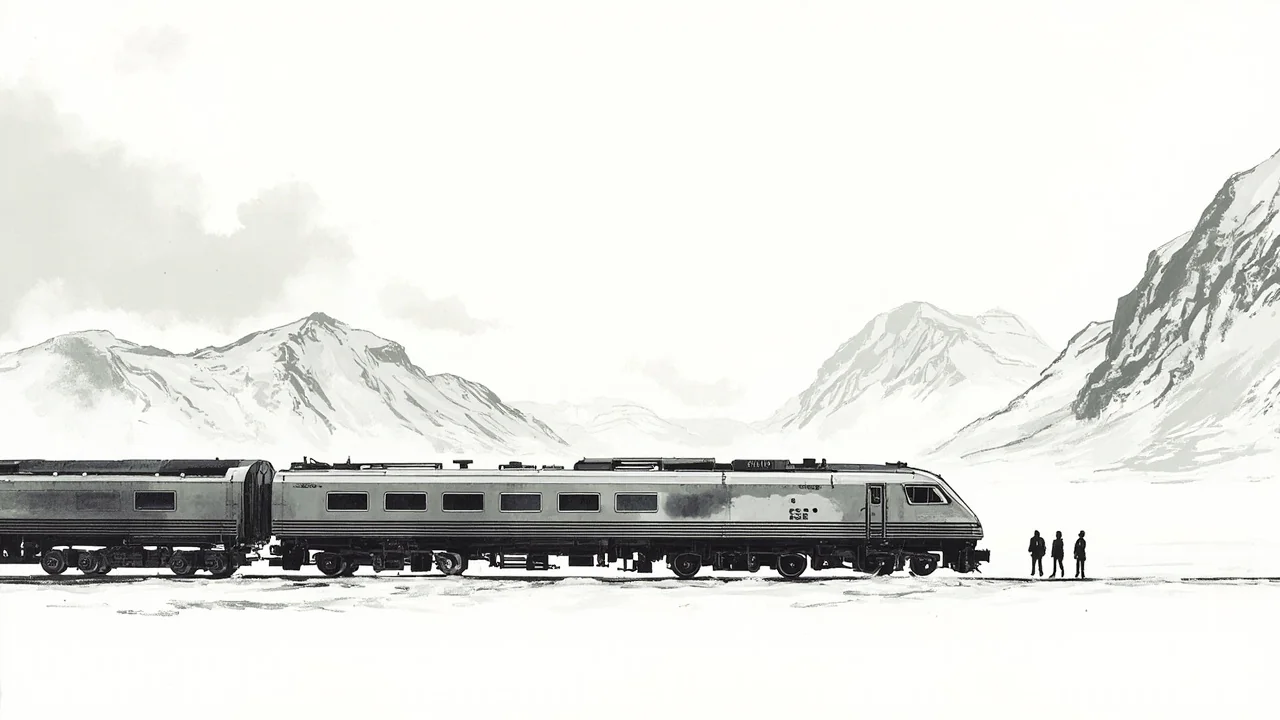
Norway's critical northern rail line faces a 72-hour shutdown after a dramatic derailment severed the transport artery to the Arctic city of Bodø. The Nordland Line between Fauske and Bodø will remain closed until at least Wednesday, isolating the regional capital and disrupting both passenger travel and freight. Recovery teams from the state rail operator Bane Nor are en route to the remote site, with a full assessment of the damage pending the removal of the derailed train set.
“The first priority now is to remove the train set that is on site,” said Harry Korslund, Bane Nor's press officer, in a statement. “We have confirmed damage to the sleepers and to the fastening between the rails and sleepers. But we will only get a full overview of the extent of the damage after the train set is pulled away, so we can do a full examination of the area where it is standing.” The specialized recovery crew was expected on site by 11:00 AM Tuesday, beginning a race against the clock.
The disruption highlights the vulnerability of single-track lines in Norway's vast northern regions. The Nordland Line, Norway's longest, is a lifeline for communities along the coast, connecting them to the national rail network in Trondheim. This incident cuts off the final 65-kilometer stretch to Bodø, a city of over 50,000 people and a key hub for the Norwegian Armed Forces, tourism, and regional government.
A Critical Transport Link Severed
The immediate impact is logistical chaos. All train traffic on the northernmost section has been canceled, with bus replacements organized for stranded passengers. For freight, the ramifications are more severe. The Port of Bodø is a significant logistics node, and the rail line is essential for moving goods to and from the Arctic coast. The closure forces a shift to road transport, adding cost, time, and environmental impact to supply chains already stretched across long distances.
This derailment occurs in a politically sensitive period for Norwegian rail infrastructure. The government and Bane Nor have faced persistent criticism over maintenance backlogs and punctuality issues on several lines. The Nordland Line itself has been the subject of major investment debates, with discussions about electrification and upgrades to improve reliability for both passenger and future freight traffic, including minerals from the north.
The Technical and Logistical Challenge
The statement from Bane Nor points to damage to both sleepers and the fastening system—the components that hold the rails in place and maintain proper gauge. This suggests significant force was involved in the derailment. Repairing this damage is not a simple task. It requires specialized crews, heavy equipment, and the delivery of materials like concrete sleepers and steel fastenings to a potentially inaccessible spot along the line.
“The timeline for reopening is entirely conditional on what they find once the train is cleared,” said a former railway engineer with knowledge of northern operations, speaking on background. “Damaged fastenings over a section of track mean you're looking at a complete rebuild of that segment. In the best-case scenario with a small crew, that’s a multi-day job. Weather and location are the wild cards.” The incident serves as a stark reminder of the engineering challenges of maintaining infrastructure in Norway's Arctic climate, with its freeze-thaw cycles and extreme weather.
Political Repercussions and Broader Context
Politicians from the northern region are likely to use this incident to amplify calls for increased infrastructure spending. The derailment will be cited as evidence of systemic underinvestment in maintenance, a recurring theme in debates in the Storting, Norway's parliament. The disruption to Bodø, a city central to Norway's Arctic strategy, adds a layer of national security concern, given its military importance.
From an energy and environmental perspective, the shutdown pushes traffic onto roads. Norway has ambitious goals to shift freight from road to more efficient and less polluting rail transport. Incidents like this directly undermine that policy, increasing carbon emissions from the heavy trucks that must fill the gap. It also disrupts tourism, a vital summer industry for Bodø and the Lofoten Islands, which many travelers access via this rail terminus.
The Human and Economic Toll
Beyond the statistics, the closure creates real daily disruptions. Commuters, students, and travelers are stranded or face lengthy bus journeys. Businesses awaiting goods face delays and uncertainty. For a region already grappling with perceptions of remoteness, such infrastructure failures reinforce challenges in attracting and retaining residents and investment. The reliability of transport links is a fundamental factor in regional development, and repeated or prolonged closures can have a chilling effect.
The coming days will be a test for Bane Nor's crisis management and communication. Providing accurate, timely updates to the public and freight operators will be crucial. The company's ability to execute a swift, safe repair will be closely scrutinized by politicians, the media, and the public who depend on this artery. The incident is a pressure point for an organization that manages Norway's 4,000-kilometer rail network under intense public and political oversight.
As the recovery teams assess the full damage, questions will inevitably turn to cause. Was it a technical fault, an issue with the track, or a problem with the rolling stock? The Norwegian Safety Investigation Authority will likely open an inquiry, but its findings are months away. For now, the focus is on restoration. The isolation of Bodø by rail is a rare event, underscoring how a single point of failure on a key line can have outsized consequences for Norway's northernmost communities. The 72-hour timeline is an initial estimate; the true cost of this derailment, in both economic and political capital, will be tallied long after the tracks are cleared and the first train rolls into Bodø station once more.