
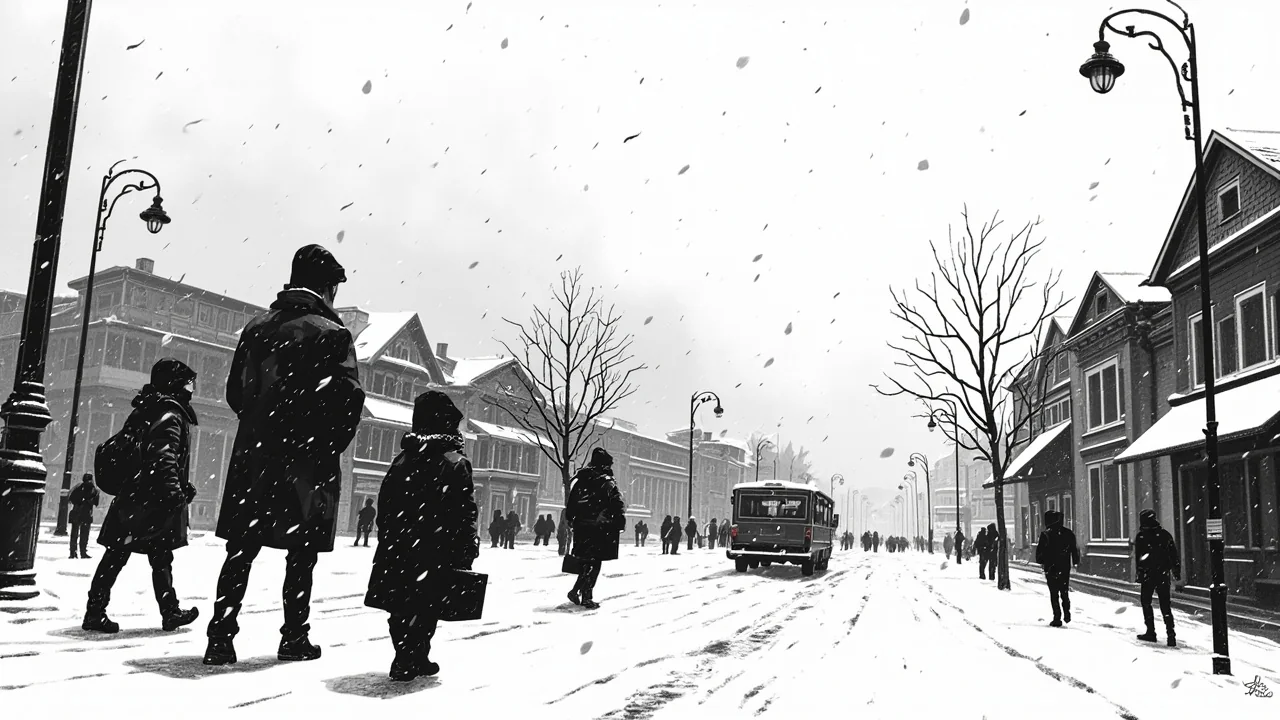
Norway's capital region faces significant disruption as meteorologists issue a yellow-level warning for up to 20 centimeters of snow overnight. The Norwegian Meteorological Institute forecasts challenging conditions for Oslo, Akershus, and parts of Buskerud and Østfold from Tuesday evening through Wednesday morning. "It's not huge amounts, but it's enough to create trouble in the Oslo area," said meteorologist Hanne Beate Skattør, highlighting the potential for transport chaos during the Wednesday commute.
This warning follows a difficult Tuesday morning across southern Norway, where mirror-slick roads caused multiple incidents. On the E18 near Kristiansand, two cars slid into ditches, with reporters describing conditions as treacherously icy. Traffic operator Vegard Hornes Halvorsen at the Eastern Traffic Centre urged extreme caution. "Now it's about taking it easy and slowing down," Halvorsen advised, noting that while serious accidents have been few, the risk remains high.
A Capital Unprepared for Winter's Return?
The forecast poses a direct test for Oslo's winter preparedness systems. While 20 centimeters is not exceptional for Norway, its timing—overnight and into the morning rush—maximizes disruption. The main concern is whether road clearance crews can keep pace with the snowfall. Meteorologists indicate the snow may later turn to sleet, particularly in southern areas, creating a slushy, icy mix that compounds the danger. This creates a dual challenge: managing fresh accumulation while preventing a layer of ice from forming beneath.
Public transport officials are bracing for delays to bus and tram services, while Oslo Airport Gardermoen has warned passengers of potential flight disruptions. The yellow warning, the second of three alert levels, signals conditions that could cause significant inconvenience and require public vigilance. It contrasts with the relatively mild winter experienced in the region until now, potentially catching some drivers off guard.
Southern Norway Already Reeling from Icy Blast
The new warning for the east comes as southern regions continue to grapple with the aftermath of Tuesday's severe conditions. In Agder county, up to 20 centimeters of snow fell within 24 hours. Meteorologist Pernille Borander highlighted the added risk from expected follow-up precipitation. "When we get 20 millimeters of sleet and rain on top of that again – it can become slushy, and not least slippery," Borander explained. This sequence—snow followed by rain or sleet—often creates the most hazardous road surfaces, as melting and refreezing lead to black ice.
Yellow warnings for icy roads also remain in effect along the south and west coasts. The pattern shows a weather system moving eastward, set to deliver the bulk of its precipitation over the capital region overnight. The situation illustrates Norway's geographic weather divide, where coastal areas face icy rain while inland and eastern areas receive heavier snow.
Expert Analysis: Why Oslo's Traffic Grid is Vulnerable
Transport analysts note that Oslo's traffic network is particularly susceptible to this type of weather event. The city's heavy reliance on morning commuters from surrounding counties in Akershus, Buskerud, and Østfold means major arteries like the E6 and E18 become critical failure points. If snow clearance on these roads lags, delays ripple across the entire system. "The problem is one of concentration," said Lars Fjelldal, a transport researcher at the University of Oslo. "Tens of thousands of vehicles all need to use the same few corridors to enter the city at the same time. Even minor slowdowns from snow or ice cause exponential delays."
Furthermore, many secondary and residential roads in Oslo may not be plowed before the morning rush begins, forcing drivers onto already congested main roads. The advice from authorities is unequivocal: allow extra time, use public transport if possible, and drastically reduce speed. Halvorsen from the Traffic Centre emphasized that speed is the primary factor drivers can control. "Driving 50 km/h on a clear road is very different from driving 50 km/h on an icy one. The stopping distance can be ten times longer," he stated.
The Economic Ripple Effect of a Snowbound Capital
Beyond the immediate travel headaches, a significant snowfall in Oslo carries a substantial economic cost. The city is the nation's economic engine, and a disrupted workday impacts productivity across sectors. Logistics and delivery services face delays, construction projects halt, and absenteeism rises as employees struggle to reach workplaces. For the service and retail industries, a day of reduced footfall can mean a direct hit to revenue.
Insurance companies typically see a spike in claims following such events, ranging from minor vehicle collisions to more serious property damage. The cost to municipal budgets also spikes, with overtime for plow operators and increased use of salt and gravel. While Norway is well-equipped for winter, the concentrated impact on its most populous region magnifies the financial consequences of every major snow event.
A Test for Norway's Famous Winter Resilience
Norwegians pride themselves on a culture of dugnad (communal effort) and preparedness for harsh weather. This event serves as a seasonal reminder of those values. Authorities are clear that individual responsibility is paramount. Checking local forecasts on sites like yr.no before traveling, ensuring vehicles have suitable winter tires with adequate tread depth, and packing an emergency kit are considered basic necessities, not optional precautions.
The weather also tests the coordination between state, county, and municipal agencies. The Norwegian Public Roads Administration manages national highways, while municipalities handle local roads. Seamless communication between these entities and the Meteorological Institute is crucial for an effective response. The yellow warning system itself is a key tool, providing the public with standardized, easily understood information about impending hazards.
Looking Ahead: A Prolonged Period of Unsettled Weather
The current system is not an isolated event. Meteorologists suggest a pattern of unstable weather may persist across southern and eastern Norway for the coming days. Residents should prepare for fluctuating temperatures around the freezing point, which is often more dangerous for road conditions than sustained cold. This leads to repeated freezing and thawing cycles, creating persistent ice.
The immediate focus, however, remains on the Wednesday morning commute. For Oslo's residents, the message is to plan for a difficult journey. Schools may open later, and employers are encouraged to show flexibility. As the snow begins to fall Tuesday night, the city will wait to see if this forecasted "trouble" materializes into the full-blown traffic paralysis that sometimes grips the capital when winter strikes with force. The true measure of the event will be taken not in centimeters of snow, but in the hours of delay experienced by thousands of commuters facing a suddenly winter-white landscape.