
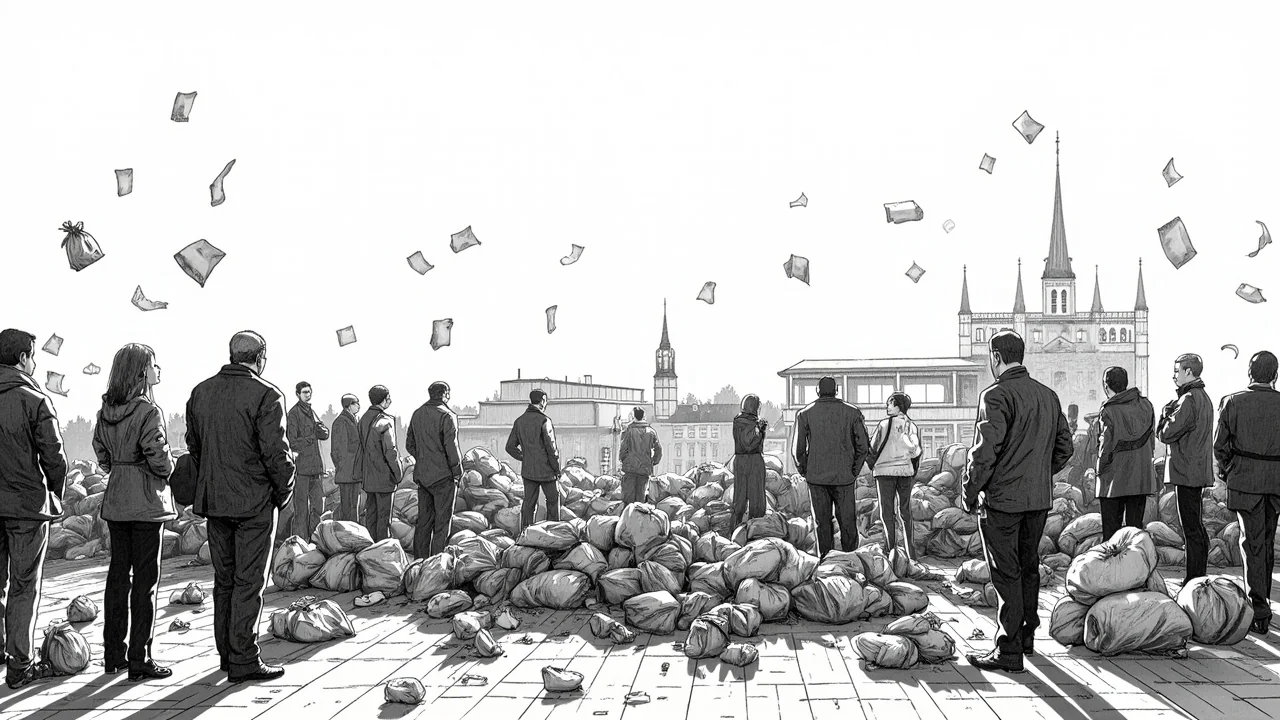
Norway's capital is struggling with a wave of ruptured garbage bags clogging its waste processing systems. The problem stems from shoppers, faced with expensive grocery store carrier bags, buying the cheapest possible rolls of plastic bags for their household trash. These flimsy alternatives are failing on conveyor belts, creating what city waste officials call a significant and costly operational headache.
Jørgen Bakke Fredriksen, press contact for Oslo's Waste Management and Recycling Agency, confirms the scale of the issue. 'It is still a challenge. Daily, there are garbage bags that burst or have burst when they arrive at the plant,' Fredriksen said. He directly links the problem to the near-seven-kroner price for single-use bags at grocery checkouts, which has led to a marked decline in their sales. Instead, sales of thinner, cheaper bag rolls have increased.
Thinner Bags, Bigger Problems
The core of the issue is simple physics applied to household economics. 'The thinner the bag, the cheaper, and the greater the chance that the bag with your residual waste will rip and create problems at the waste plants,' Fredriksen explained. When asked what bags people should choose, his advice was clear: 'Think about the thickness. It doesn't need to feel like a bag from Meny, but don't choose the thinnest and cheapest.' He urges residents to spend an extra five to ten kroner on a sturdier roll, noting a seven-kroner roll for 20 bags is often insufficient.
This shift in consumer behavior is creating a direct financial and mechanical burden on the city's waste infrastructure. The constant breakages require manual intervention to clean machinery and slow down the sorting process, increasing operational costs that are ultimately borne by taxpayers. The situation illustrates a clear, unintended consequence of Norway's push to reduce plastic bag use through pricing, where the environmental goal for shopping bags is creating a separate waste management issue.
A Cascade of Sorting Errors
The problem is compounded by a second trend: the misuse of dedicated sorting bags for general waste. In Oslo's system, purple bags are for plastic packaging, and green bags are for food waste. Fredriksen reports a rise in people using these colored bags for their regular trash. 'It is to the greatest extent the green food waste bags that are being used. The purple ones have some small holes for ventilation, so that is probably why the green one is used most, when people are going to use the wrong bag anyway,' he said.
This misuse has severe consequences for the city's specialized processing facilities. The green bags are supposed to be directed to the biogas plant at Romerike, where food waste is processed through grinders, screens, and sieels. 'It gets big consequences for us,' Fredriksen added. The machines are not designed for the contents of general waste. 'We see textiles, frying pans, canned goods - everything can end up in those bags. It destroys the machinery, and takes time and money,' he stated.
Textiles and Tangible Costs
Among the misplaced items, textiles pose a particular nuisance. 'It has become a lot of textiles in recent years. It can take an hour to loosen a sheet,' Fredriksen noted. These items wrap around moving parts, requiring workers to shut down equipment and perform lengthy, hazardous removal operations. This downtime translates directly into higher processing costs and reduced efficiency at a time when cities are under pressure to manage waste streams more effectively and sustainably.
Fredriksen's message to residents who are skimping on bags or using the wrong ones is pragmatic. 'Before, you spent a few kroner on the grocery bag. The difference now is that the money must be spent on a roll of bags instead. It is a small expense,' he said. He emphasizes that the solution requires a minor shift in household budgeting rather than a major sacrifice.
The Path to a Cleaner System
Oslo provides its residents with rolls of the correct purple and green sorting bags for free at designated pickup points, a system intended to make proper sorting easy and cost-free. The current confusion suggests a need for renewed public communication. Officials must clarify that while grocery bags are now expensive, the investment in adequate bags for non-recyclable household waste remains essential. The integrity of the entire municipal waste system, from the kitchen bin to the biogas plant, depends on the first link: a bag sturdy enough to make the journey.
The situation in Oslo serves as a case study for other municipalities implementing similar plastic reduction policies. It highlights the need for holistic planning that considers how consumer behavior might shift across the entire waste ecosystem, not just at the checkout counter. The goal of reducing plastic bag litter is laudable, but it must not come at the cost of crippling the sophisticated sorting systems that handle the waste afterward. For now, the fix rests with Oslo's residents, their shopping choices, and a few extra kroner spent at the store.