
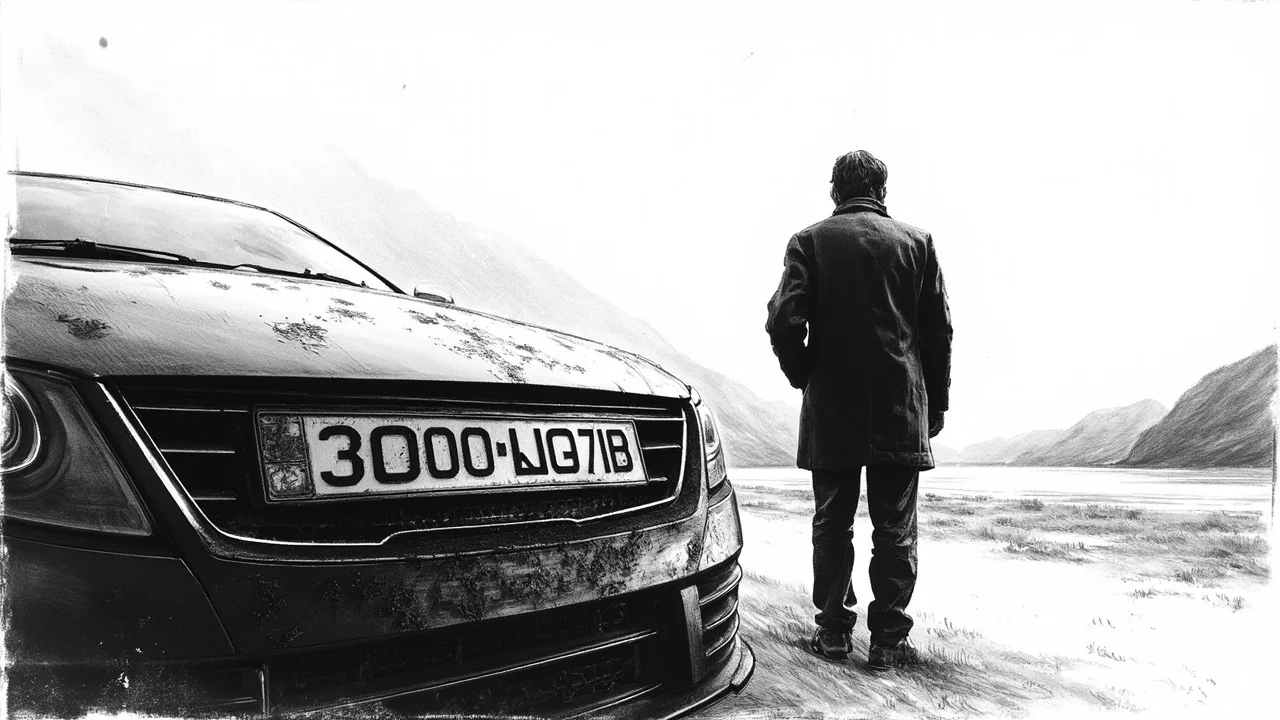
Norway's traffic police issued over 5,000 fines last year for obscured or illegal license plates, with a standard penalty of 3,000 kroner for non-compliant plates. The law is clear: a vehicle's license plate must be clearly visible at all times. This requirement is critical for the function of automated systems, from toll collection and speed cameras to police checks for insurance and registration fraud. With winter conditions coating vehicles in snow, salt, and grime, maintaining a clean plate has become a daily challenge for drivers, creating a widespread seasonal compliance issue.
The Legal Requirement and Its Purpose
Norwegian road traffic law mandates that license plates be clearly visible and not covered by foreign objects. The primary reason is functional. Toll payments are processed automatically by reading license plates. Speed camera violations are identified the same way. When police and vehicle authorities use their plate scanners to find uninsured vehicles, those with lapsed EU control checks, or cars with fake plates, the system depends on legible plates. "The rule is that the license plate must be clearly visible and not covered by irrelevant objects," said Assistant Police Chief Roar Skjelbred Larsen. He confirmed a violation can result in a 3,000 kroner fine for driving without the proper use of license plates.
Winter's Challenge and Police Discretion
Current weather conditions make simple compliance difficult. Snowfall, road salting, and road spray coat cars and plates in grime. Police acknowledge the difference between intentional concealment and accidental covering. "There is a difference between deliberately trying to hide the license plate number on the vehicle, and the snow drift having covered it," Skjelbred Larsen stated. He noted that if police see someone has deliberately tried to hide the plate, or if the plate is missing, a driver can expect a reaction. However, the context matters. The police urge all drivers to ensure the plate number is not covered by snow or anything else before driving, emphasizing preventive action.
Intentional Violations Face Strict Penalties
Cases of deliberate obscurement or manipulation receive far stricter penalties. Police have previously reported examples of newly washed cars being stopped because their plates were left dirty with a solid layer of grime. Drivers who have folded the plate down so it cannot be read immediately also occur. The same applies to plates where numbers or letters have been manipulated with marker pens, stickers, or similar. "In such cases, you are in a bad position and will likely be considered for a fine of 3000 kroner," the assistant chief said. More severe cases involve deliberate fraud. Some time ago, a man from Bergen was sentenced to pay a 20,000 kroner fine and 21 days in prison for installing a retractable roller blind that covered his plates during toll passages. The toll fraud had lasted two years before police uncovered it.
The Technology Dependency
This enforcement is underpinned by Norway's advanced digital traffic management infrastructure. The nation's extensive network of automatic toll stations and speed cameras functions entirely through automated license plate recognition (ANPR). A dirty or obscured plate can cause payment failures or administrative errors, even without fraudulent intent. For law enforcement, mobile ANPR units in patrol cars allow officers to instantly check dozens of vehicles against databases for insurance, roadworthiness, and stolen vehicle reports as they drive. An unreadable plate defeats this efficient system, forcing manual stops for checks that would otherwise be automated.
Practical Advice for Drivers
Police advice is straightforward but requires daily attention during winter. Drivers should make it a routine to clear their front and rear license plates of snow, ice, and mud before setting off. This is as important as clearing windows and lights. Simply driving and hoping spray will clear the plate is not sufficient, as wet grime can freeze or create a opaque film. Car washes often focus on body panels and may not pressure-wash the plate area effectively, so a manual wipe may be necessary afterward. The responsibility lies entirely with the vehicle owner or operator to ensure legibility.
A Question of Compliance Culture
This issue sits at the intersection of technology, law, and practical reality. Norway's high level of automated enforcement and societal trust in systems requires a corresponding level of compliance from individuals. The 3,000 kroner fine is a significant deterrent, reflecting the seriousness with which authorities view plate obscurity, given its potential to undermine multiple automated systems. While police exercise discretion for weather-related incidents, the message is clear: the license plate is a critical piece of legal identification, not an accessory. As winter continues, the sight of drivers brushing snow off their plates before driving may become as common as scraping ice off windshields, a new minor ritual in the season's routine.
What remains to be seen is whether public awareness will shift to view a clean license plate as a core part of vehicle readiness, especially as automation in traffic management only increases. The financial and legal risk is tangible, making those few seconds of extra cleaning a potentially costly winter habit to ignore.