
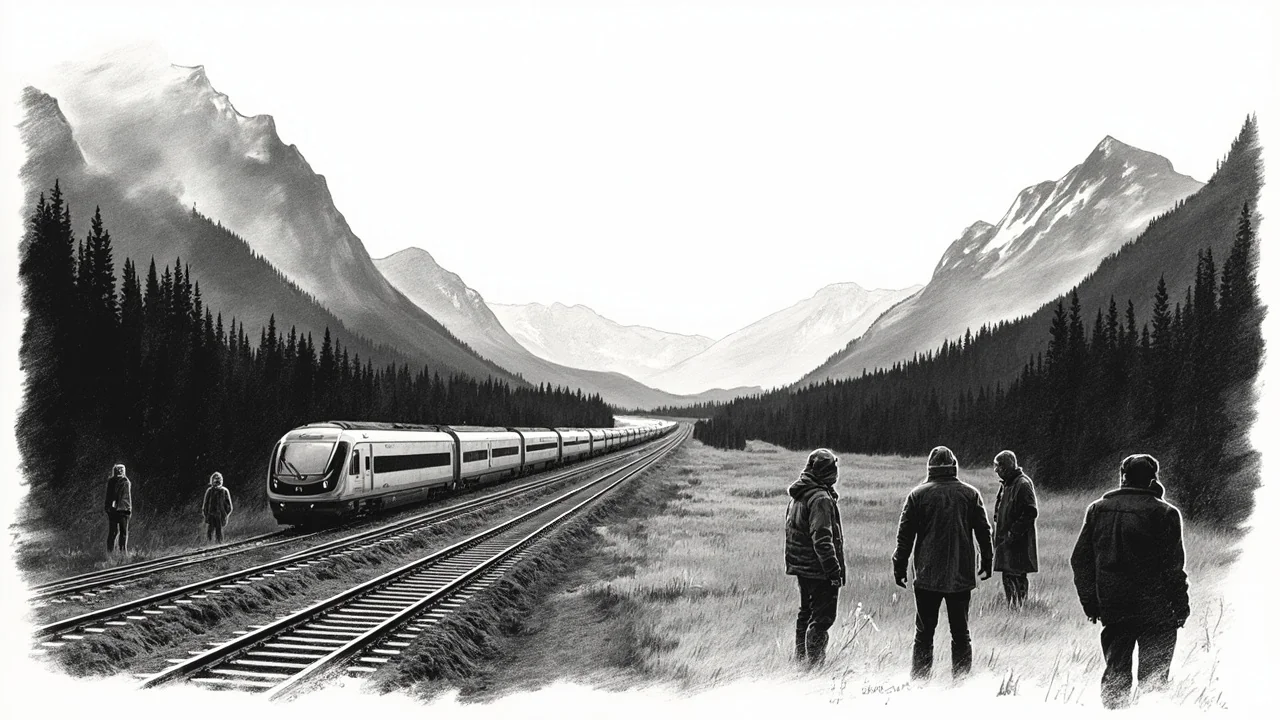
Norway's critical Dovrebanen railway line has suffered a complete shutdown after a train struck the overhead power lines near Dombås. The incident, reported by state rail operator Bane Nor at 13:07, has halted all passenger and freight traffic on the main artery connecting Oslo's Gardermoen airport to Trondheim. Hundreds of passengers are stranded on immobilized trains, with officials warning disruptions could last for hours.
“We do not yet have an overview of the extent of the damage,” said Bane Nor press officer Harry Korslund in a statement. “We have called out crews to assess the situation.” The affected train is without power, and Bane Nor has dispatched a rescue locomotive. The company cannot rule out that resolving the problems “could take a while,” directly impacting services run by both Vy and SJ, Norway's primary passenger operators.
Stranded Passengers Face Long Wait
One passenger aboard the stricken train, Markus Bjørnerud Kristiansen, described a frustrating standstill. “We have been told this will take time,” he said. He called the situation “tedious,” adding that the on-board conductor had asked everyone to be patient. “I don't have anything urgent I need to get to, but I assume others do!” His comments underscore the human impact of the infrastructure failure, leaving travelers uncertain of when they will reach their destinations.
Rail operators are scrambling to respond. Vy has warned passengers to expect significant delays and cancellations, promising an update as soon as more information is available. SJ Nord has begun organizing bus replacements for train services between Hamar and Oslo Central Station on affected departures. “We apologize for the inconvenience this causes,” an SJ statement read. The coordination of alternative road transport is a standard but complex procedure during major rail outages.
Assessing the Damage and System Vulnerability
The immediate focus for Bane Nor's technical crews is assessing the physical damage to the catenary system—the overhead wires that supply electricity to the trains. A collision severe enough to cause a full line stoppage suggests significant damage to both the wire and potentially the supporting masts. Repairing high-voltage electrical infrastructure is meticulous work, often dependent on weather conditions and the availability of specialized equipment and parts.
This incident highlights the vulnerability of a single-track main line in Norway's mountainous terrain. The Dovrebanen is not just a passenger corridor but a vital link for freight moving between central Norway and the south. A prolonged stoppage disrupts supply chains and logistics networks across the region. Bane Nor's Korslund confirmed the halt affects “all traffic, including freight traffic,” indicating broader economic repercussions beyond passenger inconvenience.
Historical Context of Norwegian Rail Reliability
While Norwegian railways are generally reliable, they are not immune to major disruptions. The country's challenging geography, with steep gradients, sharp curves, and harsh weather, places immense strain on infrastructure. The Dovrebanen, completed in its modern form in 1921, is a historic line that has required continuous, heavy investment to maintain. Incidents like today's power line strike, though infrequent, test the resilience of the system and the contingency planning of the operators.
Analysts often point to the tension between maintaining a vast, geographically difficult network and achieving the high punctuality rates expected by modern travelers and businesses. This event will likely reignite discussions about investment levels in rail infrastructure, the need for more redundant systems, and the speed of emergency response. The performance of Bane Nor and the train operators in managing this crisis—from passenger communication to repair efficiency—will be closely watched.
The Ripple Effect on Travel and Commerce
The disruption's impact extends beyond the immediate line. The Dovrebanen connects to other lines, meaning cancellations and delays could propagate through the network. Travelers heading north from Oslo to destinations like Lillehammer or Trondheim face the most direct impact, but those on connecting services may also experience knock-on effects. The bus replacement services, while a necessary alternative, are significantly slower and less capacious than trains, leading to longer, more crowded journeys.
For freight, the stoppage creates immediate logistical headaches. Rail freight is crucial for transporting everything from industrial goods to food products. Delays can have contractual and financial consequences for businesses reliant on just-in-time delivery. This incident serves as a stark reminder of the economic dependency on smooth rail operations, particularly along key national corridors where few competitive alternatives exist.
Looking Ahead: Recovery and Review
As repair crews work at the site, the key questions for authorities and the public are: How long will the closure last? And what caused the train to strike the power line in the first place? The latter question will likely trigger an internal investigation by Bane Nor to determine if the cause was technical failure, human error, or an external factor. The findings could influence operational procedures or maintenance schedules.
For now, the priority is restoring power and resuming safe operations. The stranded passengers will hope for a swift resolution, but history suggests that repairs to high-voltage rail systems are rarely quick. This midday incident could easily affect travel throughout the evening and potentially into the next day. The event is a test of Norway's rail crisis management, challenging the system's ability to protect passengers, communicate clearly, and restore a vital piece of national infrastructure under pressure. Will this disruption become a brief footnote or a catalyst for a deeper examination of the rail network's robustness?