
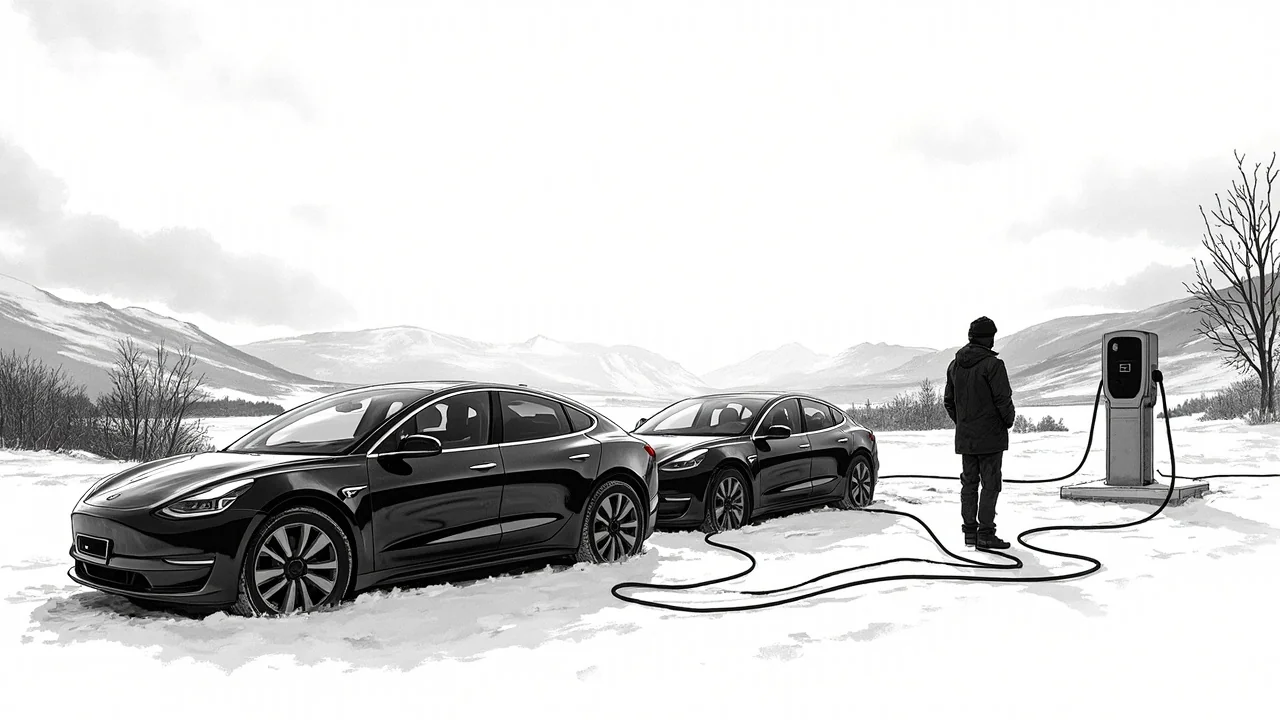
Norway’s electric vehicle drivers are facing a familiar but frustrating winter reality: slower charging and shorter range. New data from charging infrastructure shows a 30 percent increase in charging time during January compared to a summer day. This seasonal shift forces drivers to adapt their routines and underscores a key challenge for the Nordic tech hub's full-electric future.
The Cold, Hard Data on Winter Charging
Odd Olaf Askeland, head of public charging at the infrastructure firm Eviny, has the numbers. His company's systems show that while people charge just as often in winter, each session takes significantly longer. “Our data shows it's almost 30 percent longer charging time now in January than it is on a summer day,” Askeland said. The core issue is battery temperature. Lithium-ion batteries, the standard in most EVs, operate best at around 20 degrees Celsius. In the Norwegian winter, a battery can start at minus 20 degrees if a car has been parked outside. This cold temperature slows down the chemical reactions inside the battery needed for efficient charging.
How Battery Chemistry Limits Speed
The slowdown is rooted in battery chemistry. Inside a standard EV battery pack is a liquid electrolyte. This substance allows lithium ions to flow between the cathode and anode, which is how the battery charges and discharges. In the cold, this electrolyte becomes more viscous, like syrup straight from the fridge. This thicker fluid impedes the movement of ions, slowing down the entire charging process. Whether using a fast or rapid charger, a cold battery cannot accept energy at its maximum rate. This is why drivers often see a lower kilowatt (kW) rate displayed on the charger until the battery management system warms the pack.
Preheating Is the Essential Step
Industry experts point to preheating as the single most effective countermeasure. “The optimal temperature for the battery itself is 20 degrees,” Askeland emphasized. “That's why many cars preheat the battery to this temperature. But it doesn't necessarily happen by itself.” For the system to activate, the car typically needs to know a charging stop is coming. This requires programming the destination charger into the vehicle's built-in navigation system or manually activating a pre-conditioning function via the car's menu. Without this step, a driver might need to travel a considerable distance before friction and internal resistance generate enough heat naturally. Some newer models, particularly from Scandinavian-focused brands, feature more aggressive and automated thermal management systems designed for the local climate.
Real-World Impact on Norwegian Drivers
For drivers, the effect is tangible. Herman Sanner, who drove from Oslo, experienced it firsthand. “I've driven over from Oslo in the summer, and now in winter. From one charging stop to three now when it's cold, so I have absolutely noticed it,” he said. This increase in necessary stops alters travel planning and adds time to longer trips. It also leads to practical issues at charging hubs, like the queues reported at the Danmarksplass station in Bergen. The situation improves if the battery is already warm from a long drive. If you drive directly to a charger after finishing a trip, the battery is far more receptive to charging at a normal speed.
Cabin Heat and Other Energy Drains
Beyond charging, the cold weather impacts overall range through increased energy consumption. The largest drain is cabin heating. Running a powerful electric heater to warm a car from sub-zero temperatures can consume a significant portion of the battery's energy, directly reducing the distance a car can travel on a single charge. Other systems like heated seats, steering wheels, and defrosters add to the load. This combination of shorter range and longer charging times defines the winter EV experience in Norway, testing the convenience factor that is crucial for mass adoption.
The Road Ahead: Solid-State Solutions
The search for a technological solution is intensifying within the Nordic tech ecosystem. The future, many engineers believe, lies in solid-state batteries (SSBs). These next-generation batteries replace the liquid electrolyte with a solid material. A Finnish company, Donut Labs, is among the Nordic tech startups in this space, claiming to have made a critical breakthrough. This technology promises two major benefits for cold climates. First, solid electrolytes are less susceptible to performance degradation in low temperatures, potentially mitigating the winter charging penalty. Second, they offer reduced fire risk, a key concern for battery safety. While not yet commercially viable for mass-market EVs, the progress in SSBs represents a significant focus for Norwegian and Scandinavian research labs aiming to solve climate-specific challenges.
Practical Tips for Winter EV Use
For now, Norwegian drivers must work with current technology. The consensus advice from experts is straightforward. First, always precondition the battery by setting the charger as a destination in your navigation. Second, plug in at home whenever possible to keep the battery warm and start your day with a full charge. Third, use scheduled cabin heating while the car is still plugged in to preserve driving range. Fourth, understand that your vehicle's stated range is a summer estimate, plan trips with a winter buffer. Finally, parking in a garage, even an unheated one, provides some insulation against the coldest temperatures. As Norway continues its digital transformation into an electric transport society, managing the winter hurdle remains a shared effort between drivers adapting their habits and Nordic technology trends pushing for better hardware.
The challenge of cold-weather performance is a critical test for electric mobility in Scandinavia. While current data confirms the winter slowdown, the focus from Nordic tech startups and innovation labs on solutions like solid-state batteries highlights a regional commitment to not just adopting electric vehicles, but perfecting them for the harsh local environment. The next few winters will show how quickly technology can close the gap between summer ease and winter reality.