
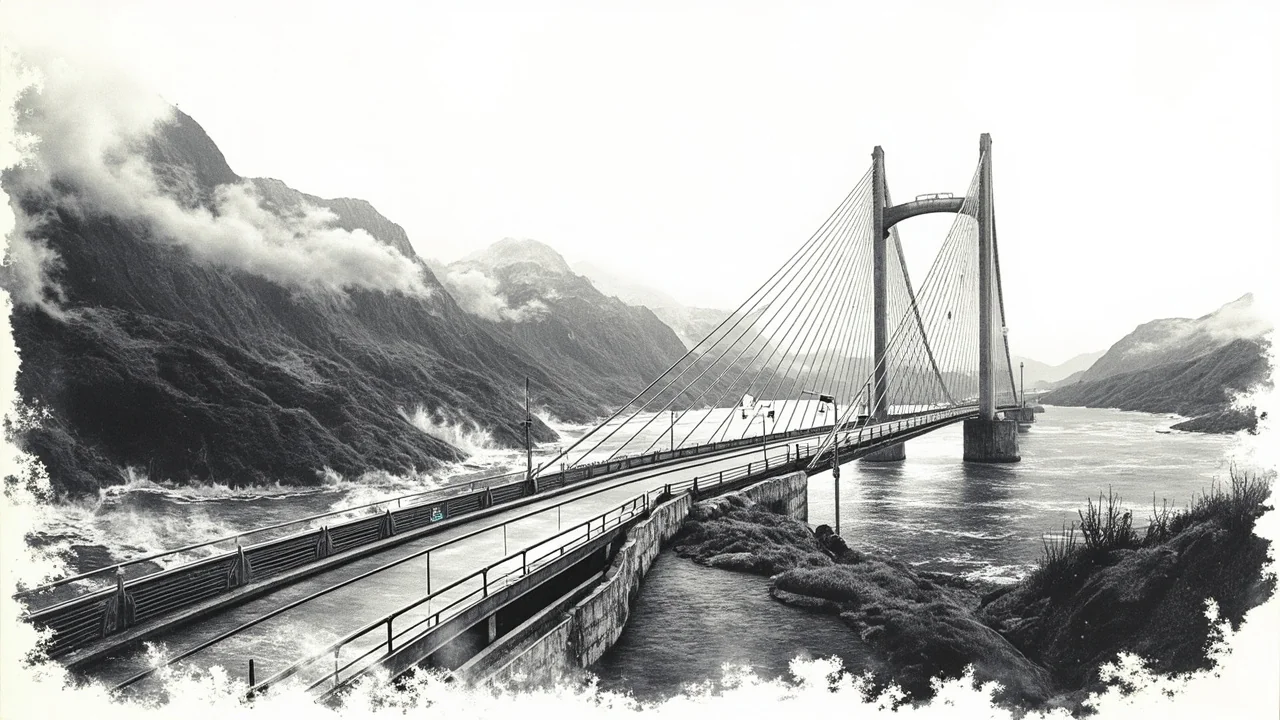
Norway's critical Helgeland Bridge on County Road 17 faces immediate closure threats as hurricane-force winds batter the coast. Meteorological Institute warnings predict gusts reaching 37 meters per second, following a shutdown triggered by 39 m/s winds. The vital artery connecting communities in Nordland county remains vulnerable to sudden closure with minimal notice, disrupting transport and isolating residents.
The Helgeland Bridge, a 1,065-meter-long suspension bridge, is a lifeline for the coastal communities of Helgeland. Its closure severs the main road link between the towns of Levanger and Bodø, forcing lengthy detours inland. Local authorities have issued urgent travel advisories, warning drivers to avoid the area and prepare for rapid changes. "The bridge can be closed at short notice as strong winds persist at the site," a traffic operator confirmed.
A Vital Link Under Siege
This is not the first time the bridge has succumbed to the fierce weather of the Norwegian Sea. The structure has a documented history of closures during autumn and winter storms, a recurring vulnerability for regional infrastructure. Each shutdown triggers a cascade of logistical problems, affecting commuters, commercial transport, and emergency services. The bridge's exposure makes it a barometer for the intense coastal weather patterns that define life in Northern Norway.
Local politicians have long highlighted the bridge's sensitivity. "When the Helgeland Bridge closes, our region is effectively cut in two," said a county council representative from the area. "It underscores our absolute dependence on a single piece of infrastructure in a harsh climate. We must have robust contingency plans, but the economic and social disruption is immediate and severe." The closure forces heavy goods vehicles onto alternative routes, adding hours to journey times and increasing costs for local businesses.
The Science Behind the Shutdown
The Meteorological Institute's yellow warning is a level two alert, indicating dangerous weather that could cause local disruptions. Winds forecast between 27 and 37 m/s qualify as a strong gale to hurricane force on the Beaufort scale. For suspension bridges like Helgeland, the primary risk is not structural failure but the danger to vehicles. High-sided trucks and caravans are particularly susceptible to being blown over or off course, creating extreme hazards.
Bridge operators use anemometers to measure wind speed at the deck level. Protocols typically mandate precautionary closures when sustained winds exceed certain thresholds, often around 25-30 m/s, or if gusts are deemed too dangerous. The decision is a balance between maintaining connectivity and ensuring public safety. "The wind direction is crucial," explained a civil engineer specializing in maritime structures. "Southeast winds, as forecast, hit the bridge at a particularly vulnerable angle. The geometry of the fjord can also funnel and accelerate the wind, creating localized gusts stronger than nearby areas."
Economic and Human Impact
Beyond the immediate traffic disruption, these closures have a tangible economic cost. The Helgeland region relies on tourism, fisheries, and small-scale industry. Unexpected bridge closures strand tourists, delay fresh seafood shipments, and prevent workers from reaching their jobs. For residents, it means cancelled medical appointments, disrupted school runs, and separation from family.
The incident highlights a broader national challenge. Norway's geography, with its deep fjords and scattered coastal communities, necessitates ambitious engineering like the Helgeland Bridge. However, climate change projections suggest increasing frequency and intensity of extreme wind and precipitation events along the coast. Infrastructure built to historical weather patterns may face more frequent stress tests. This raises long-term questions about resilience and adaptation planning for vital transport links.
A National Infrastructure Dilemma
Norway's Public Roads Administration constantly monitors weather-vulnerable points. While building a more resilient bridge might be technically possible, the cost would be enormous. The more common strategy involves improving forecasting, monitoring, and warning systems to optimize closure times—minimizing unnecessary shutdowns while never compromising safety. Some experts advocate for investing in alternative transport modes, like improved ferry services or tunnels, as backup systems for when bridges close.
However, in sparsely populated counties like Nordland, the economics of building redundant infrastructure are challenging. The Helgeland Bridge itself was a monumental project when it opened in 1991, replacing a network of ferries. Its closure is a stark reminder that the engineering triumph that connected communities can still be disabled by the raw power of Norwegian nature. The debate continues between the need for reliable connections and the fiscal realities of maintaining them in an extreme environment.
As the current storm system passes, the bridge will reopen. Traffic will resume its flow across the Leirfjorden. But the episode will be logged as another entry in a growing list of weather-related disruptions. For now, residents and travelers are left watching the weather forecast with heightened attention, knowing that a shift in the wind could once again sever their most important link. The question for Norwegian authorities is whether reactive closures are a sufficient long-term strategy, or if a more fundamental reassessment of coastal infrastructure resilience is on the horizon.