
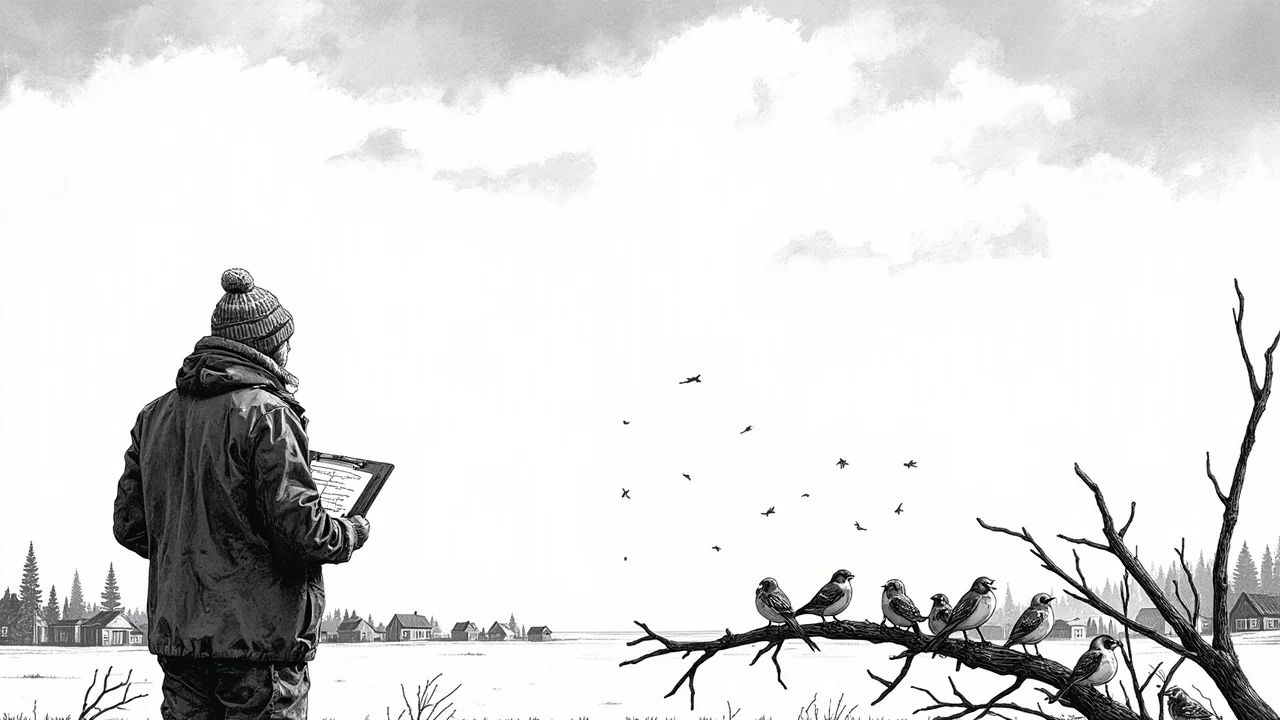
Norway's most familiar bird, the house sparrow, is in a state of silent crisis. The species, which has lived alongside humans for millennia, has been named 'Bird of the Year 2026' by BirdLife Norge in a bid to draw urgent attention to its dramatic decline. Populations have fallen by 15-30% in Norway over the last decade, mirroring a catastrophic 63% drop across Europe since 1980. This sharp decline signals a profound shift in the relationship between Norwegians and their immediate natural environment.
"There are few birds so strongly linked to humans as the house sparrow," said Martin Eggen, a nature conservation advisor with BirdLife Norge. "It is completely dependent on human activity. It really needs our help to survive." The designation as Bird of the Year is not a celebration, but a conservation alarm bell. It aims to mobilize public action for a species that was once ubiquitous in every farmyard, garden, and city street across the country.
The Disappearing Companion
The house sparrow, known locally as gråspurv or huskaillen, evolved alongside human agriculture. For roughly 10,000 years, it has thrived on the grain, seeds, and food scraps provided by human settlements. Its traditional nesting sites were in the nooks and crannies of older farm buildings, barns, and stables. However, modern Norwegian architecture and agricultural practices have erased these habitats.
"Before, 'everyone' had horses and livestock. Then there was plenty of food, and many places to nest. Now our houses have become tighter, and there are fewer hollows under roofs and in walls," Eggen explained. The result is a critical shortage of suitable nesting sites and reduced access to food. Newer buildings are sealed and efficient, leaving no room for sparrows. The decline of small-scale farming and open farmyards has further reduced the mosaic of habitats the species requires.
A Silent Indicator of a Larger Problem
Experts point to the parallel collapse of insect populations as a direct and devastating blow to house sparrows. While adults eat seeds, sparrow chicks are entirely dependent on insects for protein during their first critical days of life. "The decline in insect populations hits the house sparrow directly, because insects are absolutely crucial food for the young," Eggen stated. The sparrow's struggle is therefore a visible indicator of the broader, less visible insect apocalypse, which has severe implications for entire ecosystems.
This connection makes the house sparrow a vital barometer for environmental health in human-dominated landscapes. Its disappearance from a neighborhood is not just a loss of a familiar sight and sound; it is a warning sign of ecological degradation happening on doorsteps. The bird's fate is inextricably linked to choices about urban planning, agriculture, and pesticide use.
Simple Actions for a Complex Problem
The conservation message from BirdLife Norge is one of pragmatic hope. They argue that individual Norwegians can make a tangible difference through simple, direct actions. The primary recommendations are to put up nest boxes specifically designed for house sparrows and to ensure they are included in winter bird feeding.
"We encourage everyone to put up a nest box and feed the house sparrow this winter too," Eggen said. House sparrow nest boxes differ from those for tits; they are designed for colonial nesting and have a larger entrance hole. Placing several boxes together can help recreate their preferred social nesting conditions. Providing food like millet, cracked corn, and sunflower hearts during the harsh winter months can be a lifeline for surviving flocks.
These actions serve a dual purpose. They provide immediate material support for the struggling species, and they reforge a conscious connection between people and local wildlife. In an increasingly digital and insulated world, the simple act of observing and caring for garden birds offers a grounding link to the natural world.
The Power of Public Participation
BirdLife Norge's strategy hinges on public engagement. The annual Garden Bird Count, scheduled for January 24-25, is a cornerstone of this effort. Last year, over 10,000 gardens participated, with an estimated 30,000 people contributing data by counting birds in their local environment. This citizen science project generates crucial long-term data on population trends for the house sparrow and other common species.
"It's good for mental health to watch birds," Eggen noted. "They tell us a lot about how things are in the nature around us, and how the insects are doing." This participatory model turns every gardener and bird feeder into a conservationist and a researcher. The data collected helps organizations like BirdLife Norge track the effectiveness of conservation campaigns and identify new areas of concern.
A Cultural Loss and a Call to Action
The decline of the house sparrow represents more than just a statistical loss in biodiversity. It represents a fading thread in the cultural fabric of everyday Norwegian life. The chatter of sparrows was a background soundtrack to generations, a constant presence in villages and towns. Their absence creates a quieter, poorer environment.
Naming it Bird of the Year 2026 is a forward-looking attempt to reverse this trend before it's too late. It is a two-year campaign designed to build knowledge and habitat ahead of its titular year. The goal is to make 2026 a year of recovery, not just recognition. The success of this campaign will not be measured in headlines, but in the gradual return of chirping flocks to Norwegian eaves and hedges.
The house sparrow's plight is a test case for human-aided conservation in the Anthropocene. It asks a fundamental question: can we redesign our modern lives to make space for the species that depend on us? For a bird that chose to live with humanity ten thousand years ago, the answer must be found in the gardens, buildings, and choices of modern Norway. Its future now rests entirely in human hands.