
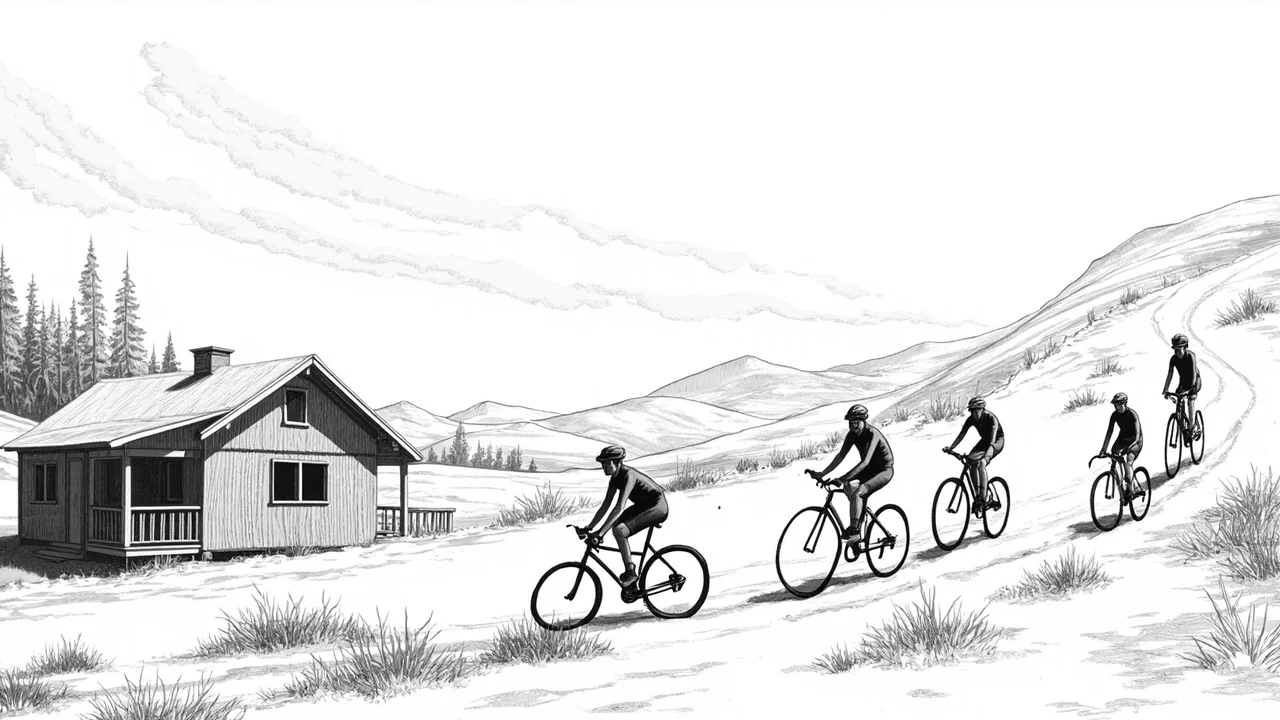
Norway's historic Kikutstua ski hut has recorded a steady decline in winter ski days over the past decade, while spring and autumn cyclist visits have surged by an estimated 40% as climate change reshapes Nordmarka. This shift marks a profound transformation for a cabin that has been a cornerstone of Norwegian friluftsliv since its opening in the winter of 1926. Known as the Norwegian Trekking Association's largest lodge in Nordmarka, Kikutstua's evolving reality reflects broader environmental changes impacting Arctic and sub-Arctic regions, where warmer temperatures are shortening traditional snow seasons.
A Century of Ski Tradition
Kikutstua's story began nearly 100 years ago, woven into the history of how outdoor life has developed in Norway. For generations, it has served as a vital refuge and gathering point for skiers exploring the marked trails of Nordmarka, the vast forested area bordering Oslo. The hut's identity has been intrinsically linked to winter, with its operations and community built around reliable snow cover from December through March. This tradition is embedded in Norway's cultural fabric, where skiing is not merely a sport but a fundamental aspect of national identity and access to nature. The consistency of the ski season at Kikutstua, once taken for granted, provided a predictable rhythm for outdoor enthusiasts and the local economy.
The Unfolding Climate Shift
The current hosts, who recently took over operations, are preparing for a new normal defined by shorter and more unpredictable ski seasons. Meteorological data for southern Norway, which includes the Nordmarka region, shows a clear trend of rising average winter temperatures and decreased snowfall duration over the last 30 years. While specific figures for Kikutstua are not publicly aggregated annually, the trend is palpable to those running the lodge. The window for classic ski tourism is contracting, pushing the operational focus toward the shoulder seasons. This change is not an isolated incident but part of a pattern affecting mountain areas across Norway, with implications for tourism businesses and recreational patterns tied to the country's energy-rich economy, which itself contributes to global emissions.
Adapting to Green Seasons
In response, Kikutstua is increasingly catering to a different crowd: cyclists. The months of May, June, September, and October now see a steady stream of mountain bikers and gravel cyclists where skiers once dominated. The hut's trails and facilities are being evaluated for this new use. This adaptation is a practical business decision and a cultural shift. Where the sound of skis on snow was once the dominant melody, the hum of bicycle tires on forest paths is becoming more common. The hosts are adjusting their supplies, marketing, and even their maintenance schedules to accommodate this longer period of green, snow-free access. This transition highlights how climate change is directly altering the economics of outdoor hospitality in Norway.
The Electric Bike Factor
A significant driver of this increase in cyclist traffic is the popularity of electric-assisted bicycles. The steep trails around Kikutstua, which may have deterred some riders in the past, are now accessible to a wider range of people with the help of an electric motor. This technological adoption has accelerated the change, making the hut a feasible destination for day trips and tours even during the muddier periods of spring and autumn. The hosts note that e-bike tourists often have different needs, seeking charging points and robust repair kits, which are now considerations in the hut's planning. This trend mirrors a national increase in e-bike sales, illustrating how technology and environmental change are intersecting to reshape Norwegian outdoor life.
Cultural and Economic Ripples
The transformation at Kikutstua signals a wider adjustment for Norway's friluftsliv. Other ski lodges and tourist facilities in similar regions are likely facing comparable pressures. The shift from a winter-based economy to a more diversified, multi-season model presents both challenges and opportunities. For local communities and the Norwegian Trekking Association, which manages numerous cabins, it requires rethinking infrastructure investment, seasonality of employment, and the very definition of these outdoor spaces. While skiing will remain part of Kikutstua's future, its role is becoming more symbolic and weather-dependent, while cycling grows as a reliable activity. This evolution raises questions about the long-term sustainability of traditions built on stable climates.
Looking to the Future
As the new hosts at Kikutstua prepare for another season, their focus is on flexibility. They are not abandoning winter but embracing a broader calendar. The hut's legacy as a gathering place continues, even if the activities change. This story is a microcosm of the adaptation required across Norway as the effects of a warming planet become locally visible. The success of Kikutstua in navigating this shift may offer lessons for other heritage sites facing similar environmental pressures. Ultimately, the hut's ability to blend its rich history with a changing climate will determine its role for the next century of Norwegian outdoor life.