
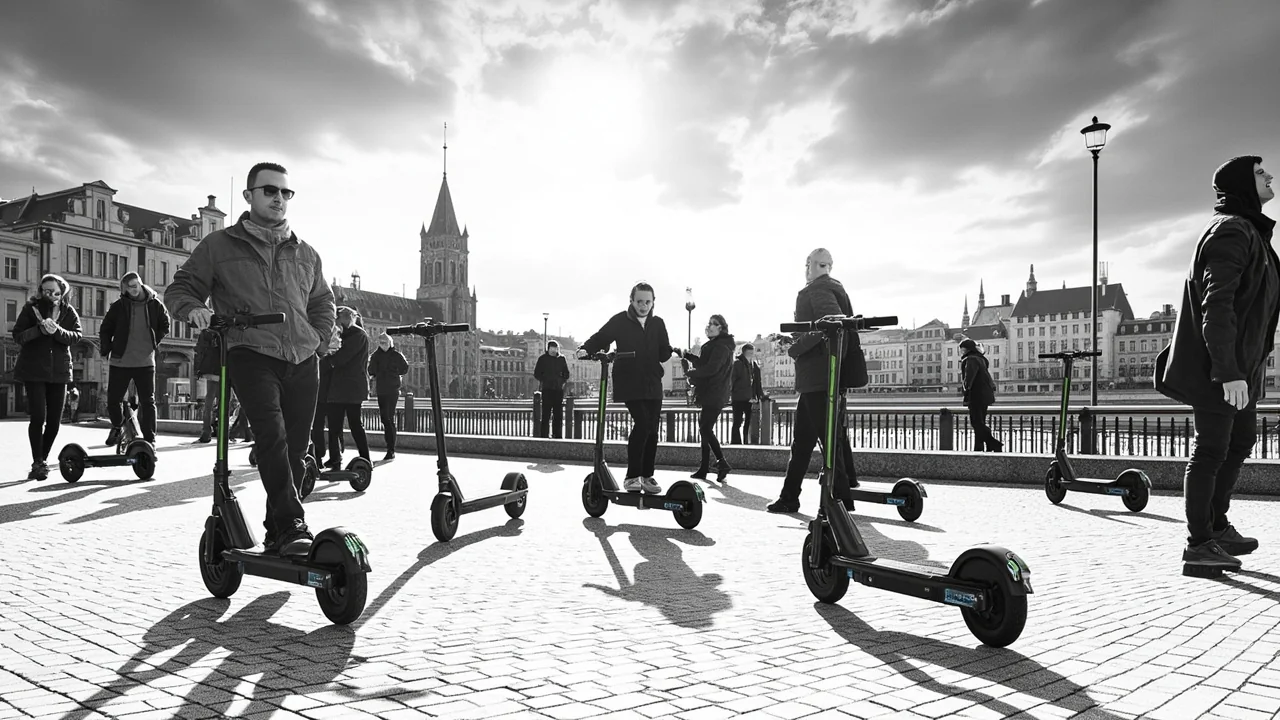
Oslo's electric scooter accident numbers doubled last year after the city council permitted operators to deploy twice as many vehicles, prompting a major political party to demand a drastic rollback. The Green Party (MDG) is now calling for the number of rentable e-scooters in the capital to be cut by half, from 16,000 back to 8,000, citing what it calls a direct link between the increased fleet and a surge in injuries.
Statistics from the Oslo Emergency Clinic show that up to November last year, 1,473 e-scooter-related injuries were registered. This figure is double the total number of such injuries recorded in all of 2022. The sharp increase followed a political decision in April 2023 to raise the cap on permitted e-scooters from 8,000 to 16,000.
A Policy Reversal Demanded
MDG's representative in the city council, Sirin Stav, framed the current situation as a predictable outcome of lax regulation. “The current chaos and the doubling in the number of accidents is a direct result of a conscious political choice to unleash twice as many electric scooters,” Stav said in a statement. The party asserts that the correlation is clear and that restoring the previous, lower cap is a necessary first step to improve pedestrian safety and order on public pathways.
Stav, a former city councilor for transport, outlined a broader suite of measures MDG believes are required. “MDG proposes halving the number, introducing more no-ride zones, stricter parking rules, a higher age limit, night-time shutdowns, and higher fees – because that is what actually works,” she stated. The proposal represents a significant tightening of the regulatory framework that has governed the popular but controversial micro-mobility sector since its introduction.
The Core Conflict: Accessibility vs. Safety
The debate over e-scooters in Oslo encapsulates a wider struggle in urban planning between promoting green, accessible transport and ensuring public safety and urban livability. Proponents argue they are a vital last-mile solution, reducing car dependency for short trips. Critics point to cluttered sidewalks, reckless riding, and significant injury rates as unsustainable downsides.
The 2023 decision to double the fleet was initially seen as a win for accessibility and competition among operators. However, the subsequent injury statistics have provided potent ammunition for those advocating for a stricter regime. The data offers a concrete basis for the argument that volume directly impacts harm, moving the discussion beyond anecdotal complaints to evidence-based policy.
Political Implications and Next Steps
For the proposal to become reality, MDG would need to build a majority in the Oslo City Council. This will involve convincing other parties that the safety and public space concerns outweigh the benefits of a large, readily available scooter fleet. The issue cuts across traditional political lines, with divisions often based on urban vs. suburban perspectives and generational attitudes towards new mobility.
The coming political discussion will likely focus on finding a new equilibrium. A simple rollback to 8,000 scooters may be contested by operators and some users, potentially leading to a compromise figure. The ancillary measures—like geofenced no-ride zones in busy areas like Karl Johans gate or Aker Brygge, stricter parking corrals, and higher fees for improper parking—could gain broader support as targeted tools to manage the problem without an outright deep cut in numbers.
Industry and Public Reaction
While the source material does not include direct quotes from e-scooter companies, similar regulatory moves elsewhere have been met with warnings about reduced service reliability and accessibility. Operators typically argue that education, better infrastructure like dedicated lanes, and technological solutions like sidewalk detection are preferable to blunt caps. Public opinion is also mixed, with strong supporters and vehement detractors ensuring the issue remains a hot-button topic in city politics.
The Oslo Emergency Clinic's data, however, puts significant weight on the side of regulatory action. When injury statistics double in tandem with a policy change, it creates a powerful impetus for correction. MDG's proposal sets a clear marker for the debate: safety and orderly public spaces must be the priority, even if it means scaling back a popular modern convenience.
A Test for Urban Mobility Policy
Oslo's e-scooter dilemma is a test case for how progressive cities manage innovation. The city has ambitions to be a leader in sustainable transport and cutting emissions. This goal sometimes involves experimenting with new solutions, but also requires the political courage to impose strict limits when those solutions create new problems. The move from a permissive to a restrictive stance on e-scooters reflects a maturation in this policy area, where initial enthusiasm is being tempered by real-world outcomes.
The final decision will send a signal about Oslo's priorities. Will it prioritize unfettered access to micro-mobility, or will it assert that the safety of pedestrians and riders, and the quality of its shared urban spaces, are non-negotiable? The answer will shape the city's streets for years to come.