
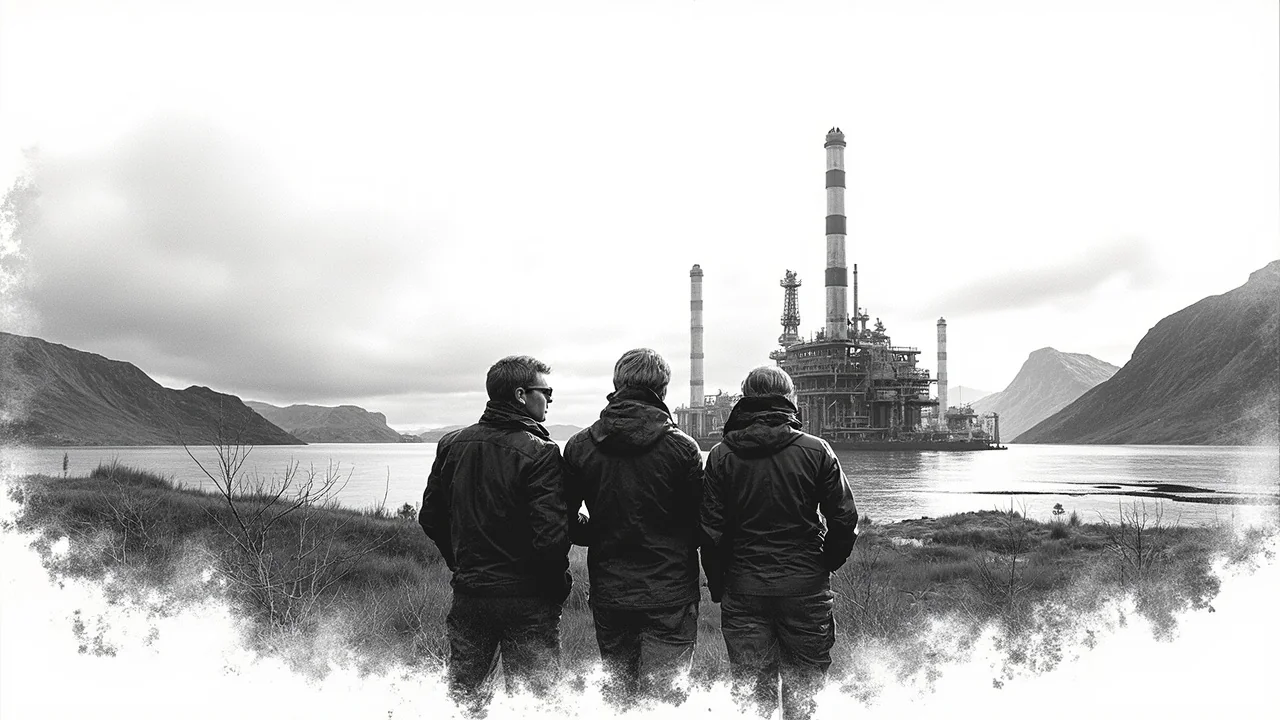
Norway's Storting vote on Thursday could see five parliamentary parties backing a proposal to release electricity reserved for the Melkøya electrification project, threatening the government's majority. This unexpected shift includes all of the government's support parties, the Conservative Party (Frp), and the Christian Democratic Party (KrF), with the Socialist Left Party (SV) now negotiating a compromise. The move puts the future of a key Arctic energy investment in doubt and highlights deep divisions over Norway's climate and industrial policies.
A Growing Parliamentary Rebellion
Every party that typically supports the Labour Party (AP) and Centre Party (SP) minority government has expressed intent to vote for Rødt's proposal. This means the government cannot rely on its usual backing. The Conservative Party and the Christian Democrats have also announced their support, creating a potential majority against the government's position. The vote centers on freeing up power grid capacity currently earmarked for electrifying the Melkøya gas processing plant in Hammerfest, a project aimed at cutting CO2 emissions from offshore operations. The government and state-owned Equinor have consistently warned that diverting this electricity would violate Norwegian law and contractual obligations.
SV Seeks a Middle Path
SV, a crucial support party, is now working on an alternative solution with the AP government. SV's deputy leader, Lars Haltbrekken, confirmed the negotiations. He said SV will propose a gas power plant with carbon capture and storage instead of using reserved electricity or building new wind farms. "We are against the wind turbines up there, because they destroy nature and they severely impact Sami reindeer herding interests and other Sami interests," Haltbrekken said. "The other point is that we want to cut emissions. But the proposal on the table now does not solve the problems related to interference in nature. The power will just be distributed to others, but many data centers are in queue." He compared the situation to passing a resolution ordering a minister to speed, which they cannot do without legal authority.
Rødt's Architect Expresses Disappointment
Sofie Marhaug from Rødt, who designed the Melkøya proposal, expressed sharp disappointment with SV's potential defection. Her initiative had long been poised to hand the government a defeat. "SV is allying itself with the two parties that are for the electrification of Melkøya. So how that can be a solution, I am skeptical," Marhaug said. She urged SV not to yield to pressure from business groups like the NHO. "I hope that SV does not let itself be pressured by NHO and company. I think they are making an extremely unwise choice if they let Ap, Høyre, and NHO dictate SV's policy. This is not the SV I know," she added.
Local Backlash in the Arctic
In Hammerfest, the municipality hosting the Melkøya facility, local politicians from across the spectrum oppose Rødt's proposal. Mayor Terje Rogde from the Conservative Party called it a "betrayal of the region." He said, "I think this is a betrayal of the district by Rødt, which is now coming up with a new battle proposal to stop a legally made decision." Local SV members in Hammerfest, Ingrid Petrikke Olsen and Elisabeth Rønning, also do not support Rødt's move. They compared the situation to a ladder game where you are almost at the top, implying that the proposal undermines long-term planning and investment stability. Their stance underscores the tension between national political maneuvers and local economic concerns in Northern Norway.
Legal Warnings and Energy Market Ripples
The government and Equinor have stated clearly that reallocating the reserved electricity would be in conflict with Norwegian law. This legal stance forms the core of the administration's opposition. Energy Minister Terje Aasland has emphasized that the reservation is crucial for meeting emission reduction targets from the petroleum sector without jeopardizing grid stability. The Melkøya plant processes gas from the Snøhvit field in the Barents Sea, and its electrification is part of Norway's strategy to maintain oil and gas production while lowering its carbon footprint. Diverting the power could signal regulatory unpredictability, potentially chilling investment in future Arctic energy projects.
The Broader Political Implications
This vote transcends energy policy, testing the cohesion of Norway's political landscape. The AP government's ability to govern through compromise with support parties is under strain. If SV reaches a deal with the government, it might salvage the majority, but at the cost of alienating Rødt and others pushing for more aggressive climate action. The debate reflects a national dilemma: balancing emission cuts, protecting Sami interests and Arctic nature, and maintaining Norway's lucrative oil and gas industry. The outcome will influence Norway's approach to the European energy market, where it is a key supplier, and its credibility in international climate forums.
What Comes Next
All eyes are on Thursday's vote in the Storting. If SV sides with the government, the Melkøya electrification may proceed under a modified plan, possibly incorporating carbon capture. If SV joins the opposition, the government faces a significant defeat, forcing a rethink of its energy and industrial policies for the north. The decision will resonate beyond Oslo, affecting Hammerfest's economy, Sami communities, and Norway's position as a stable, green energy partner. As politicians negotiate, the core question remains: can Norway reconcile its climate ambitions with its industrial heritage in the Arctic?