
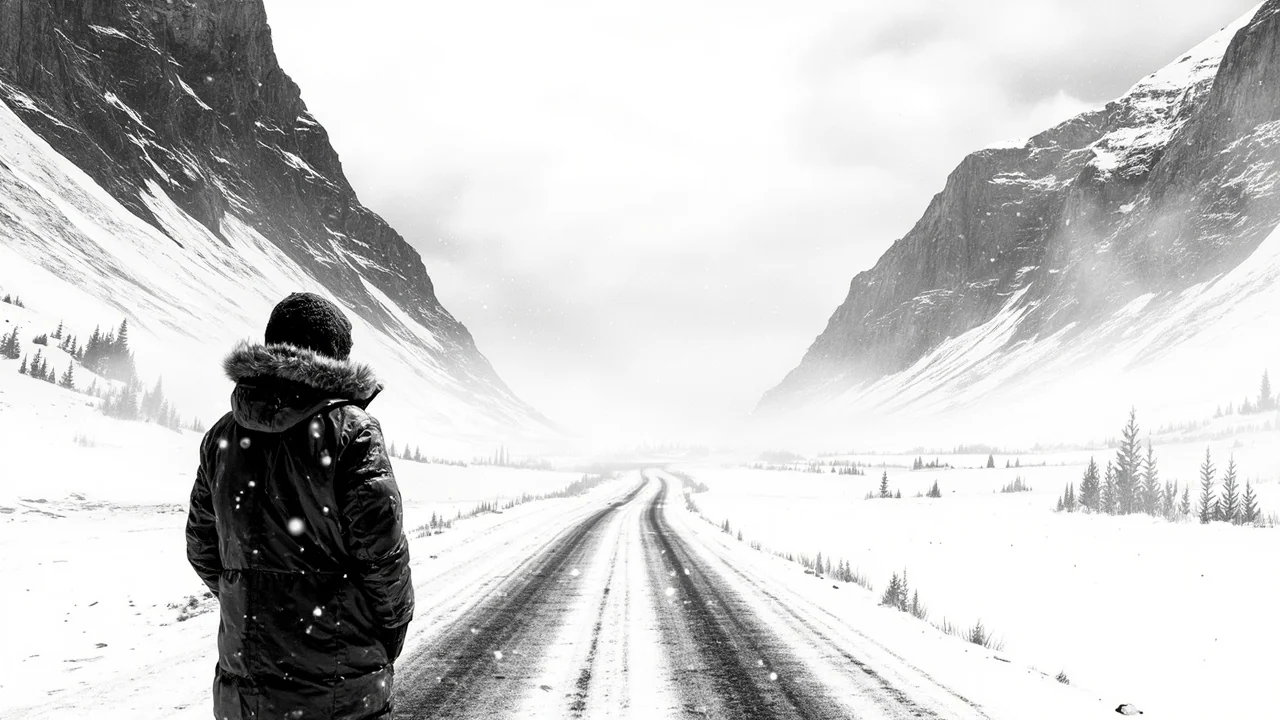
Norway's E134 highway over the formidable Haukelifjell mountain plateau is closed to all but convoy traffic, a stark reminder of the raw power of the nation's winter. The Norwegian Public Roads Administration has mandated convoy driving, known locally as 'kolonnekjøring,' due to severe weather and avalanche danger. This critical transport artery linking eastern and western Norway will likely remain under convoy control until early Wednesday morning, with further closures forecast for Thursday and Friday.
For travelers and truckers, the announcement means long waits, careful planning, and submission to the authority of the snowplow drivers who lead the convoys. The closure disrupts freight, isolates communities, and showcases the annual battle between Norwegian infrastructure and the Arctic climate. It is a routine yet profound event that defines life in the world's northernmost connected nation.
The Mechanics of Mountain Control
Convoy driving on Norwegian mountain passes is a meticulously organized operation. When winds exceed 15 meters per second, visibility drops near zero, or avalanche risk is deemed too high, the Roads Administration halts free passage. Traffic is then gathered at designated points on either side of the mountain, such as the Haukeliseter tourist lodge. Under the guidance of a heavy-duty snowplow, vehicles proceed in a slow, single-file line through the most hazardous sections.
The lead vehicle, equipped with professional drivers who know every curve and wind pattern of the pass, sets a safe pace. No overtaking is permitted. The convoy system is not merely a suggestion; it is a legal requirement enforced by road authorities. Ignoring closure signs and attempting to drive alone is illegal, perilous, and can result in heavy fines. It is a system built on collective safety and respect for nature's limits.
Economic and Social Ripple Effects
The closure of Haukelifjell sends immediate shockwaves through supply chains and daily life. The E134 is a vital corridor for freight moving between the port of Haugesund and the populous east, including the capital region of Oslo. Delays here cascade, affecting supermarket shelves, industrial components, and time-sensitive goods. For the transport industry, these closures represent costly downtime and logistical headaches.
Beyond commerce, the isolation impacts people. Residents in the Setesdal valley or smaller communities like Røldal find their most reliable connection to the outside world severed. Medical transports require special coordination with emergency services. Travel plans for families, tourists, and businesspeople are thrown into disarray. The mountain pass is more than asphalt; it is a social lifeline, and its closure is felt deeply in the regions it serves.
A Nation Defined by Geography
This event on Haukelifjell is not an anomaly but a feature of the Norwegian condition. The country is crisscrossed by dozens of high mountain passes—Sognefjellet, Trollstigen, and the Atlantic Ocean Road—that are routinely closed or restricted each winter. Managing these roads is a core function of the state, costing billions of kroner annually in maintenance, snow clearance, and avalanche protection.
Experts point to this as a fundamental challenge for Norwegian policy. "Our infrastructure investment must always account for the fact that we are fighting geography itself," says Lars Fjelldal, a senior advisor at the Norwegian Institute of Transport Economics. "The budget for the national road network isn't just about building new roads; it's a massive, ongoing subsidy to keep existing ones open against elemental forces. This defines our energy needs, our settlement patterns, and even our national character."
Climate Change and an Uncertain Future
The recurring closures also frame a pressing national debate: climate change. While a single winter storm is not evidence of broader trends, the Norwegian Centre for Climate Services reports that winters are becoming warmer and wetter. This can lead to more volatile precipitation, with snow turning to rain at higher altitudes, increasing the risk of slush avalanches and ice formation on roads.
Paradoxically, milder winters could reduce some traditional snow-related closures. However, they may introduce new hazards like more frequent freeze-thaw cycles and rockfalls as permafrost melts. The long-term future of mountain pass reliability is uncertain. Some analysts suggest that increased investment in alternative transport links, including subsea tunnels or improved rail, may become more economically justified as climate volatility increases.
The Human Element of the Convoy
At its heart, the convoy is a human story. For the drivers in the queue—the trucker from Poland, the family heading to a ski cabin, the local farmer with supplies—it is an exercise in patience. Conversations strike up at rest stops. Coffee from thermoses is shared. There is a shared, unspoken understanding that everyone is at the mercy of the same weather.
The greatest responsibility rests with the convoy leaders. These are highly experienced operators of massive snow-clearing equipment. They read the mountain's mood, judge wind direction over the barren plateau, and make split-second decisions for the safety of hundreds following them. Their expertise, honed over decades, is a critical national asset. They are the quiet guardians of Norway's winter mobility.
Looking Beyond the Immediate Closure
The forecast for further convoy driving later in the week underscores the persistent nature of the threat. This is not a one-off storm but a sustained period of winter hostility. It prompts questions about resilience and adaptation. Should Norway invest more in permanent avalanche shelters, like the famous structures on the railway line over the mountain? Can weather prediction and digital coordination be improved to minimize waiting times?
The Storting has repeatedly debated increasing funds for mountain road maintenance. These debates pit the practical needs of regional Norway against the cost concerns of the central treasury. Every closure of Haukelifjell strengthens the argument of regional politicians who demand more robust infrastructure. As one member of the Storting from Telemark recently stated, "The state's responsibility does not end where the snow begins."
Norway's relationship with its mountains is one of awe, dependence, and constant negotiation. The closure of the E134 over Haukelifjell is a temporary retreat in that endless negotiation. It is a demonstration of prudence over convenience, a collective pause dictated by the environment. As the convoy snakes its way carefully over the pass, headlights piercing the blowing snow, it embodies a fundamental Norwegian truth: here, nature sets the timetable, and humanity must learn to follow.
Will the increasing unpredictability of winter weather force a fundamental rethink of how Norway connects its regions? The answer will be written not in policy papers, but on the winding, snow-swept asphalt of passes like Haukelifjell in the decades to come.