
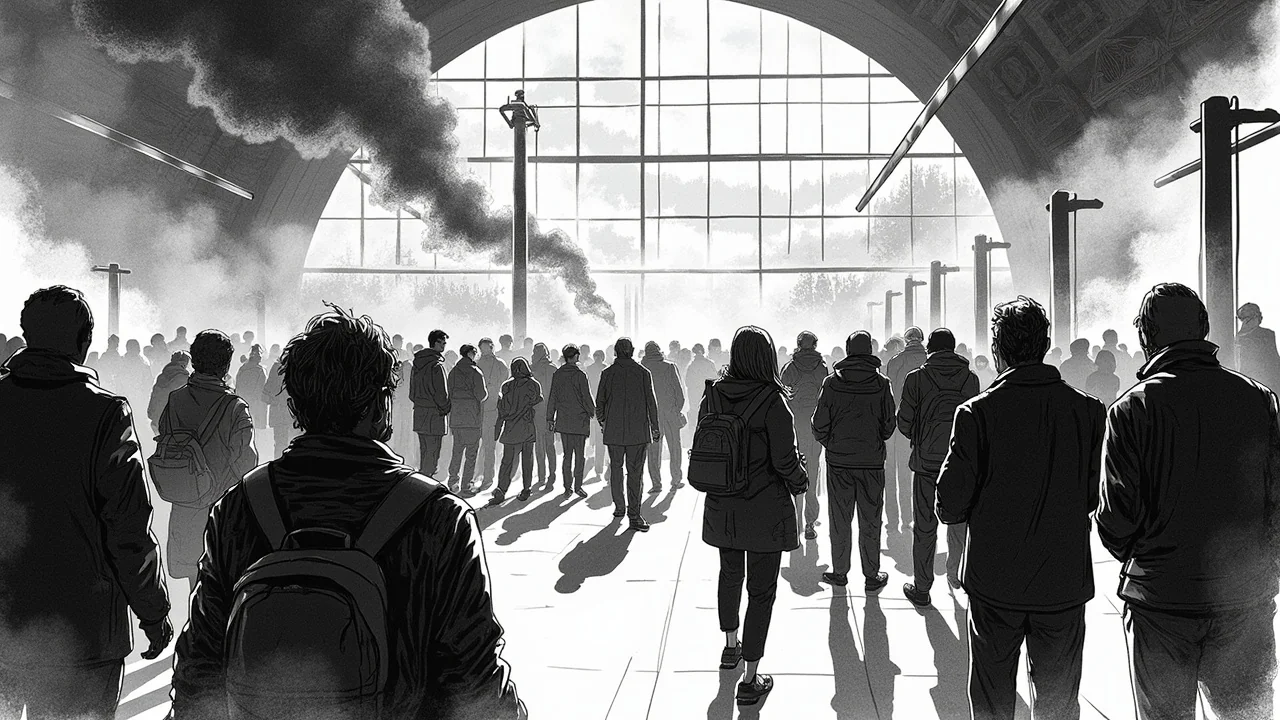
Norway's Nationaltheatret station, a critical node for 70,000 daily commuters, was evacuated Tuesday morning following reports of smoke development. Emergency services converged on Oslo's central station as police confirmed an 'unclarified situation,' halting all rail traffic through the capital's core and triggering major disruptions.
Police operations leader Vidar Pedersen said emergency services were on site dealing with the smoke incident. The situation was initially unclear, he noted in a log update at 09:38. Smoke was also reported inside the station area itself. Officers worked to establish control and understand what caused the problem. 'We are working to get an overview of the situation,' police later told press.
The immediate operational response was swift. Rail operator Vy closed the track section between Nationaltheatret and Oslo Central Station (Oslo S). Infrastructure manager Bane Nor also shut the line between Nationaltheatret and Skøyen. These two closures effectively severed a main artery of Oslo's public transport network during the morning rush.
Commuter Chaos in Capital
The shutdown created immediate ripple effects across the city. Nationaltheatret station is not just a metro stop; it is a central interchange for multiple subway lines, trams, and regional trains. With no trains running through the tunnel connecting the west and east sides of central Oslo, alternative transport options became overloaded. Commuters faced long waits for replacement buses and packed trams on adjacent lines.
This incident highlights the vulnerability of concentrated urban transit systems. A single point of failure at a major hub like Nationaltheatret can paralyze movement for tens of thousands. Oslo's dependence on this underground corridor, which runs beneath the city center, means any closure there has outsize consequences. The economic impact of such a prolonged morning disruption is significant, affecting worker punctuality and business operations.
Emergency Protocol Activation
The response followed established protocols for fire and smoke hazards in underground spaces. Evacuating passengers safely is the absolute priority, followed by securing the area for first responders. Fire crews likely focused on locating the source of the smoke, ventilating the tunnels, and ensuring no fire was active. Electrical faults, overheated brakes, or issues with technical equipment in the tunnels are common culprits in such situations.
Vidar Pedersen's careful phrasing—'unclarified situation'—is standard in the early stages of an incident. It allows authorities to gather facts without speculation. The presence of smoke inside the station area would have triggered the highest level of caution, given the confined space and limited escape routes inherent to subway systems.
Infrastructure Under Scrutiny
While the cause remains unknown, this event will inevitably prompt questions about the state of Oslo's rail infrastructure. Nationaltheatret station and the associated tunnels are decades old, though they have undergone modernization. Bane Nor is responsible for maintaining this network, and any technical failure will be thoroughly investigated. The focus will be on whether this was a preventable mechanical issue or an unforeseen accident.
Norway prides itself on safe and reliable public transport. A serious incident at the heart of its capital's system is therefore particularly notable. It comes amid broader national discussions about infrastructure investment and the challenges of maintaining aging systems while increasing capacity. Reliability is a key metric for public trust, and unplanned closures undermine it.
A Capital Reliant on Rails
Oslo's geography funnels a huge volume of traffic through this central tunnel. For many suburban residents, there is no viable road alternative for a commute into the city center. This makes the rail network's performance a matter of daily importance for a large segment of the population. The system's design, with a single-point interchange like Nationaltheatret, creates efficiency but also concentration risk.
Today's shutdown demonstrated that risk clearly. The social media response from stranded commuters was one of immediate frustration, followed by resigned adaptation. The incident serves as a real-time stress test for the city's contingency planning, revealing how well information flows and how effectively alternative transport can be mobilized.
Looking for Answers
The investigation will now seek to determine the smoke's origin. Officials from Bane Nor, the fire department, and possibly the Norwegian Railway Inspectorate will examine all possibilities. They will scrutinize maintenance records for trains that passed through the tunnel, inspect the tracks and electrical systems, and review station equipment. A preliminary finding is likely within days, though a full technical report could take longer.
For now, the priority is restoring service safely. Before trains can run again, authorities must ensure the environment is completely safe for passengers and crew. This involves air quality checks and confirming that all systems are functional. The duration of the closure directly correlates to the severity of the underlying issue and the complexity of the repair work required.
The Resilience Question
Beyond the immediate cause, this event forces a conversation about resilience. How does a modern city like Oslo build more redundancy into its critical transport infrastructure? Are there lessons from other Nordic capitals with different network designs? The debate often centers on the trade-off between the cost of building duplicate infrastructure and the societal cost of major disruptions.
For today's affected commuters, the question was more immediate: how to get to work or home. As the situation developed, the true test was the effectiveness of coordinated communication between Vy, Bane Nor, and other transport providers to guide the public. The final analysis of this incident will grade not just the technical response, but also the crisis communication that followed.
While thankfully not a tragedy, the smoke at Nationaltheatret station is a stark reminder of the complex, interdependent systems underpinning urban life. It underscores a simple truth: when a single hub in a network fails, the entire city feels the interruption. For Oslo, a city committed to green mobility and public transit, ensuring such failures are rare and well-managed is essential. The coming investigation's findings will be closely watched, not just by transport officials, but by every commuter who relies on that underground passage.