
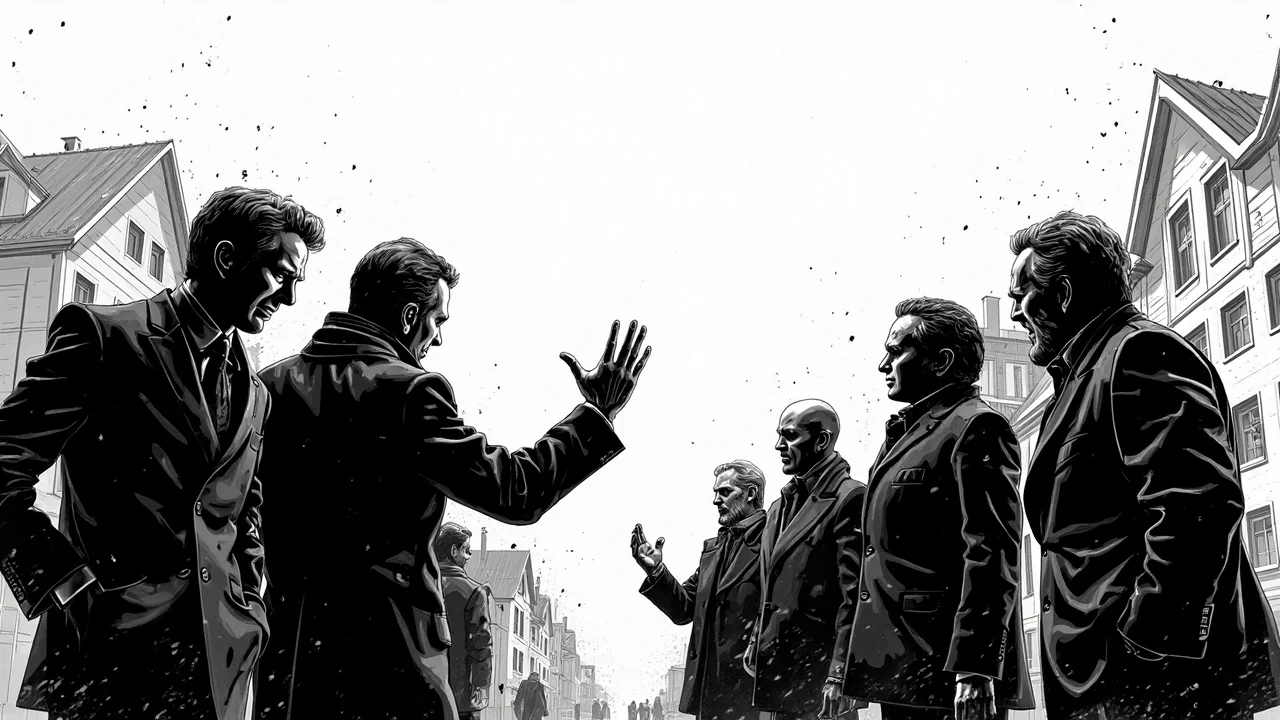
Norway's Oslo city government coalition is heading for a potential breakdown after a policy revolt within the Conservative Party (Høyre). The party's local branch passed a resolution demanding a reversal of several traffic and car policies, putting it on a direct collision course with its liberal coalition partner, Venstre. City Council Leader Eirik Lae Solberg of Høyre confirmed the bind, stating simply, "I am bound."
A Resolution Forcing a Reckoning
The conflict stems from a resolution passed at the Oslo Høyre annual meeting this past weekend. Delegates voted for what has been described as a "small U-turn" on car policy. The resolution contains a series of specific points that directly challenge the existing traffic policies supported by the city's governing coalition. While the full text of the resolution is not publicly detailed in the source material, its adoption by the party's grassroots represents a formal instruction to its political leadership in the city council.
This move creates an immediate and serious problem for Council Leader Solberg. As the head of the city government, he must balance the demands of his own party's base with the necessity of maintaining a functional coalition with Venstre. His statement, "I am bound," acknowledges the formal weight the party resolution carries. He is now obligated to pursue these new policy directives, even though they threaten the agreement upon which his administration is built.
The Foundation of the Fragile Coalition
To understand the severity of this clash, one must look at the foundation of Oslo's current city government. The coalition between Høyre and Venstre was formed on a negotiated platform that included specific compromises on urban development, environment, and transportation. A central element of Venstre's policy agenda in Oslo has been promoting public transit, cycling, and pedestrian-friendly spaces, often involving measures that restrict car access or use in certain areas of the city center.
The new Høyre resolution appears to target these very policies. It signals a shift back toward prioritizing car accessibility and convenience, a stance more traditionally associated with the Conservative Party's base but one that had been moderated for the sake of the coalition. The resolution effectively dismantles a key compromise that allowed Høyre and Venstre to govern together.
Political Reactions and a Strained Partnership
The reaction from Venstre has been one of clear defiance. Party officials have stated they see no room for renegotiating the core traffic and environmental policies already agreed upon. For Venstre, these policies are not minor details but fundamental principles. Abandoning them would mean betraying their own voters and their core identity as a party focused on climate and urban sustainability. They have drawn a clear line in the sand, indicating that adherence to the existing governing agreement is non-negotiable.
This leaves Eirik Lae Solberg in an almost impossible position. He cannot ignore his own party's democratically passed resolution without facing severe internal criticism and potentially a leadership challenge. Simultaneously, he cannot force Venstre to accept a radical rewrite of the coalition's foundation. The city council leader's authority is directly undermined by his own party members, creating a crisis of governance that he must now navigate.
Broader Implications for Oslo and National Politics
The standoff has implications beyond city hall corridors. A collapse of the Oslo coalition would trigger a significant political crisis in Norway's capital. It could lead to a period of administrative paralysis or force the creation of a new, potentially unstable, minority government. Other parties in the city council, such as the Labour Party (Arbeiderpartiet) and the Progress Party (Fremskrittspartiet), would be forced to reconsider their positions, possibly leading to new and unexpected political alignments.
Nationally, the conflict highlights the growing tension within center-right politics regarding climate policy and urban living. The Oslo Høyre resolution reflects a segment of the party pushing back against what they perceive as an anti-car ideology. This internal struggle is mirrored in debates at the national level, where transportation and energy policies remain deeply contentious. The Oslo dispute serves as a microcosm of this larger battle, showing how local decisions can reverberate through the national political landscape.
A Path Forward or a Dead End?
In the coming days, the focus will be on whether any room for compromise can be found. Can the wording of the Høyre resolution be interpreted in a way that allows for minor adjustments rather than a full policy reversal? Could Venstre accept some symbolic concessions without ceding their core principles? The answers to these questions are unclear, and both sides have publicly adopted firm positions.
The most likely outcome appears to be a protracted stalemate. Eirik Lae Solberg will be pressured to present the resolution's demands to the city council, where Venstre will vote against them. This will repeatedly demonstrate the coalition's inability to act on a key issue for one of its partners. Such dysfunction often leads to a breakdown of trust, making collaborative governance on any issue difficult. The question is no longer if the coalition is damaged, but whether it can survive at all, or if Oslo is headed for a political reconfiguration that will reshape the city's priorities for years to come.