
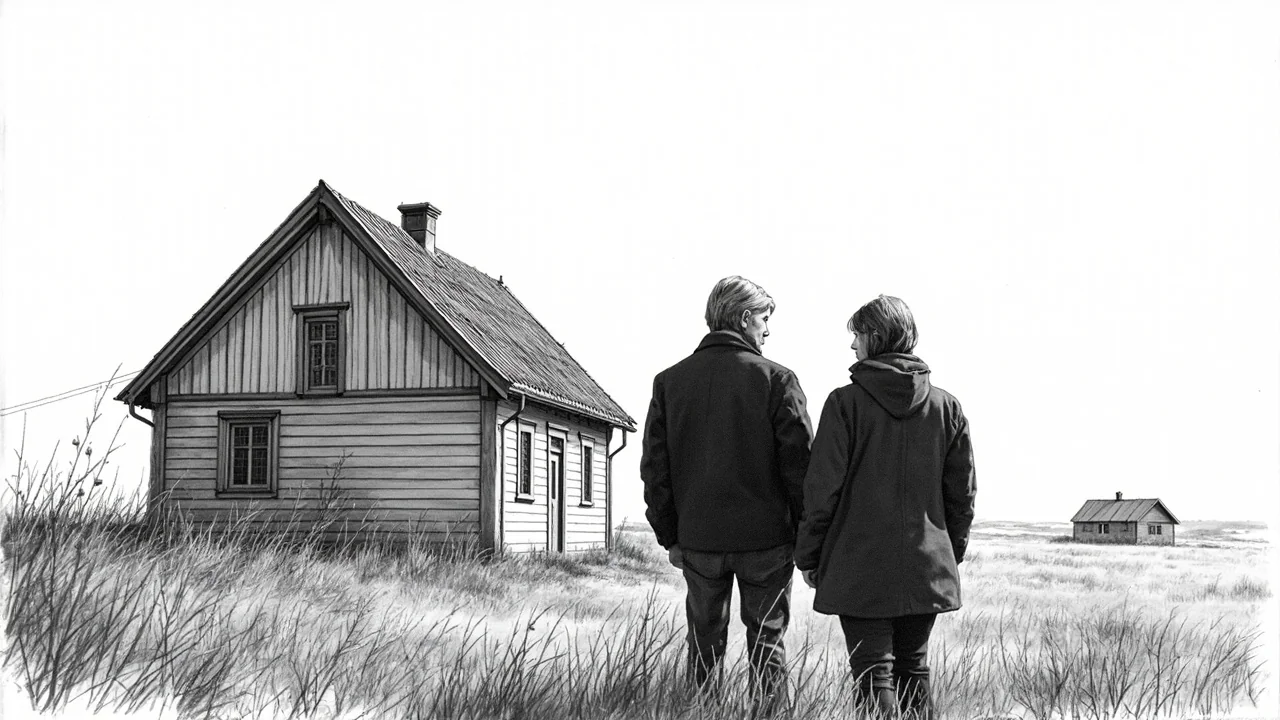
Norway's Volda municipality demands 3.5 million kroner from the state, claiming a thirteen-year-old decision to approve a private school has left its finances and community fractured. The conflict centres on two small schools six kilometres apart in the Dalsfjord area, now competing for just 50 total pupils after the local authority was forced to maintain a public school it says is no longer viable.
A Calculated Demand in a Cold Climate
The municipal demand, detailed in a recent letter to state authorities, is a direct response to what local officials describe as an impossible situation. In 2013, Volda municipality closed its public school in Lauvstad. State authorities then gave parents the green light to establish Ulvestad, a Christian private school, in the same area. The municipality opposed this move at the time, warning there were too few pupils to sustain two institutions. Now, with only 50 children spread between Ulvestad and the public Dalsfjord school, the local government says it is financially 'checkmated'.
'We are in a sense a bit checkmated,' said Per Ivar Kongsvik, the municipality's head of education and childhood services. 'We must run a very small municipal school. At the same time, we get a reduction in state grants because they operate a private school that the state approved in its time.' Kongsvik argues the state must provide compensation for the ongoing economic consequence of that approval, which the municipality calculates at 3.5 million kroner for 2026 alone.
Parental Fears in the Fjords
For families in the scattered communities along the fjord, the dispute is more than a budgetary line item. It threatens a fundamental aspect of rural life. If the municipal Dalsfjord school were to close, children would face a two-hour daily commute by bus and ferry to Volda's central schools. For parent Guri Aksnes Moy, who moved back to her home district last year with her five children, this prospect is unthinkable. 'It is completely out of the question and will not happen,' Moy said. 'We moved to the countryside to have family life and be allowed to be together. Then we cannot spend all our time commuting.'
Local politicians voted to keep the Dalsfjord school open during December's budget negotiations. However, Moy and other parents fear the closure proposal will return repeatedly, creating perpetual uncertainty. This school year, no first-grade pupils enrolled at the municipal school, signalling a potential slow decline.
The Structural Tension in Norwegian Education
The standoff in Volda highlights a persistent tension in Norwegian education policy between local municipal autonomy, state oversight, and parental choice. The Norwegian model funds public schools directly through municipal budgets, which are in part supported by state grants calculated per pupil. When students choose a state-approved private school, a portion of that per-pupil grant follows the child, leaving the municipality with the fixed costs of maintaining public infrastructure for a dwindling number of students.
In dense urban areas, this system allows for specialization and choice. In remote rural districts like those in Møre og Romsdal county, where populations are sparse and distances vast, it can create unsustainable duplication. The six-kilometer distance between the two Dalsfjord schools is a short drive but represents a deep community divide. Maintaining two separate administrative structures, teaching staffs, and facilities for a handful of pupils challenges the economic logic of any small municipality.
Seeking a Resolution Beyond the Fjord
Volda municipality's direct financial claim is an unusual escalation. Officials admit they are uncertain about its realism but see it as a necessary tactic. 'I don't know how realistic it is, but it is somewhat important for us to highlight it,' Kongsvik stated. The move is designed to force a conversation about who bears the long-term cost of educational decisions in rural Norway. The municipality's position is that the state, having approved the private school against local advice, should now cover the financial impact of that policy decision.
There is no immediate mechanism for such a payment, making the claim largely a political statement. However, it places the issue squarely on the desk of federal education officials. The case exposes a gap in policy consideration for the long-term viability of rural school networks when parental choice is exercised. Similar conflicts simmer in other remote parts of Norway, where the departure of a few families to a new private institution can tip the scales toward closing a century-old public school.
The Road Ahead for Dalsfjord
As winter grips the fjords, the immediate future for both schools remains secure for the next academic year. The true test will come in subsequent budget cycles and enrolment figures. The parents at Ulvestad private school made their choice for a specific educational environment. The parents committed to the public Dalsfjord school are fighting for community cohesion and practical family life. The municipality is caught in the middle, mandated to provide a public service it believes has been made fiscally irrational by state policy.
The 3.5 million kroner figure is a symbol of that frustration. Whether the state engages with Volda's demand for compensation will signal how seriously it takes the complex trade-offs between choice and sustainability in Norway's most vulnerable districts. The outcome will resonate far beyond Dalsfjord, offering a precedent for other Arctic and rural communities navigating the same difficult equation of depopulation, educational quality, and sheer economic survival.