
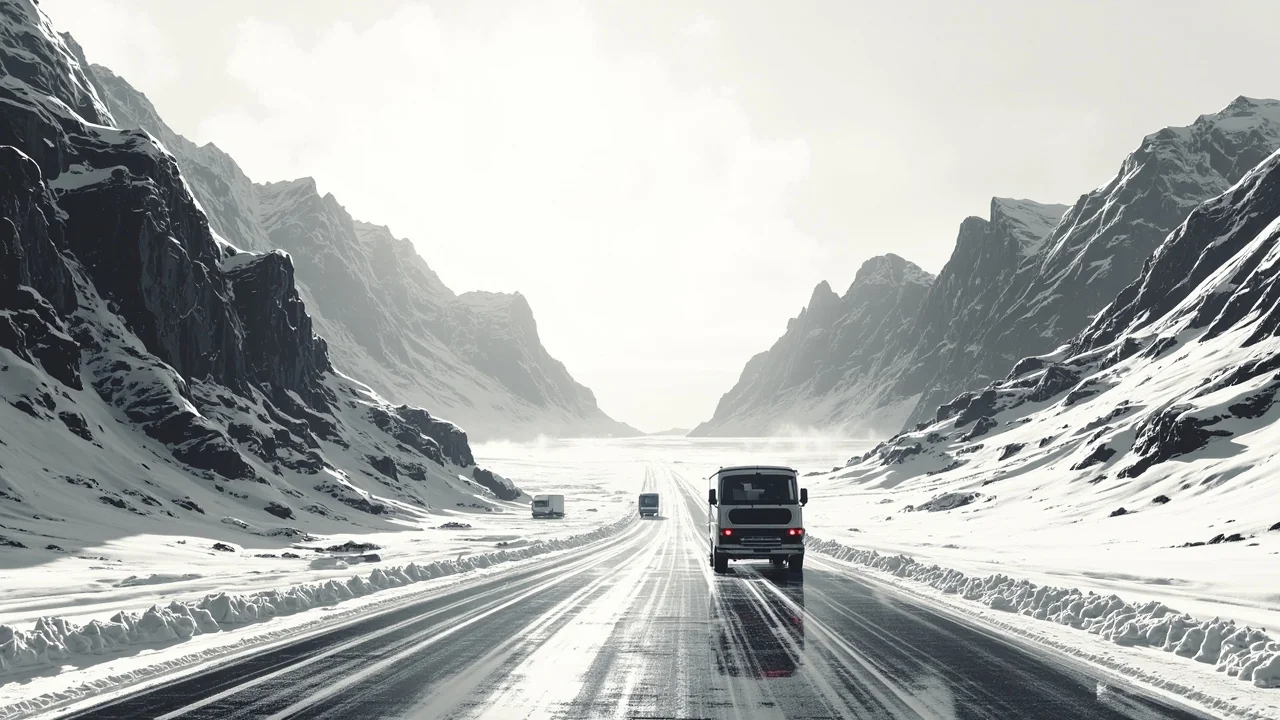
Norway's southern roads have become treacherous corridors of ice and snow, testing the nation's winter driving prowess and infrastructure. Traffic operators are issuing urgent warnings as a significant snowfall in Agder creates hazardous conditions across the region. While traffic continues to move, the underlying danger of slippery surfaces has authorities urging extreme caution for all drivers.
Vegard Hornes Halvorsen, a traffic operator at the Eastern Traffic Centre, delivered a clear message to motorists. "We strongly advise people to drive carefully," he said in a statement. His warning underscores a widespread issue affecting major and minor routes throughout southern Norway. The situation highlights the annual battle between Nordic weather and mobility.
The Agder Snowfall and Regional Impact
The county of Agder, encompassing popular areas like Kristiansand and the Setesdal valley, is experiencing heavy snowfall. This weather system is not confined to remote areas but impacts primary European Route E39, a critical coastal artery. The snow creates a dual challenge: reducing visibility and forming compacted ice layers on asphalt. Municipal road crews are working extended shifts, but the precipitation rate is outpacing salting and plowing operations in some districts.
This is a classic Norwegian winter scenario. The coastal south often receives wetter snow than the colder, drier interior, leading to more severe icing. Drivers from Oslo heading to cabin country in Telemark or the southern coast are encountering rapidly changing conditions. A clear highway near the capital can become an icy track within a fifty-kilometer drive. The variability tests driver preparedness and vehicle equipment.
Infrastructure and the Human Factor
Norway invests heavily in winter road maintenance, with an annual budget exceeding 4 billion kroner for state roads alone. The system relies on a network of roadside sensors and weather stations feeding data to traffic centres like the one where Halvorsen works. Despite this technological advantage, human judgment remains the critical variable. Safety campaigns consistently emphasize proper winter tires, adequate speed, and increased following distance.
Yet, complacency is a persistent risk. "Many people become accustomed to driving in winter conditions, but each storm is different," explained a veteran driving instructor from the Norwegian Automobile Federation (NAF). "The first major snowfall of the season, or a sudden storm in a typically mild area like the southern coast, catches drivers off guard. They may not have adjusted their mental approach or checked their tire tread depth."
The economic impact is tangible. Delays in freight transport affect the Port of Kristiansand and other logistics hubs. Commuter delays ripple through the workforce, particularly in regions with limited public transit alternatives. For emergency services, response times can lengthen, adding risk to medical and safety situations.
A Comparative Look at Nordic Winter Preparedness
Norway's approach to winter road management is often compared to its Nordic neighbors. Sweden and Finland face similar challenges but with different geographical emphases. Southern Norway's particular issue stems from its maritime climate, where temperatures hover around freezing. This leads to repeated melting and refreezing, creating black ice—a transparent layer on asphalt that is notoriously difficult to see.
Norwegian law mandates the use of winter tires from November to Easter, a rule strictly enforced. The country also has a higher density of roadside reflector posts and lighting on vulnerable stretches compared to some European nations. However, the terrain itself is a formidable opponent. The winding roads through valleys like Setesdal or over mountain passes present limited escape paths for sliding vehicles.
Local municipalities bear responsibility for county and local roads, leading to variability in response times. A well-funded municipality with a large fleet of plows may clear streets quickly, while a neighboring district with a smaller tax base might struggle. This patchwork system is under constant review by the Norwegian Public Roads Administration (Statens vegvesen).
The Role of Technology and Future Challenges
In recent years, authorities have expanded the use of dynamic message signs and app-based alerts to warn drivers of specific hazards like the current conditions in Agder. The goal is to provide real-time, localized information that generic weather forecasts cannot. The "Vegvesen" app and similar services send push notifications about road closures, ice warnings, and recommended routes.
Looking ahead, climate change introduces new complexities. Warmer winters may lead to more frequent freeze-thaw cycles in southern Norway, increasing the incidence of black ice. This requires adaptations in road construction materials and drainage systems. Some experts advocate for more widespread use of automated ice detection systems that trigger anti-icing sprays on bridges and inclines.
Electric vehicle adoption adds another layer. While EVs offer excellent torque control for traction, their substantial battery weight can affect braking dynamics on ice. Driver education programs are slowly incorporating EV-specific winter driving techniques. The silent operation of electric cars also poses a minor risk to wildlife like moose and deer, which may not hear an approaching vehicle on a quiet, icy road.
Analysis: Beyond the Immediate Hazard
The recurring story of slippery southern roads is more than a weather report. It is a stress test for Norway's famed societal trust and individual responsibility. The country operates on the principle of "dugnad," or communal effort. Safe winter driving is a collective dugnad where each person's actions affect everyone's safety.
There is also a political dimension. Funding for road maintenance competes with other infrastructure priorities like ferry replacements and tunnel projects. Members of the Storting's transport committee regularly debate the balance between building new roads and maintaining existing ones to a high winter standard. Incidents of widespread disruption often trigger these debates.
From an international perspective, Norway's challenges are a lesson for any northern nation. The integration of meteorology, traffic management, public communication, and law enforcement provides a model. Yet, as this week's conditions prove, no system can eliminate natural forces. The ultimate responsibility rests with the person behind the wheel, navigating the beautiful but demanding Norwegian landscape.
Will the increasing unpredictability of winter weather due to a changing climate force a fundamental rethink of Norway's transportation resilience? The slippery roads of Agder this week are a timely reminder that even the most prepared society must constantly adapt to the world outside its window.