
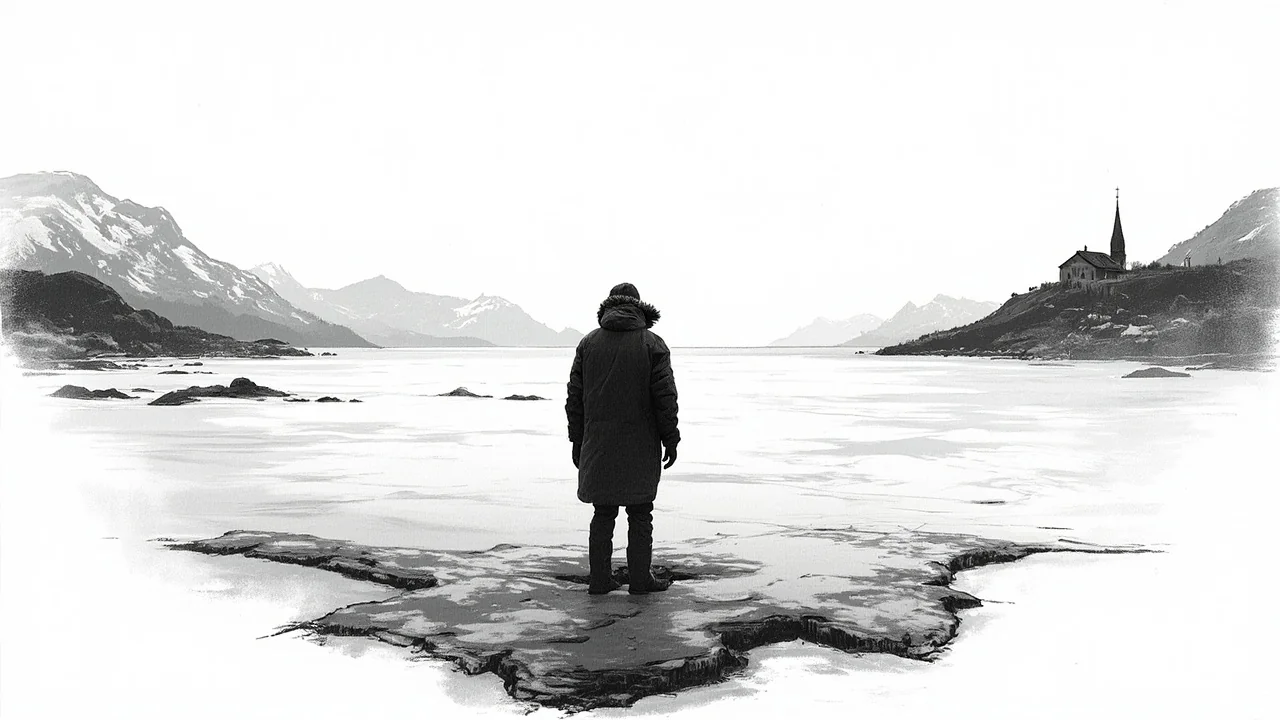
Norway's weather service has issued a nationwide warning for dangerous ice conditions. A rapid temperature shift is creating treacherous black ice across southern regions. The thaw will last about a week before winter cold returns.
Meteorologists state warm air is moving slowly but surely across southern Norway. It will reach northern areas later in the week. This transition period carries significant risk. "In connection with this, it can become very slippery, so pay attention," the forecasters warned.
A formal danger warning for slippery roads was issued Monday. The public is urged to exercise extreme caution during commutes. This weather pattern represents a classic Norwegian winter hazard. Rapid thaw-freeze cycles create nearly invisible ice layers on roads and pavements.
A Cascade of Weather-Related Incidents
The sudden shift in weather is already causing disruptions beyond transportation. Emergency services in Os responded to a major water leak on Brugata Monday. The incident occurred in a commercial building with ground-floor shops. Water was reportedly spraying from a copper pipe.
"It looks like it's in a business premises where there are shops on the 1st floor. I don't know more at the moment," said duty officer Børre Brekkvassmo. A plumber was on site working to shut off the water supply. Fire crews pumped out water to prevent further damage. While not directly caused by the thaw, such infrastructure issues often surface during rapid temperature changes that stress pipes.
On the west coast, residents faced a different challenge. Strong winds battered the Vestlandet region Monday morning. The wind held steady for several hours before beginning to subside. Sleet was also reported but was expected to clear by late morning.
Expert Advice for Navigating the Thaw
Meteorologists are providing clear guidance for the public. Susanne Moen Olsen, the duty meteorologist at StormGeo, confirmed the wind and sleet conditions. Leonidas Tsopouridis, duty meteorologist at the West Norway weather forecasting office, offered blunt advice: "Remember studs tomorrow!" His warning highlights the immediate expectation for icy conditions as temperatures hover around freezing overnight.
Wind records illustrate the day's severity. At 6 a.m., a gust of 30.8 meters per second was recorded at Florida in Bergen. While not a record, it marked the strongest wind in Norway outside of mountain peaks and lighthouses at that time. The strongest gust in the country was measured at Folgefonna glacier—a powerful 55.9 meters per second, equivalent to hurricane force.
"It's blowing strongly there, but we are talking about the top of Folgefonna then," a meteorologist noted, providing context. Despite the high winds, no major incidents were reported in Bergen city center, though fire services were called to Lars Hilles gate for a minor weather-related issue.
The Human Impact of Rapid Change
Beyond the weather warnings, the thaw week coincides with other events requiring public awareness. In Bergen, police arrested a man in his late 20s on Sunday afternoon. He is suspected of sharing a sexually explicit video without the woman's knowledge. The alleged offense occurred in Bergen some time ago.
"The woman was not aware that she was being filmed. She has been tipped off about the video," said police prosecutor Mari Axelsen. The man was arrested to secure evidence and was scheduled for questioning Monday. Police believe he had a short-term relationship with the woman of a similar age. Authorities do not yet know how many people may have received the video.
This case, while separate from the weather, underscores the importance of community vigilance and reporting. Police encourage the public to come forward with any relevant information. Such social responsibilities remain constant even as environmental conditions shift dramatically.
Understanding the Meteorological Mechanism
This week's weather presents a textbook example of a Norwegian winter thaw. Warm Atlantic air masses are pushing inland, overriding the entrenched cold continental air. The collision creates precipitation—often as rain or sleet—that freezes on contact with still-cold ground and road surfaces. This process creates "black ice," a transparent glaze that is notoriously difficult to see.
The phenomenon is particularly dangerous at dawn and dusk. These periods often see temperatures dip back below freezing, turning any melted slush into a smooth, hazardous sheet. The warning's duration—about one week—aligns with the forecasted persistence of the milder air mass before high pressure from the north or east reasserts winter conditions.
Historical data shows such thaw events are common in January and February. They frequently lead to spikes in traffic accidents, pedestrian falls, and minor property damage from ice accumulation and meltwater. Municipalities often increase road salting and graveling operations during these periods.
A Week of Calculated Caution
The primary message from authorities is consistent: situational awareness is key. Drivers are advised to reduce speed, increase following distance, and ensure their vehicles are equipped with proper winter tires—studded tires are still legally required in most areas until later in the spring. Pedestrians should wear shoes with good grip and be mindful of seemingly wet pavements that may actually be icy.
The thaw also brings a reminder about home maintenance. Property owners should ensure drains and gutters are clear to handle meltwater runoff. Rapid freezing can lead to ice dams on roofs, which may cause water infiltration. The incident in Os with the burst pipe serves as a reminder that plumbing systems are under stress during these transitions.
For the energy sector, a week-long thaw can reduce heating demand temporarily. However, it also reduces hydropower reservoir inflow that is typically stored as snow, a factor monitored by Norway's water resources and energy directorate. The wind on the west coast, however, provided a boost to wind power generation during the same period.
Looking Beyond the Immediate Forecast
While the focus is on the coming week, this weather event fits into broader patterns. Climate researchers note that while winter cold snaps remain severe, the frequency and intensity of intervening thaw periods may be changing. This can affect everything from transportation planning to winter sports industries.
The immediate task for Norwegians is practical navigation of the hazardous conditions. The collective experience of handling such weather is deeply ingrained, but complacency is the greatest risk. Each thaw cycle requires a renewed focus on basic safety measures—slowing down, looking out for one another, and heeding the straightforward advice of meteorologists: pay attention, because it can become very slippery.
Will this brief return of milder air be a fleeting interlude, or a sign of an early spring? The forecast suggests winter will reclaim its grip soon. For now, the country adjusts its rhythm to the immediate, tangible hazard underfoot, proving once again that in Norway, daily life is always a negotiation with the elements.