
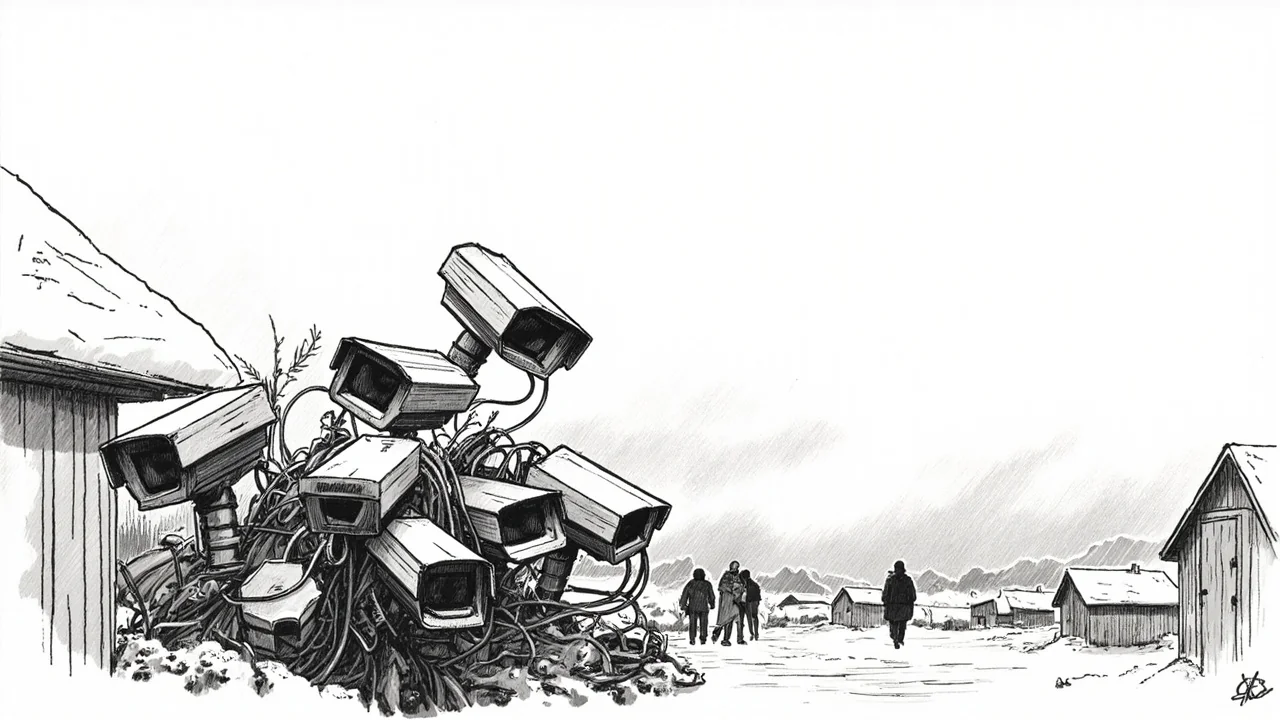
Norway's Tromsø municipality has reported a major breach of surveillance regulations to the national data watchdog, Datatilsynet. The northern city has identified 277 cameras operating across municipal buildings without proper legal documentation or signage. This admission reveals systemic failures in how a major public authority handles personal privacy.
André Sollied-Sørensen, section leader for buildings in Tromsø municipality, called the situation "regrettable." He emphasized the cameras were not hidden but lacked the required legal basis. "The municipality should of course follow regulations and its own routines," Sollied-Sørensen said in a statement. The municipality has ordered all cameras to be switched off by January 27 unless departments can prove their compliance.
A Systemic Failure in Public Oversight
The scale of the failure is significant. Two hundred seventy-seven cameras were found both inside and outside municipal properties. These include schools, administrative offices, and cultural buildings. The mapping exercise uncovered missing documented assessments required by the General Data Protection Regulation (GDPR). Signage and marking informing the public of surveillance were also inadequate or absent.
This is not a case of covert spying. Officials stress the cameras were visibly mounted. The core issue is a bureaucratic and procedural collapse. Tromsø municipality failed to establish the legal grounds for collecting personal data through video. Every camera installation requires a specific assessment balancing security needs against privacy intrusion. Tromsø skipped this fundamental step.
The Legal Reckoning and Immediate Fallout
Under the GDPR and Norway's Personal Data Act, video surveillance is a serious intrusion. Authorities must demonstrate it is necessary, proportionate, and lawful. They must also inform people they are being recorded. Tromsø's failure on both counts triggers a mandatory breach notification to Datatilsynet. The watchdog now must decide on potential fines or corrective orders.
The municipality's self-imposed deadline of January 27 creates a logistical scramble. Department heads must now retrospectively build legal cases for each camera. This involves drafting necessity assessments and ensuring proper signs are installed. Cameras that cannot be justified will be deactivated permanently. This could create security gaps the original installations were meant to address.
Expert Perspective: A Warning for Municipalities Nationwide
Privacy experts see this as a cautionary tale for all Norwegian public bodies. "This reveals a common problem: treating surveillance cameras as mere infrastructure, like lighting, rather than as data processing systems," says a legal scholar specializing in Nordic data law, who requested anonymity due to ongoing consultations with several municipalities. "The technical installation is often handled by facilities management, while the legal compliance falls to a separate data protection office. The connection gets lost."
The expert notes that Tromsø's proactive reporting may mitigate penalties. Datatilsynet often looks more favorably on organizations that self-report and take swift corrective action. However, the duration and scale of the non-compliance will be key factors. "The question Datatilsynet will ask is: how could this go on for so long without anyone noticing? This points to a deficient internal control culture," the expert adds.
The Broader Context of Surveillance in Norway
Norway has a complex relationship with surveillance. It is a high-trust society with robust privacy protections. Yet its cities are among the most heavily monitored in Europe per capita. A 2022 study by the Norwegian Research Center estimated over one million surveillance cameras in the country. Many are privately owned, but a substantial portion are operated by public entities like municipalities, schools, and public transport agencies.
Tromsø's case highlights the tension between practical security and bureaucratic rigor. School administrators may install cameras to prevent vandalism. Sports facility managers might use them to monitor after-hours access. These intentions are not malicious. However, without following strict legal procedures, such surveillance becomes illegal mass data collection. The principle is as important as the practice.
Analysis: Why This Happened in Tromsø
Several factors likely contributed to this breakdown. First, decentralization of responsibility. Individual municipal departments probably had autonomy to install cameras for their specific needs. Central oversight from a data protection officer or legal team was either not sought or not enforced. Second, a lack of ongoing training. GDPR compliance is not a one-time event but requires continuous review as technology and layouts change.
Third, the northern location may play a role. Tromsø, while a large city by Arctic standards, operates with the resources of a medium-sized municipality. It may lack the large, dedicated data governance teams found in Oslo or Bergen. This is not an excuse but a potential systemic vulnerability for similar municipalities across Nordland, Troms, and Finnmark counties. They should view Tromsø's experience as a direct warning.
The Path Forward and National Implications
Tromsø's immediate path is clear: audit, justify, or deactivate. The longer-term task is rebuilding internal processes. This will require creating clear chains of approval for surveillance technology, mandatory training for facility managers, and regular audits. The municipality's credibility with its citizens has been damaged. Transparent communication about the corrective actions will be essential.
For Norway, this incident should trigger a national review. The Norwegian Association of Local and Regional Authorities (KS) should issue updated guidance to all 356 municipalities. Datatilsynet may consider a targeted audit campaign of municipal surveillance practices. The Storting's Standing Committee on Justice could also examine whether the current laws provide sufficient clarity and deterrents for public bodies.
The core lesson is that privacy protection is an active duty. It requires more than good intentions. It demands meticulous documentation, clear signage, and a culture where every employee understands that a camera is not just a lens and a wire. It is a tool that collects the personal data of fellow citizens, with all the legal and ethical weight that carries. Tromsø forgot this. Its journey to remembering will be watched closely by every public administrator in Norway.
A Question of Trust in the High North
This scandal unfolds in a region where community trust is paramount. The Arctic environment demands cooperation and a sense of shared responsibility. When a municipality violates data protection laws, it erodes that trust. Citizens may now wonder what other regulations have been overlooked. The challenge for Tromsø's leadership is to demonstrate that this failure is an anomaly, not a symptom of broader governance neglect.
The coming weeks will show whether other municipalities discover similar gaps in their own systems. Tromsø's painful admission may well be the first domino to fall in a nationwide reassessment of how Norway's public sector watches its citizens. The balance between security and liberty is perpetual. For now, in Tromsø, the scales have tipped too far towards unchecked observation, and a hard correction has begun.