
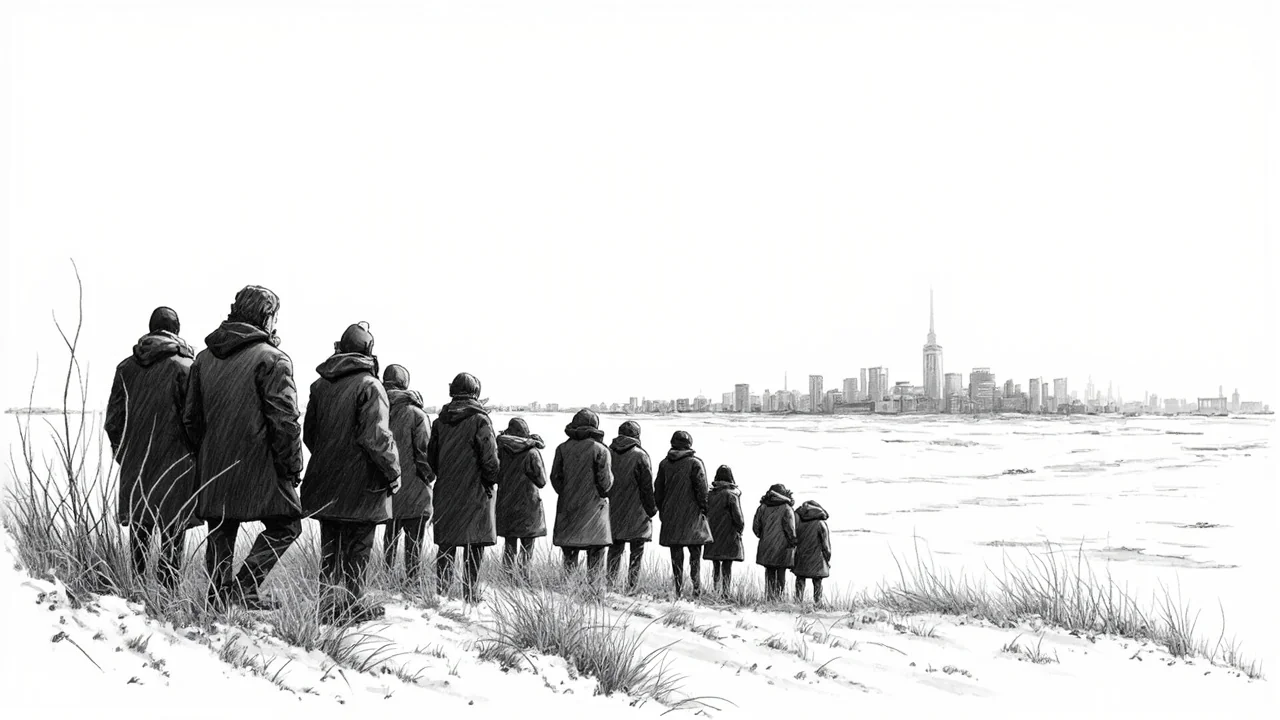
Norway's workforce exclusion crisis leaves one in five people of working age completely outside employment and education. The silence is heavy on an October morning. Aleksander Holtan just opened the letter from NAV, believing the money would come as a matter of course. The words 'application denied' hit him like a punch to the gut. He got into his car. With no plan for the rest of the day, he drove off. The road was empty. He ended up in a desolate place. No cars. No people. 'Is this when it happens? Is this when I stop living?' he thought.
A System Struggling to Respond
Around 700,000 people between 20 and 66 years old stand completely outside work and education in Norway. That is one in five people of working age. According to NAV and Statistics Norway, about one in four of these cases are due to mental health issues. Aleksander was one of them. He was 16 when he entered the NAV system. Since he was little, he has lived with severe anxiety and depression. Then came substance abuse problems. For several years, he lived in isolation. He is now 33. According to figures from NAV, 114,000 young adults were outside work and education in 2024. That is about one in six people between 20 and 29 years old. Of young adults outside work and education, about half receive a benefit. The other half get nothing from NAV.
A Childhood Marked by Fear
He was four years old the first time his body clearly spoke up. His mother dropped him off at kindergarten like every other day. But for Aleksander, the discomfort in his stomach grew. Everything was as before, yet completely different. He lay down on the floor and began to thrash about until he vomited. It happened several times. Finally, his mother had to take him out of kindergarten. This was raised with his doctor at the time, but in the 1990s, knowledge about mental health seemed limited. It was easier to explain it with food than with fear, Aleksander feels in retrospect.
The Rising Tide of Mental Health Absence
Today, NAV figures and research reports show that sickness absence in Norway is increasing more than in neighboring countries, and that psychological problems are one of the biggest drivers. Mental disorders were linked to 26 percent of all sickness absence in the third quarter of 2025, according to a NAV communications advisor. The number has increased considerably in recent years. When he started school in Tønsberg, the anxiety in his stomach followed him. He stuttered, struggled socially, and was afraid in the classroom – afraid of being asked, afraid of answering wrong, afraid of the laughter. It felt safer to hold back than to try.
The Weight of Shame and Isolation
For Aleksander and many others, the experience is 'extremely shameful'. The journey from a frightened child on a kindergarten floor to an adult receiving a rejection letter in his car is marked by years of navigating a system that often fails to grasp the root cause. The isolation feeds the mental health struggle, and the mental health struggle deepens the isolation, creating a cycle that is difficult to break. The statistics represent individual stories of fear, shame, and a search for support that does not always arrive in the right form or at the right time.
A National Challenge Requiring New Solutions
The scale of the issue presents a significant national challenge. With 700,000 individuals affected, the implications for society, the economy, and the welfare system are substantial. The notable increase in mental health-related absences points to a need for updated approaches in both healthcare and the labor and welfare administration. The fact that half of the excluded young adults receive no benefits suggests a gap in the safety net for a vulnerable group transitioning into independence. The story of Aleksander highlights that early intervention and a deeper understanding of mental health are critical. The system's historical tendency to look for physical or simpler explanations, as Aleksander experienced as a child, may still create barriers for those seeking help today.
Looking Beyond the Statistics
The narrative is not just about numbers from NAV and Statistics Norway. It is about the quiet mornings, the empty roads, and the profound question of whether to continue living. It is about the long-term impact of childhood anxiety that goes unrecognized and the adult consequences of being left behind. As Norway examines its high levels of sickness absence compared to neighbors, the human cost of workforce exclusion remains written in the daily experiences of hundreds of thousands. The solution lies not only in policy but in a fundamental shift in recognizing and addressing the invisible wounds that keep people from participating. For Aleksander, the journey continues, a testament to the resilience required to navigate a life on the margins of Norway's prosperous society.