
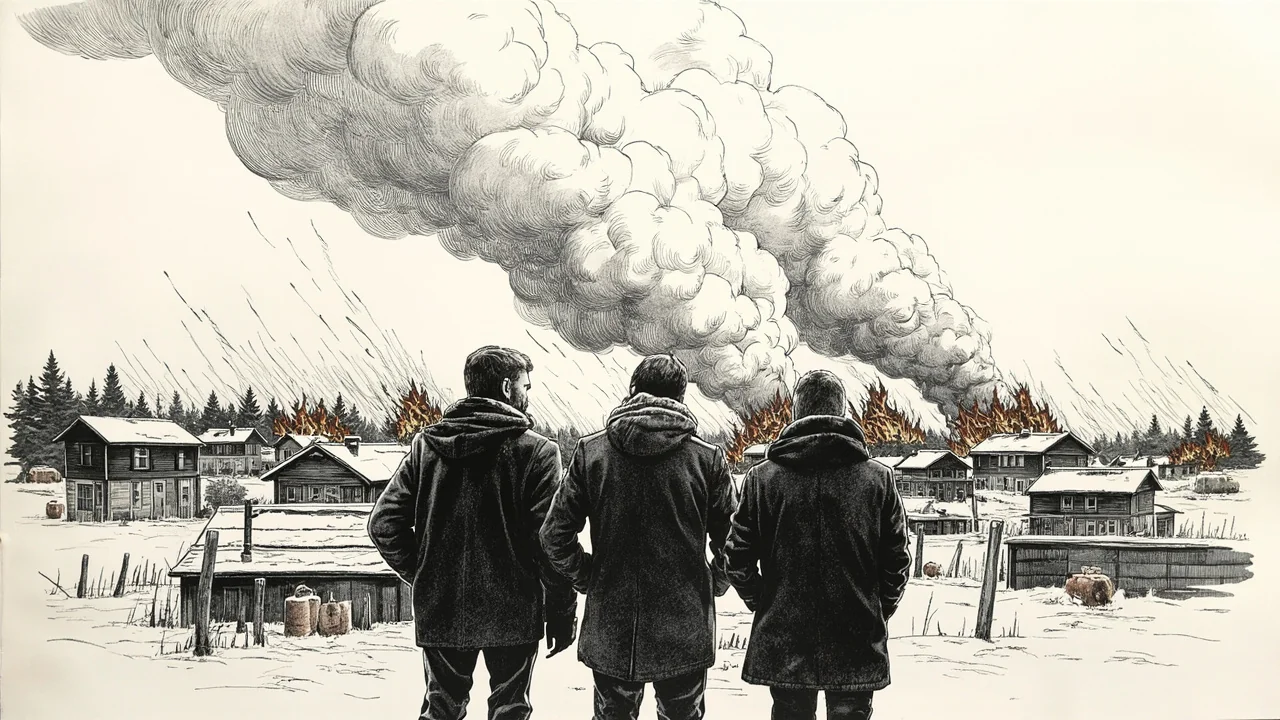
Norway emergency services launched a major operation in Sarpsborg as a fierce workshop fire raised alarms over a possible gas container on site. Police confirmed all personnel were evacuated from the building in the early hours, with no immediate danger reported to surrounding areas. The Øst police district stated that heavy smoke development was visible, and teams were assessing the risk from the potential gas vessel. This incident highlights the persistent hazards in Norway's industrial zones, even with the country's reputation for stringent safety protocols.
Immediate Response and Evacuation
Police from the Øst district were first alerted to the fire in the Sarpsborg workshop, leading to a swift evacuation of all individuals from the premises. Authorities used social media platform X to update the public, noting significant smoke emission from the scene. Initial reports emphasized that while a gas container might be present, there was no threat to the wider community. Firefighters and hazardous materials teams were deployed to contain the blaze and monitor for any gas leaks. The response underscores Norway's coordinated emergency systems, which are routinely tested in industrial settings across regions like Østfold.
Sarpsborg, a city in Viken county, hosts numerous manufacturing and workshop facilities integral to local employment. The specific workshop involved has not been named, but such sites often handle flammable materials, including gases used in welding or storage. Police have cordoned off the area to prevent public access, with traffic diversions in place. No injuries have been reported, according to official statements, which is a relief given the potential for escalation with gas involvement. The incident draws attention to the daily risks faced by workers in Norway's industrial sectors, from oil support services to maritime repairs.
Industrial Safety in Norwegian Context
Norway's industrial landscape, spanning from North Sea oil fields to inland factories, operates under strict regulations enforced by agencies like the Norwegian Labour Inspection Authority. Gas containers, commonly used for propane or acetylene, pose explosion risks if exposed to fire, a fact well-known in safety drills. This Sarpsborg fire occurs amidst ongoing national debates about aging infrastructure in smaller municipalities, where maintenance budgets can be tight. Past incidents, such as the 2020 fire in an Oslo warehouse, have prompted reviews of safety codes, but local workshops sometimes fall through the cracks.
The city of Sarpsborg lies near the Oslofjord, a hub for logistics and industry, making this fire a reminder of the vulnerabilities in Norway's supply chains. Energy experts note that gas-related accidents, while rare, can disrupt local economies and prompt political scrutiny. In the Storting, committees on business and industry often discuss safety funding, with recent allocations focusing on digital monitoring for hazardous sites. This event may fuel calls for increased inspections, particularly in regions dependent on manufacturing, as Norway balances economic growth with worker protection.
Gas Hazards and Emergency Protocols
Gas containers in industrial settings require specific handling, with Norwegian standards mandating secure storage and regular checks. In this fire, the uncertainty about the container's presence added complexity to the response, as teams had to prepare for possible explosions. Norway's fire services, trained in chemical hazard management, typically use thermal imaging and gas detectors in such scenarios. The quick evacuation aligns with protocols designed to prioritize human life, a cornerstone of the country's emergency response philosophy.
Historically, Norway has seen few major gas disasters, thanks to robust training and technology, but minor incidents in workshops serve as cautionary tales. The Sarpsborg fire's location in a populated area raises questions about zoning laws, which in Norway often separate residential zones from high-risk industrial sites. Local officials in Sarpsborg will likely review compliance with these laws, as community safety remains a top priority. This incident echoes concerns in other Norwegian towns, where industrial growth sometimes outpaces safety updates.
Policy Implications and Political Oversight
As Norwegian Affairs Correspondent, I observe that fires like this one often trigger political responses, with Storting members calling for inquiries into safety enforcement. The Ministry of Labour and Social Inclusion oversees industrial regulations, and recent reforms have aimed at streamlining inspections. However, in regions like Sarpsborg, where smaller workshops dominate, resource constraints can hinder implementation. This fire may lead to discussions in the Storting about allocating more funds to local safety agencies, especially with Norway's focus on maintaining its low accident rates.
Energy policy also intersects here, as gas usage in industries ties into Norway's broader energy mix, which includes oil and renewable sources. The country's Arctic policies emphasize safety in remote operations, but inland industrial fires remind us that risks exist closer to home. Politicians from the Østfold region may use this event to advocate for better infrastructure support, citing the need to protect jobs and communities. In past sessions, the Storting has debated amendments to the Working Environment Act, and this incident could renew those talks.
Community Impact and Future Steps
The Sarpsborg community is likely to feel the economic ripple effects, as workshop closures disrupt local supply chains and employment. Residents have expressed relief at the no-danger assurance, but anxiety remains about long-term safety. Police and fire investigators will conduct a thorough probe to determine the fire's cause and the status of the gas container, with results influencing future safety campaigns. Norwegian authorities often publish such findings to promote transparency and learning across industries.
Looking ahead, this fire serves as a stark reminder of the balance between industrial activity and safety in Norway. As the country continues to leverage its energy and maritime sectors, incidents like Sarpsborg's workshop blaze test the resilience of its regulatory frameworks. The coming days will see increased scrutiny on similar facilities nationwide, with calls for proactive checks rather than reactive measures. Norway's commitment to safety is unwavering, but each event prompts a reevaluation of how well policies are practiced on the ground.
In conclusion, the Sarpsborg fire, with its potential gas container hazard, underscores the everyday challenges in maintaining industrial safety. While Norway's systems prevented a catastrophe this time, the incident invites reflection on whether current measures are sufficient for an evolving economy. As investigations unfold, the focus will be on turning this emergency into a lesson for safer futures across all Norwegian workshops.