
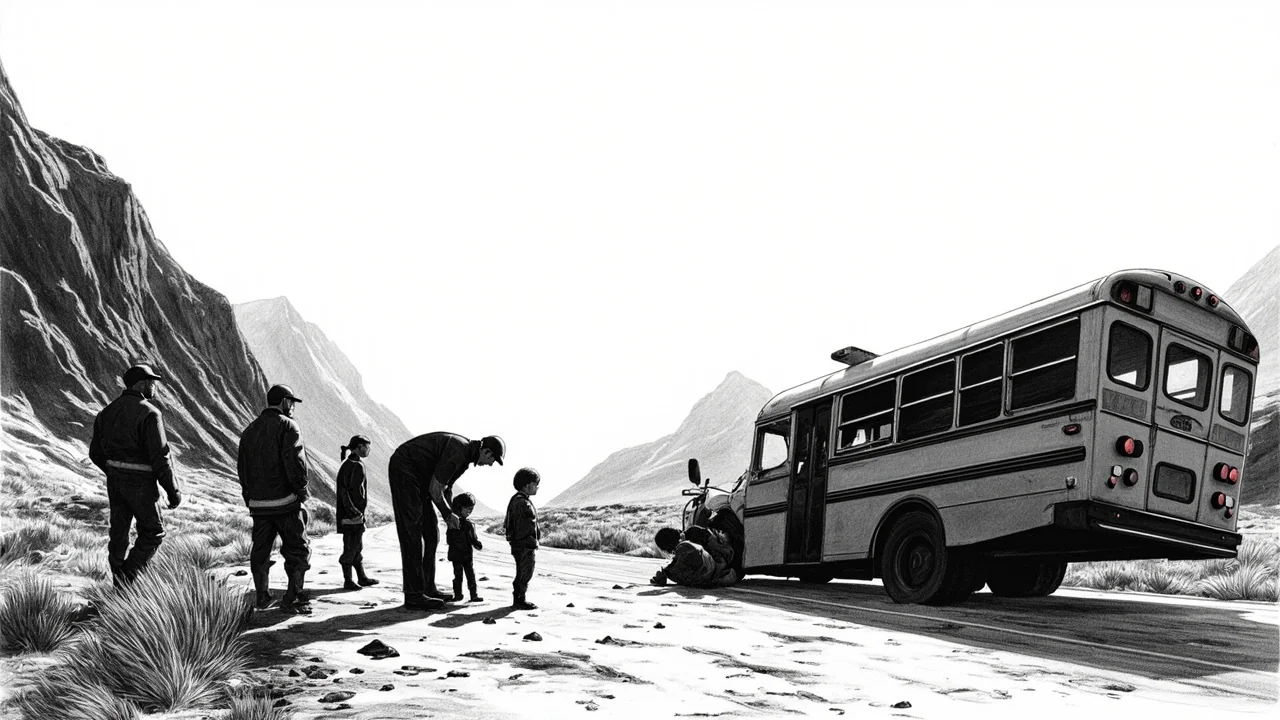
Norway's Lofoten Islands saw a school bus accident on the E10 highway near Flakstad, with all occupants escaping serious injury despite severe weather conditions. Police confirmed the incident involved teenagers and a driver, with one student transported to hospital for precautionary checks. The bus came to rest partially in a roadside ditch but remained upright on all four wheels, a factor officials say likely prevented more severe consequences.
A Narrow Escape on a Treacherous Road
The accident occurred on the E10, the main arterial road connecting the islands of the Lofoten archipelago. This route is famed for its dramatic scenery but is also known for its vulnerability to harsh Arctic weather. At the time of the incident, police reported extremely strong winds in the area. Such conditions are not uncommon in this region, where weather can change rapidly, presenting significant challenges for drivers, especially those operating larger vehicles like buses. The fact that the bus remained on its wheels, rather than rolling over, is being viewed as a critical piece of luck. A rollover in these remote locations, far from major trauma centers, could have dramatically altered the outcome.
The Human Element: Relief and Procedure
While the physical injuries appear minor, the psychological impact on the teenagers involved is a primary concern for local authorities and health services. Experiencing a vehicle accident, particularly at a young age, can be traumatic. The response protocol in such incidents is well-established. Emergency services, including police, ambulance, and if necessary, fire and rescue, are dispatched. The priority is always life-saving medical intervention, followed by securing the scene and investigating the cause. In this case, the immediate assessment that injuries were not serious allowed for a focus on welfare and logistics. The student taken to hospital is undergoing standard procedure—a thorough medical examination to rule out any hidden injuries, such as whiplash or concussion, that may not be immediately apparent.
Infrastructure and Safety in Norway's North
This incident inevitably turns attention to road safety in Norway's northern regions. The Lofoten Islands, while increasingly popular with tourists, have infrastructure that must contend with extreme environmental pressures. The roads are engineered to high standards, but they are exposed. High winds, especially side winds on exposed causeways and bridges, pose a known risk to high-sided vehicles. The Norwegian Public Roads Administration (Statens vegvesen) constantly monitors such risks. Safety measures can include wind warnings on digital signs, temporary speed reductions, or in extreme cases, road closures for certain vehicle types. This accident will likely prompt a review of the specific conditions on that stretch of the E10. Investigators will examine whether all available safety protocols were activated and followed.
The Role of Professional Drivers
The bus driver's actions before, during, and after the incident are central to the investigation. Professional drivers in Norway undergo rigorous training, including specific modules on defensive driving and handling vehicles in adverse weather. They are entrusted with the most precious cargo: children. The pressure to maintain schedules in a region where ferry connections and long distances dictate daily life can sometimes conflict with safety-first judgments. The investigation will seek to determine if speed was appropriate for the conditions, if the driver was properly briefed on weather warnings, and how they reacted when the bus began to leave the roadway. The driver's experience and the bus company's safety record will also come under scrutiny.
A Community's Response
In tight-knit communities like those in Lofoten, an accident involving a school bus resonates deeply. It represents a breach in the normal, safe rhythm of daily life. Parents across the region received alerts and felt a collective dread until the non-serious nature of the incident was confirmed. The school involved will now activate its own crisis management plan. This includes informing parents directly, providing support to students who were on the bus, and offering counseling services to any who need it. Teachers may hold special classes to discuss the event, allowing children to process their experience in a safe environment. The community's resilience is often strengthened by navigating such scares together.
Analysis: When Luck Meets Preparedness
As a correspondent who has reported on everything from North Sea helicopter crashes to avalanches in Troms, a pattern emerges in Norwegian accident response. The initial, cautious communication from police—"does not appear serious"—is standard. It avoids speculation and manages public anxiety while facts are gathered. This measured approach stems from a national culture that prioritizes accuracy over haste. The positive outcome here seems to sit at the intersection of luck and systemic preparedness. The luck was the bus's stable final position. The preparedness is the extensive network of emergency services, even in remote areas, and the high safety standards expected of transport operators. Norway invests heavily in its emergency response capabilities, understanding the risks posed by its geography and industries. This investment pays dividends when incidents occur far from major cities.
Looking Beyond the Immediate Scene
The investigation by police and the Norwegian Safety Investigation Authority (Statens havarikommisjon for transport) will now begin in earnest. They will examine the bus's maintenance records, its tire condition, and any onboard data recorders. They will map the weather data from the exact time and location, reviewing wind gust speeds. They will interview the driver and all the students. The goal is not to assign blame as a first step, but to understand the sequence of events to prevent recurrence. Recommendations could be directed at the bus company, the road authority, or national policy for school transport in high-wind zones. In a country where winter darkness and severe weather are facts of life for half the year, each incident provides data to refine safety for everyone.
The Bigger Picture of Norwegian Safety
Norway consistently ranks as one of the safest countries in the world for road travel. This is the result of decades of policy: strict drink-driving laws, extensive use of winter tires, and a Vision Zero policy that aims to eliminate all traffic fatalities and serious injuries. Every accident is treated as a failure of the system, not just individual error. Therefore, even an accident with no serious injuries, like this one, is taken seriously as a learning opportunity. It tests the response protocols and highlights potential vulnerabilities. The fact that the story is newsworthy precisely because of the lack of serious harm speaks volumes about the high safety expectations Norwegians have. In many parts of the world, a non-fatal bus accident in a rural area might not make news beyond the local community. In Norway, it triggers a full investigative machinery, because the standard is perfection.
The students on that bus will remember this day. For them, it will be a story of a scary few minutes on the way to school. For the authorities, it is another data point in the endless work of managing risk in a breathtaking but demanding landscape. The ultimate summary is one of profound relief—a reminder that in the fragile interface between human activity and the raw power of the Arctic environment, outcomes like this one are a victory.