
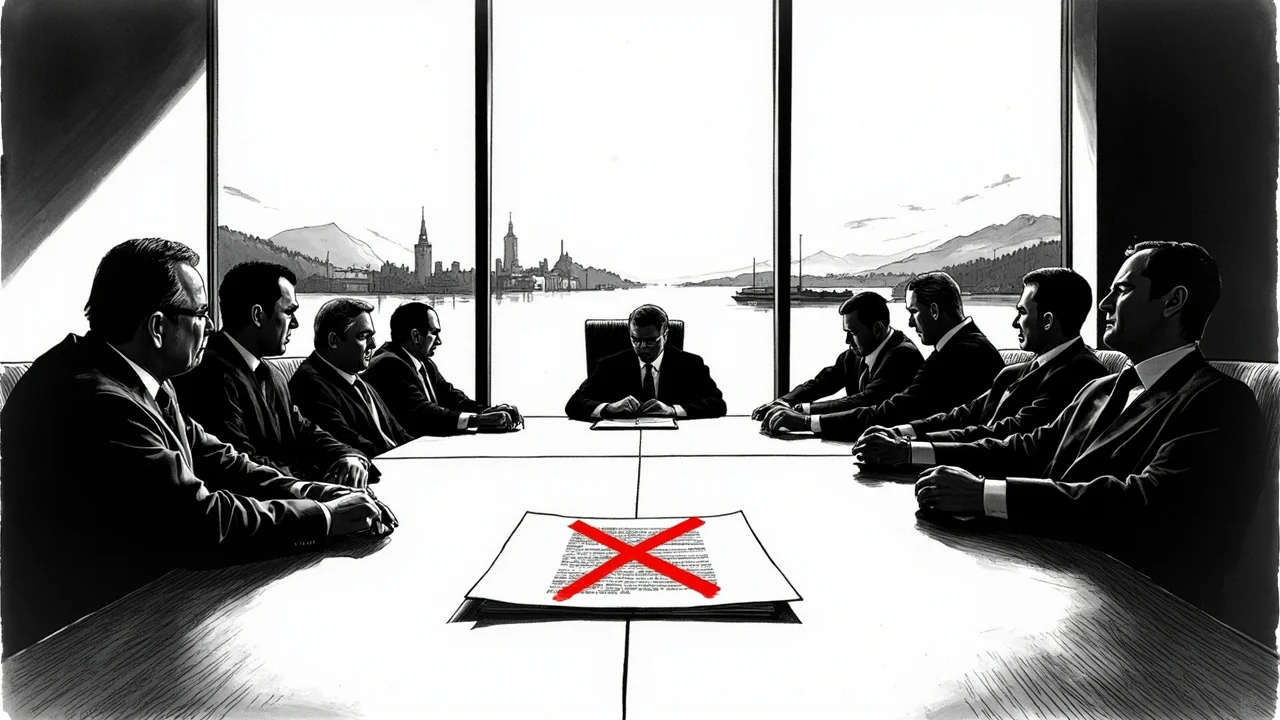
Norway's Conservative Party (Høyre) faces a major political setback as its proposal to reform the nation's generous sick pay system fails to gain parliamentary traction. The initiative, championed by Høyre deputy leader Henrik Asheim, has been flatly rejected by the largest opposition party, the Progress Party (Frp), and the governing Labour Party (Ap). This creates a formidable bloc against any reduction in sickness benefits, leaving the Conservatives isolated on a core welfare issue.
"The Progress Party believes people should have full salary during illness to ensure secure and predictable income," stated Frp's deputy leader, Hans Andreas Limi. His declaration, coupled with Labour's firm opposition, means there is no parliamentary majority for Asheim's proposed overhaul. The Conservative deputy had argued that with employers and unions no longer united on 100% pay, politicians must intervene to "reduce sickness absence significantly."
A Core Welfare Principle Under Scrutiny
At the heart of the debate is a longstanding Norwegian tradition: 100% salary compensation for the first year of illness, followed by 66%. Asheim pointed to Sweden's model of 80% pay over a longer period as a potential alternative, suggesting Norway's system might be too generous. He framed the issue as one of economic necessity, stating that political responsibility requires examining alternatives to the current arrangement.
Labour's Elise Waagen, deputy chair of the parliamentary Labour and Social Affairs Committee, was unequivocal in her response. She stated it is "completely unthinkable to weaken the sick pay scheme," defending it as a cornerstone of the Norwegian welfare state. This clear stance from the largest government party signals a defensive posture on welfare rights, a key Labour identity marker.
The Frp-Høyre Rift Deepens
The rejection from the Progress Party is particularly significant. As the largest opposition party and a traditional ally of Høyre in center-right coalitions, Frp's opposition fractures the bourgeois bloc on a sensitive social policy issue. Limi explicitly stated Frp would take "a completely different path than Høyre."
Instead of cutting benefits, Frp advocates for increasing healthcare capacity, greater use of graded sick notes, and better follow-up for those struggling to work. This approach focuses on enabling work participation rather than reducing financial security during illness. The divergence highlights a strategic split within the right-wing coalition that governed Norway for eight years until 2021.
Political Repercussions and Broken Promises
The move represents a sharp policy shift for Høyre itself. Under former Prime Minister Erna Solberg, the party was clear it would not weaken sick pay. Asheim's initiative therefore marks a new direction, one that has drawn criticism for potentially misleading voters. Marie Sneve Martinussen, leader of the Red Party, accused Asheim and Høyre of having misled their electorate before last autumn's parliamentary election, when they assured voters sick pay was safe.
This accusation strikes at the heart of political credibility. If a party advocates for a policy change immediately after an election where it promised stability, it risks significant voter backlash. The controversy places Høyre's new leadership, including party leader Tone Trøen, in a difficult position, forcing them to either defend a politically toxic proposal or retreat and face internal dissent.
The Underlying Numbers: Norway's Sickness Absence
The political battle is set against concrete statistics. Norway's current sickness absence rate stands at 6.48%—5.04% for men and 8.17% for women. These figures, while lower than historic highs, represent a significant cost to the economy and the welfare system. Proponents of reform argue that economic incentives matter; if staying home pays nearly as much as working, some individuals may choose to do so for minor ailments.
Opponents counter that a strong safety net prevents minor health issues from spiraling into long-term unemployment and poverty. They argue the system's cost is an investment in public health and workforce stability. The Norwegian model, they contend, fosters loyalty and reduces presenteeism—where employees come to work sick and reduce overall productivity.
A Question of Social Contract
Beyond the economics, this debate touches on Norway's social contract. The high-trust model, where citizens pay substantial taxes in return for comprehensive security, relies on mutual responsibility. Critics of the current system question whether that trust is being abused, while defenders see any cut as a fundamental breach of the state's promise to its citizens.
The tradition of tripartite cooperation—between government, employers, and unions—is also a factor. Asheim noted that politicians had historically respected agreements made in the workplace. With that consensus fraying, he argues the Storting must now lead. This itself is a contentious claim, as unions remain fiercely protective of the 100% pay principle.
The Road Ahead and Coalition Dynamics
The immediate future for sick pay reform appears bleak. With Labour, Frp, and likely the Socialist Left Party (SV) and Center Party (Sp) all opposed, Høyre's proposal is dead on arrival in the Storting. The party may still present it at its national conference in February, but it will be a symbolic gesture without coalition partners.
The clash has longer-term implications for Norwegian politics. It damages Høyre's ability to present a united bourgeois front with Frp, potentially complicating any future coalition negotiations. It also strengthens Labour's position as the defender of welfare rights, a narrative Prime Minister Jonas Gahr Støre will likely emphasize.
For the average Norwegian worker, the political storm provides temporary reassurance. The generous sick pay scheme, a fixture of working life, remains intact for now. However, the debate has been ignited, and the underlying pressures of an aging population and high welfare costs will not disappear. Høyre has planted a flag on contested ground, ensuring that the balance between economic sustainability and social security will be a defining battle in Norwegian politics for years to come. The question is no longer if the system will be debated, but when—and under what political constellation—the debate will turn into action.