
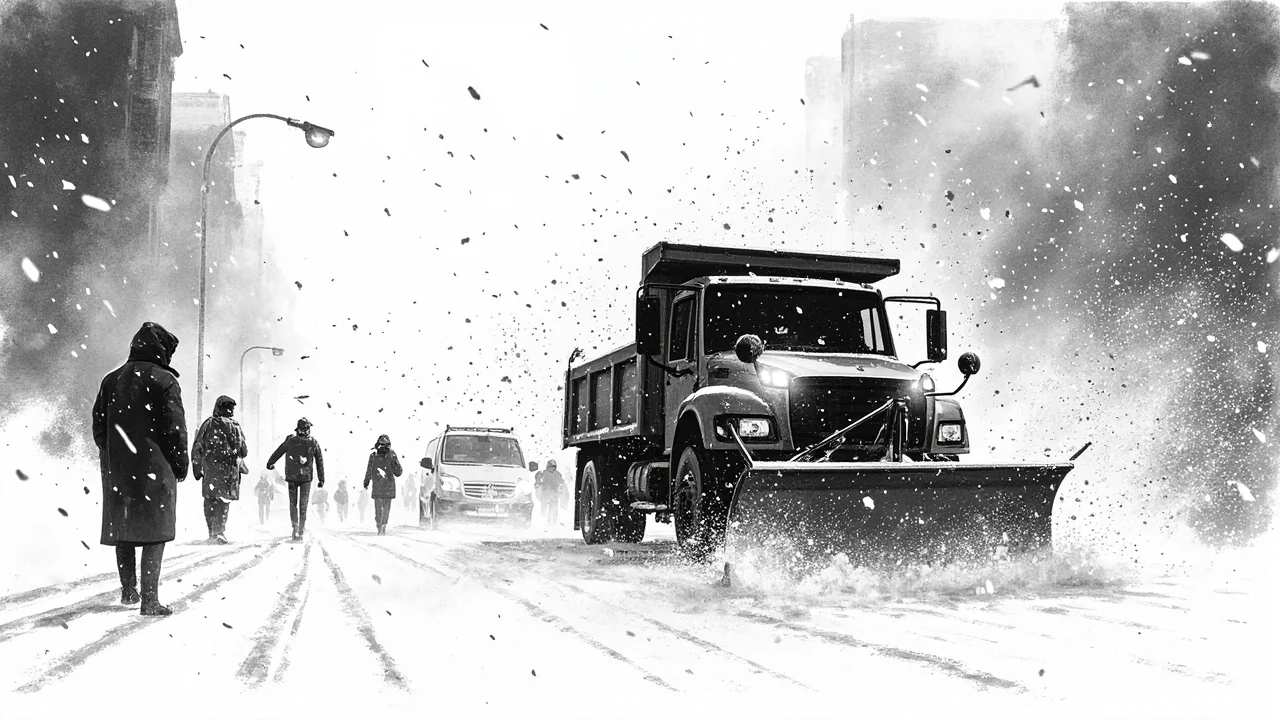
Norway's capital region faces escalating traffic chaos as heavy snowfall blankets Oslo and surrounding counties. The Norwegian Public Roads Administration's East Traffic Center warns drivers to expect significant delays Tuesday afternoon, with conditions forecast to deteriorate sharply by Wednesday morning.
"As you can probably see, it's snowing," said traffic operator Gunnar Dovland at the East Traffic Center just before 3:30 PM Tuesday. His understated observation marked the beginning of a difficult evening commute for thousands. "That means the snowplow trains are out removing snow along the roads. So, in addition to us approaching rush hour, there will be slow-moving traffic."
Movement slowed to a crawl in all directions, both into and out of Oslo. Dovland highlighted particular trouble spots: roads west toward Drammen, the E6 highway toward Gardermoen Airport, and routes south toward Østfold county. "The snowplow trains are running continuously there," he noted, indicating the intensity of the snowfall overwhelming even concerted clearance efforts.
A Capital Slowing to a Halt
The situation presents a classic Norwegian winter challenge, testing the preparedness of both infrastructure and commuters. Dovland advised anyone taking a car to allow plenty of extra time. "Remember, it takes as long as it takes to get home," he said, emphasizing patience over urgency. He also reminded drivers to adjust their speed to the conditions and maintain a safe distance from other vehicles.
For those on smaller roads, the warning was more specific: be aware of snow and slush on the road surface that can cause unwanted vehicle movements if you drive too fast. These tips, Dovland stressed, would be equally crucial for Wednesday morning's commute. The Meteorological Institute has issued a yellow danger warning for snow, valid from Tuesday evening until Wednesday morning, signaling that the worst is yet to come.
Public transport operator Ruter echoed the road authorities' warnings. Press officer Øystein Dahl Johansen advised travelers to plan for extra time, stay updated via Ruter's journey planner, and consider traveling outside peak hours if possible. On its own website, Ruter stated that passengers must expect cancellations and delays across bus, tram, and metro services.
The Infrastructure Under Pressure
This weather event tests the coordinated response between the Norwegian Public Roads Administration (Statens vegvesen) and municipal services in Oslo, Viken, and Innlandet counties. The system of "snowplow trains"—convoys of plow trucks working in sequence—is a standard and typically effective strategy for keeping major arteries like the E6 open. However, when snowfall is intense and continuous, even these efforts can struggle to keep pace, especially when combined with high traffic volume during rush hour.
Oslo's unique topography, nestled at the head of the Oslofjord and surrounded by hills, creates specific microclimates and challenging road gradients. Routes like the E18 westbound and the E6 northbound include long inclines where snow and ice severely impact traction, causing bottlenecks even when other areas seem clear. The city's extensive network of tunnels and bridges, such as the Festning Tunnel and the Ekeberg stretch, also become critical failure points during heavy snow, as incidents within them can block major thoroughfares completely.
A Nation Accustomed, Yet Disrupted
Norwegians are famously resilient in the face of winter, but urban centers like Oslo present a distinct set of challenges. Unlike sparsely populated regions where traffic is light, the concentration of vehicles in the capital region means that even a minor reduction in road capacity or driving speed creates exponential delays. The phenomenon of "vinterkaos" (winter chaos) is a recurring seasonal headline, often sparking debates about the adequacy of winter tire regulations, the allocation of plowing resources, and the public's own preparedness.
Experts often point to the importance of proper winter tires (mønterdekker or piggdekk) as the first line of defense. Norwegian law requires tires suitable for winter conditions, but the effectiveness of this law depends on enforcement and driver compliance. Furthermore, the increasing frequency of weather patterns that oscillate between freeze and thaw—creating layers of ice under fresh snow—makes driving particularly hazardous, even for experienced motorists.
Looking Ahead to a Difficult Wednesday
The yellow-level warning from the Meteorological Institute is the second of three danger levels, indicating "weather that may cause danger and major disruptions." It advises the public to "be prepared for disruptions to power supply, roads, and transport." For Wednesday morning, this likely translates to continued heavy snowfall during the crucial morning rush period, compounding the problems that began Tuesday.
Schools, businesses, and public services will be making decisions overnight about potential delays or closures. Gardermoen Airport, Norway's busiest, will be working to maintain runway operations, but travelers should anticipate possible flight delays or cancellations. The ripple effects on logistics, delivery services, and business operations across eastern Norway will be significant.
For commuters, the advice from authorities is unanimous and clear: if you must travel, allow substantial extra time, use public transport if it's running, and ensure your vehicle is properly equipped for severe winter conditions. The alternative—ignoring these warnings—risks adding to the gridlock or becoming one of the many minor incidents that collectively paralyze a road network.
The Human Factor in Winter Crisis
Beyond the logistics and infrastructure lies the human element of such a storm. Thousands will face commutes double or triple their usual length, straining personal schedules and family logistics. The elderly and vulnerable may become isolated if home care services are delayed. The economic cost of lost productivity and delayed freight runs into the millions of kroner for each major winter disruption.
These events also highlight societal dependencies. Norway's highly digitized society and efficient daily rhythms are built on the assumption of reliable mobility. When snow interrupts that flow, it reveals the fragility underlying our complex systems. It forces a slowdown, a return to a more immediate focus on basic safety and community consideration—drivers helping to push stranded cars, neighbors checking on one another, and a shared, if grudging, acceptance of nature's power.
As Gunnar Dovland signed off with his practical advice for Wednesday, his message was ultimately one of collective responsibility. The authorities can deploy plows and issue warnings, but the outcome depends on millions of individual decisions made by drivers across the region. The snow will fall regardless. The resulting chaos, or managed response, is a product of human preparation and adaptation. For Oslo and eastern Norway, the test continues through the night and into a white, challenging Wednesday.