
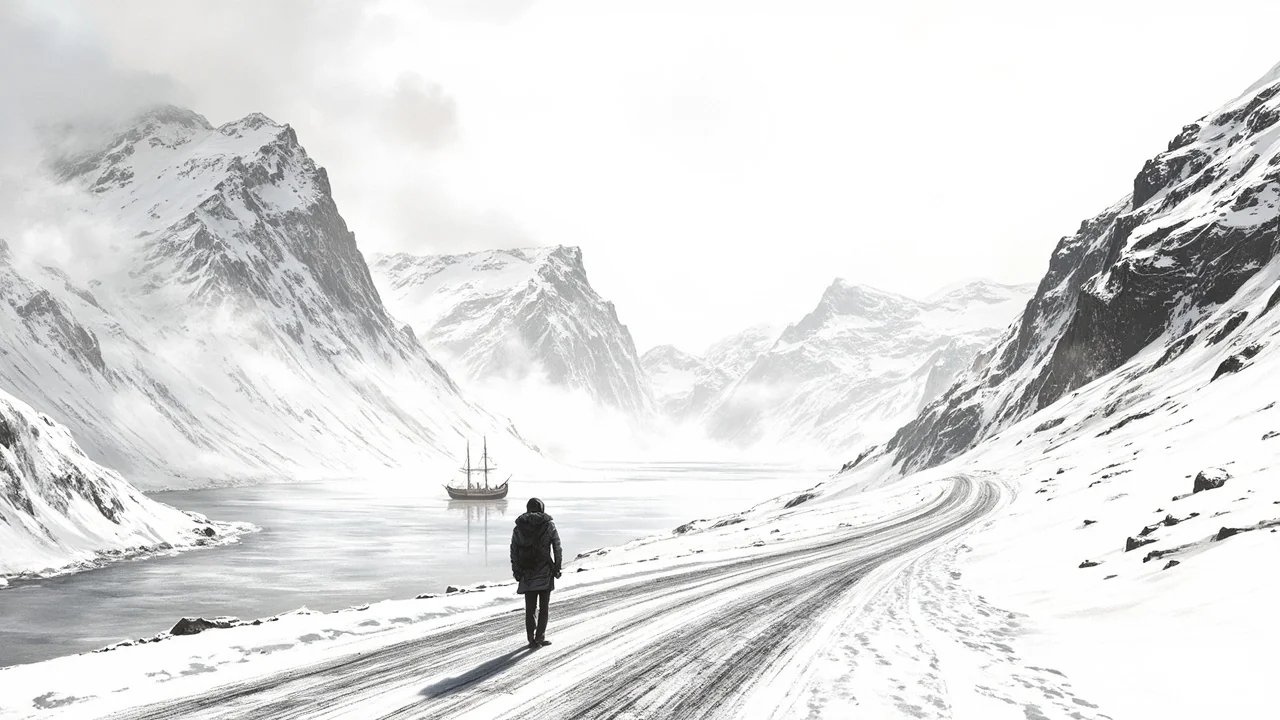
Norway's Meteorological Institute has issued a serious hazard warning for snowdrifts across mountain regions in Southern Norway. The alert, active from Tuesday morning until early Wednesday afternoon, warns of sudden road closures and potential convoy driving for the vast mountain areas from Agder and Rogaland in the south to Trøndelag in the north. A separate warning for strong winds and snowdrifts is also in effect for parts of Finnmark until midnight Wednesday.
“There is local snowdrift in the mountains due to new snow and strong wind. The danger subsides on Wednesday, first in the southern mountain areas,” the Institute stated in its official forecast. The conditions promise a severe disruption to travel and a test of the country's winter preparedness infrastructure.
The Impending Mountain Crisis
The warning spells immediate trouble for the network of vital mountain passes that connect Norway's regions. Roads over critical stretches like the Haukelifjell, Filefjell, and the Dovre plateau are directly in the path of the predicted weather. The institute specifically warned that snowdrifts would lead to locally reduced visibility and snow compacting on road surfaces.
“Snowdrift gives locally reduced visibility and snow that packs onto the road surface. Roads can be closed, and convoy driving can be introduced at short notice,” their statement continued. This language indicates authorities expect conditions to deteriorate rapidly, leaving little time for reaction once the full force of the weather hits.
Convoy driving, or kolonnekjøring, is a last-resort measure where vehicles are led in a slow, single-file line behind a snowplow. It causes major delays and is only implemented when roads are otherwise impassable. The mention of its potential use highlights the severity of the forecast.
A Nation Geared for Winter, Yet Challenged
Norwegians are renowned for their winter driving skills and robust infrastructure. However, these mountain storms present a unique set of challenges. The combination of fresh snow—which provides the material—and strong, persistent winds is what creates dangerous snowdrifts. Winds can whip snow across roads, creating white-out conditions and building impassable walls of snow in a matter of hours.
The Meteorological Institute has directly advised motorists to use proper winter tires and drive according to conditions. They also urged people to check the latest status with transport operators and the Norwegian Public Roads Administration (Statens vegvesen) before departure. This is standard but crucial advice, as conditions can vary dramatically between valleys and mountain passes.
This event is not isolated to the south. The simultaneous warning for Finnmark, Norway's northernmost county, underscores a widespread pattern of unstable early-season weather. While the south faces snowdrifts, Finnmark is contending with powerful winds capable of creating similar hazardous drifting from existing snow cover.
The Economic and Social Ripple Effects
Beyond the immediate safety concerns, such warnings trigger a cascade of economic and social impacts. The mountain roads are arterial routes for freight transport between cities like Oslo, Bergen, and Trondheim. Any closure disrupts supply chains and delays goods. The tourism sector, which relies on accessible mountain cabins and ski resorts, also faces cancellations and complications.
For local communities in these high-altitude regions, such storms are a fact of life. They test the resilience of local power grids, which can be vulnerable to ice and wind, and challenge emergency services. Ambulance and helicopter airlift services also face severely increased risks during periods of low visibility and high wind.
“The danger subsides on Wednesday, first in the southern mountain areas,” the forecast notes. This phased reduction suggests a lingering threat for central and northern mountain regions, potentially stretching the period of disruption over two full days. It requires a coordinated, rolling response from road authorities across multiple counties.
Expert Perspective on a Changing Climate
While Norway is no stranger to fierce winter weather, meteorologists are increasingly examining these events through the lens of climate change. A warming Arctic can contribute to more volatile weather patterns, potentially intensifying wind events and altering precipitation types. What might have been a stable cold snap decades ago can now manifest as a cycle of freeze, thaw, and heavy snowfall.
This specific warning, affecting such a broad swath of the country so early in the season, fits into a pattern of observed increases in extreme weather frequency. It places greater operational pressure on the Public Roads Administration, which must balance pre-emptive salting, aggressive plowing, and the difficult decision to close roads entirely.
The financial cost is significant. Keeping mountain passes open involves a fleet of heavy-duty snowplows and round-the-clock crews. The decision to implement convoy driving is logistically demanding and costly, but a necessary expense to maintain critical transport links when full closure is the only alternative.
A Test of Preparedness and Public Heed
The ultimate success of managing this event lies in public compliance. Norwegian authorities operate a highly respected alert system, but its effectiveness diminishes if drivers ignore warnings. The culture of dugnad—collective community effort—is implicitly called upon during such crises. It means individuals taking responsibility by postponing non-essential travel, ensuring their vehicle is properly equipped, and heeding official instructions.
Social media and national radio become vital lifelines, broadcasting real-time updates on road closures and convoy schedules. The digital systems of the Public Roads Administration, such as the Vegvesen app and website, will see a massive spike in traffic as Norwegians seek the latest information.
For those caught in the storm, the advice is unequivocal: stay in your vehicle if visibility drops to zero, run the engine sparingly for heat, and ensure the exhaust pipe is clear of snow. Norway's roadside emergency telephone boxes, though less common now, remain a symbol of the country's long-standing acknowledgment of mountain travel risks.
Looking Beyond the Immediate Blizzard
As the winds are predicted to calm by Wednesday afternoon, the aftermath will come into focus. Plow crews will work to clear fully blocked sections, and authorities will assess any stranded motorists. The event serves as an annual reminder of nature's dominance in Scandinavia, even in a nation with world-class infrastructure.
These storms also renew debates about infrastructure investment. Is there a need for more frequent avalanche control using cannons in certain corridors? Should wind fence technology be expanded to protect particularly vulnerable stretches of road? Each major weather event provides data that shapes future policy and budgeting for Norway's transport networks.
The simultaneous alerts from the southern mountains to the Finnmark plateau paint a picture of a nation momentarily unified by a shared meteorological challenge. It tests technology, preparedness, and the collective public spirit. While the snow will eventually stop and the roads reopen, the data gathered from this event will inform Norway's approach to winter resilience for seasons to come. The relationship between Norwegians and their formidable winter landscape is one of constant negotiation, and this week's snowdrift warning is just the latest chapter in that ongoing dialogue.